

Biotechnology News – Latest Headlines
 Subscribe to our Biotechnology News feed
Genetically modified tobacco plants are viable as raw material for biofuels
In her PhD thesis Ruth Sanz-Barrio, an agricultural engineer, has demonstrated, for the first time, the viability of using specific tobacco proteins (known as thioredoxins) as biotechnological tools in plants. Specifically, she has managed to increase the amount of starch produced in the tobacco leaves by 700% and fermentable sugars by 500%.
October 14, 2013 Read more

Football-shaped artificial particles bolster the body's defense against cancer
Researchers at Johns Hopkins have succeeded in making flattened, football-shaped artificial particles that impersonate immune cells. These football-shaped particles seem to be better than the typical basketball-shaped particles at teaching immune cells to recognize and destroy cancer cells in mice.
October 14, 2013 Read more
Beyond genetics: mining biological networks for new treatments for disease
The EU-funded project BIONET ('Network topology complements genome as a source of biological information') is using graph theory to model biological network interactions and develop advanced algorithms to analyse these complex data.
October 11, 2013 Read more
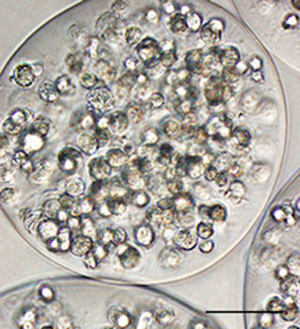
Packaging stem cells in capsules for heart therapy
In many studies of stem cell therapy for heart disease, most of the cells wash away in the first hour. Researchers at Emory and Georgia Tech encapsulate mesenchymal stem cells in alginate so that the cells stay alive and in the heart. In rats, the capsules promote healing after a heart attack. Alginate has several biomedical uses already so the path to translation looks good.
October 11, 2013 Read more
Unlocking biology with math
Researchers develop a first-of-its-kind mathematical model for the biological process that keeps your immune system working.
October 7, 2013 Read more
Discovery of novel regulators of the birth of blood platelets
New research has led to a better understanding of the molecular mechanisms that make certain blood-producing cells function normally. The research will help prevent diseases that lead to heart attacks and strokes.
October 7, 2013 Read more
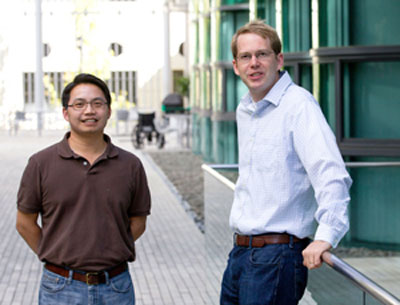
Scientists create technique for high-speed, low-cost epigenomic mapping
A new technique developed by researchers at the Stanford University School of Medicine could pave the way to an era of personalized epigenomics.
October 7, 2013 Read more

Salt-tolerant bacteria improve crop yields
Uzbek microbiologist Dilfuza Egamberdieva hopes to apply her new agricultural technique soon in Uzbekistan to boost the yield of economically important crops such as wheat, cotton, tomato and cucumber.
October 7, 2013 Read more
'Jekyll-and-Hyde' protein determines life and death of cancer cells
Singapore and Oxford scientists unlock secret to cancer cell growth, paving the way for better fight against cancer.
October 7, 2013 Read more
Gene activity and transcript patterns visualized for the first time in thousands of single cells
Biologists of the University of Zurich have developed a method to visualize the activity of genes in single cells. The method is so efficient that, for the first time, a thousand genes can be studied in parallel in ten thousand single human cells.
October 6, 2013 Read more
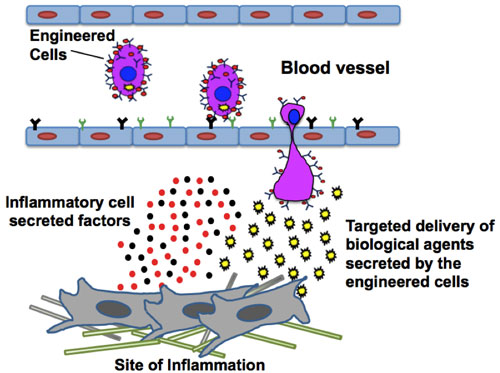
Stem cells engineered to become targeted drug factories
A group of researchers have found a way to use stem cells as drug delivery vehicles. The researchers inserted modified strands of messenger RNA into connective tissue stem cells - called mesenchymal stem cells - which stimulated the cells to produce adhesive surface proteins and secrete interleukin-10, an anti-inflammatory molecule.
October 4, 2013 Read more
Laser propelled cells
A new tool enables biomechanical studies of individual cells: Red blood cells were laser-propelled over long distances through optofluidic photonic crystal fibers and their deformation due to shear forces monitored.
October 2, 2013 Read more
Scientists develop new process to create artificial cell membranes
Scientists at The Scripps Research Institute (TSRI) report a highly programmable and controlled platform for preparing and experimentally probing synthetic cellular structures.
October 1, 2013 Read more
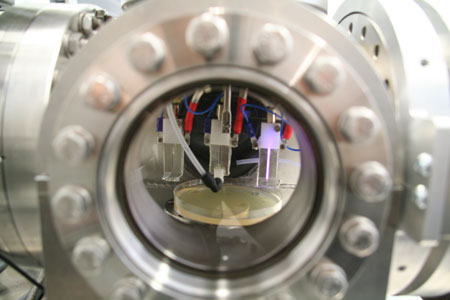
Alternative to antibiotics: plasmas attack bacterial cells on several levels
As they destroy bacteria very efficiently, plasmas constitute an alternative to chemical disinfectants and potentially to antibiotics, as well. How they achieve this effect has been investigated by a team of biologists, plasma physicists and chemists.
October 1, 2013 Read more
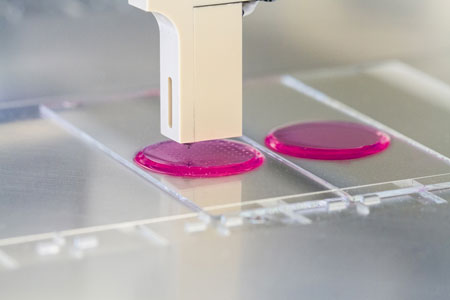
Need different types of tissue? Just print them!
What sounds like a dream of the future has already been the subject of research for a few years: simply printing out tissue and organs. Now scientists have further refined the technology and are able to produce various tissue types.
October 1, 2013 Read more
New metabolic pathway to more efficiently convert sugars into biofuels
UCLA chemical engineering researchers have created a new synthetic metabolic pathway for breaking down glucose that could lead to a 50 percent increase in the production of biofuels.
September 30, 2013 Read more
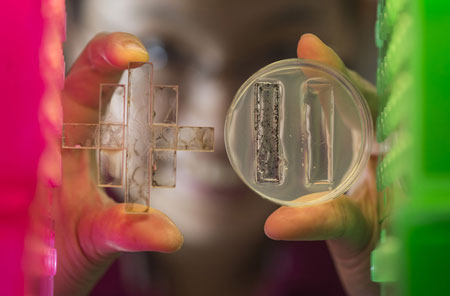
Synthetic biologists probe biochar's impact on microbial signaling
In the first study of its kind, Rice University scientists have used synthetic biology to study how a popular soil amendment called 'biochar' can interfere with the chemical signals that some microbes use to communicate. The class of compounds studied includes those used by some plant pathogens to coordinate their attacks.
September 30, 2013 Read more
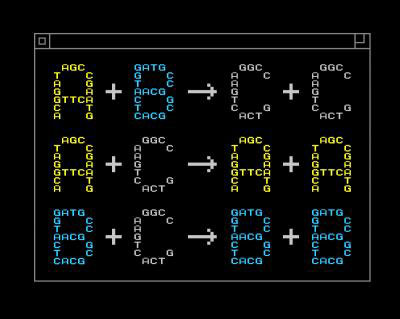
Engineers invent programming language to build synthetic DNA
Similar to using Python or Java to write code for a computer, chemists soon could be able to use a structured set of instructions to 'program' how DNA molecules interact in a test tube or cell.
September 30, 2013 Read more