

Biotechnology News – Latest Headlines
 Subscribe to our Biotechnology News feed
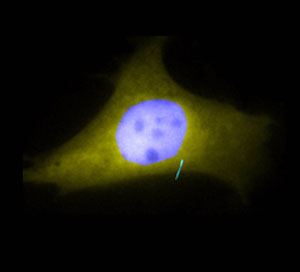
Research on cilia heats up: Implications for hearing, vision loss and kidney disease
Experiments at Johns Hopkins have unearthed clues about which protein signaling molecules are allowed into hollow, hair-like 'antennae', called cilia, that alert cells to critical changes in their environments.
May 13, 2013 Read more
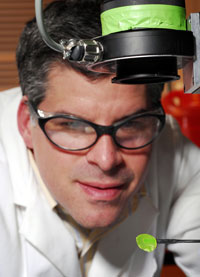
Biomaterial shows promise for Type 1 diabetes treatment
Researchers have made a significant first step with newly engineered biomaterials for cell transplantation that could help lead to a possible cure for Type 1 diabetes, which affects about 3 million Americans.
May 9, 2013 Read more
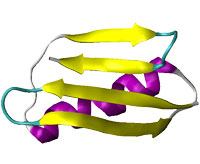
A trick to fold proteins more quickly
A team of researchers of the International School for Advanced Studies (SISSA) of Trieste and of University of Cambridge have devised a method to reduce the time used to simulate how proteins take on their signature three-dimensional shape. Such important information to comprehend their function is usually obtained using often very costly experimental techniques.
May 8, 2013 Read more
Silk and cellulose biologically effective for use in stem cell cartilage repair
Over 20 million people in Europe suffer from osteoarthritis which can lead to extensive damage to the knee and hip cartilage. Stem cells offer a promising way forward but a key challenge has been to design a 'smart material' that is biologically effective for cartilage tissue regeneration. Now researchers have identified a blend of naturally occurring fibers such as cellulose and silk that makes progress towards affordable and effective cell-based therapy for cartilage repair a step closer.
May 7, 2013 Read more
Biomedical engineers build a living patch for damaged hearts
Duke University biomedical engineers have grown three-dimensional human heart muscle that acts just like natural tissue. This advancement could be important in treating heart attack patients or in serving as a platform for testing new heart disease medicines.
May 6, 2013 Read more
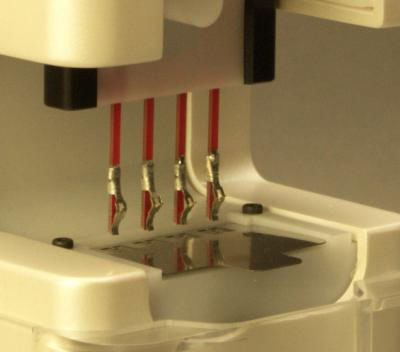
New device can extract human DNA with full genetic data in minutes
Take a swab of saliva from your mouth and within minutes your DNA could be ready for analysis and genome sequencing with the help of a new device.
May 6, 2013 Read more
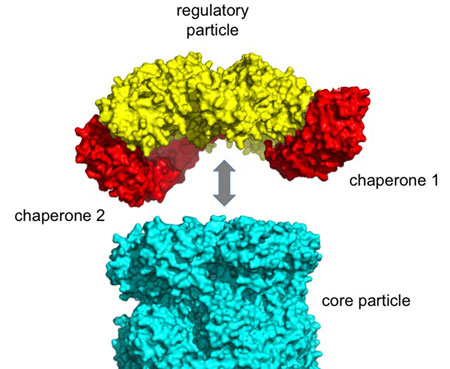
Assembly of a protein degradation machine could lead to treatments in cancer, neurological diseases
Kansas State University scientists helped discover new details about an intricate process in cells. Their finding may advance treatments for cancer and neurological diseases.
May 6, 2013 Read more
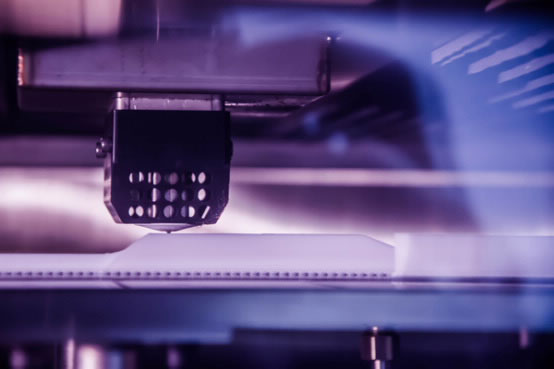
3D printed human body parts not far away
Australian scientists are at the forefront of a medical revolution using 3D printing to reproduce human body parts.
May 6, 2013 Read more
A new cost-effective genome assembly process
A collaboration between the DOE JGI, Pacific Biosciences (PacBio) and the University of Washington has resulted in an improved workflow for genome assembly that the team describes as a fully automated process from DNA sample preparation to the determination of the finished genome.
May 5, 2013 Read more
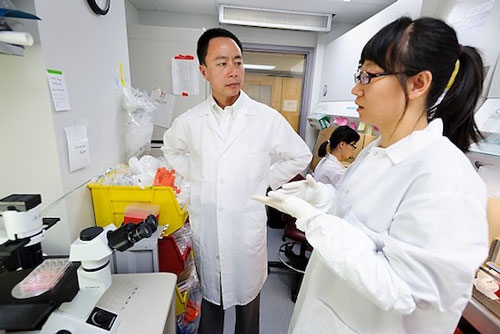
Adult cells transformed into early-stage nerve cells, bypassing the pluripotent stem cell stage
A UW-Madison research group has converted skin cells from people and monkeys into a cell that can form a wide variety of nervous-system cells - without passing through the do-it-all stage called the induced pluripotent stem cell, or iPSC.
May 2, 2013 Read more
New plant protein discoveries could ease global food and fuel demands
New discoveries of the way plants transport important substances across their biological membranes to resist toxic metals and pests, increase salt and drought tolerance, control water loss and store sugar can have profound implications for increasing the supply of food and energy for our rapidly growing global population.
May 1, 2013 Read more
'Traffic' in our cells works both for and against us
A mechanism that permits essential substances to enter our cells while at the same time removing from them harmful components also has a 'down side'. This negative aspect prevents vital drugs, such as anti-cancer drugs, from achieving their designed functions, while also enabling bacterial cells to develop resistance to penetration of antibiotics.
May 1, 2013 Read more
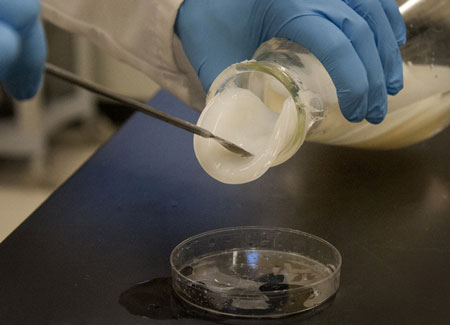
Changing cellulose-forming process may tap plants' biofuel potential
Changing the way a plant forms cellulose may lead to more efficient, less expensive biofuel production, according to Penn State engineers.
May 1, 2013 Read more
Synthetic biology research community grows significantly
The number of private and public entities conducting research in synthetic biology worldwide grew significantly between 2009 and 2013, according to the latest version of an interactive map produced by the Synthetic Biology Project at the Woodrow Wilson International Center for Scholars.
April 30, 2013 Read more
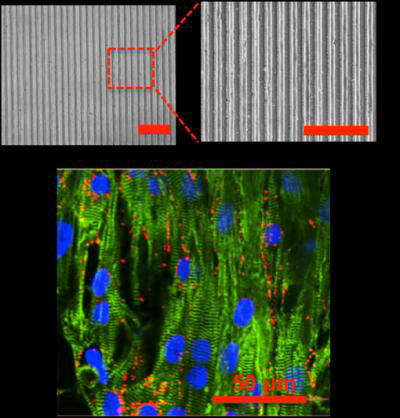
Patterned hearts
Bioengineers create rubber-like material bearing micropatterns for stronger, more elastic hearts.
April 29, 2013 Read more
Mapping of cancer cell fuel pumps paves the way for new drugs
For the first time, researchers at Karolinska Institutet in Sweden have managed to obtain detailed images of the way in which the transport protein GLUT transports sugars into cells. Since tumours are highly dependent on the transportation of nutrients in order to be able to grow rapidly, the researchers are hoping that the study will form the basis for new strategies to fight cancer cells.
April 29, 2013 Read more
Combining two enyme systems leads to faster breakdown of biomass cell walls
Enzymes could break down cell walls faster - leading to less expensive biofuels for transportation - if two enzyme systems are brought together in an industrial setting, new research by the Energy Department's National Renewable Energy Laboratory suggests.
April 26, 2013 Read more
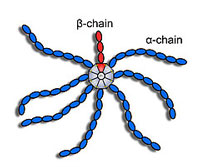
Protein shaped like a spider is potentially suitable as a transporter for drugs
The protein C4BP is similar to a spider in its spatial form with eight 'arms'. The structure of the 'spider body' leads scientists to unconventional ideas - the protein is possibly suitable as a scaffold for the transport of active pharmaceutical substances, particularly biomolecules.
April 26, 2013 Read more