

Biotechnology News – Latest Headlines
 Subscribe to our Biotechnology News feed
Biological transistor enables computing within living cells
A team of Stanford University bioengineers has taken computing beyond mechanics and electronics into the living realm of biology. They detail a biological transistor made from genetic material - DNA and RNA - in place of gears or electrons. The team calls its biological transistor the 'transcriptor'.
March 28, 2013 Read more
Opposites attract: How cells and cell fragments move in electric fields (w/video)
Like tiny, crawling compass needles, whole living cells and cell fragments orient and move in response to electric fields - but in opposite directions, scientists at the University of California, Davis, have found. Their results could ultimately lead to new ways to heal wounds and deliver stem cell therapies.
March 28, 2013 Read more
Scientists identify brain's 'molecular memory switch'
Common fruit fly key to discovery as to how memories are written into brain cells.
March 28, 2013 Read more
Researchers show stem cell fate depends on 'grip'
A team of researchers from the University of Pennsylvania has generated new insight on how a stem cell's environment influences what type of cell a stem cell will become. They have shown that whether human mesenchymal stem cells turn into fat or bone cells depends partially on how well they can "grip" the material they are growing in.
March 28, 2013 Read more
The first caffeine-'addicted' bacteria
Some people may joke about living on caffeine, but scientists now have genetically engineered E. coli bacteria to do that - literally. They describe bacteria being 'addicted' to caffeine in a way that promises practical uses ranging from decontamination of wastewater to bioproduction of medications for asthma.
March 27, 2013 Read more
New DNA test identifies ingredients in foods
Scientists at Mainz University develop a novel screening procedure for accurately determining the amount of animal, plant, and microbial substances in foods.
March 27, 2013 Read more
Making living matter programmable
Thirty years ago, the future lay in programming computers. Today, it's programming cells.
March 27, 2013 Read more
Proteins in detail
Researchers with the joint program between IRB Barcelona and the Barcelona Supercomputing Center (BSC) have devised a new strategy to study the shape of proteins.
March 27, 2013 Read more
Researchers find novel way plants pass traits to next generation
New research explains how certain traits can pass down from one generation to the next - at least in plants - without following the accepted rules of genetics.
March 26, 2013 Read more
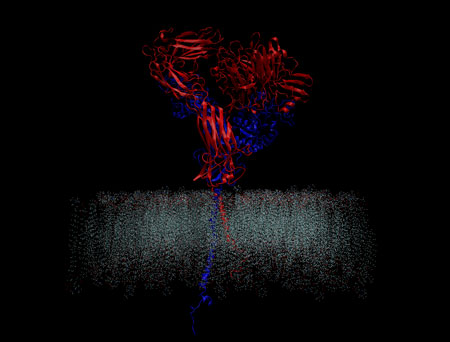
Computer simulations yield clues to how cells interact with surroundings
Berkeley Lab scientists have developed a computer model of a protein that helps cells interact with their surroundings. Like its biological counterpart, the virtual integrin snippet is about twenty nanometers long. It also responds to changes in energy and other stimuli just as integrins do in real life. The result is a new way to explore how the protein connects a cell's inner and outer environments.
March 24, 2013 Read more
Peach genome offers insights into breeding strategies for biofuels crops
Rapidly growing trees like poplars and willows are candidate "biofuel crops" from which it is expected that cellulosic ethanol and higher energy content fuels can be efficiently extracted. Domesticating these crops requires a deep understanding of tree physiology and genetics.
March 24, 2013 Read more
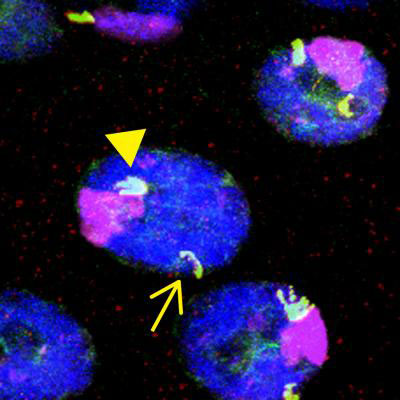
Researchers identify genetic sequence that helps to coordinate synthesis of DNA-packaging proteins
Research conducted in fruit flies at the University of North Carolina School of Medicine has pinpointed a specific DNA sequence that both triggers the formation of the "histone locus body" and turns on all the histone genes in the entire block.
March 24, 2013 Read more
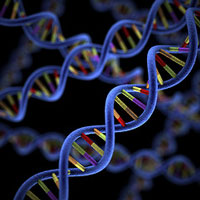
Enzymes allow DNA to swap information with exotic molecules
Research results demonstrate that DNA sequences can be transcribed into a molecule known as TNA and reverse transcribed back into DNA, with the aid of commercially available enzymes.
March 22, 2013 Read more
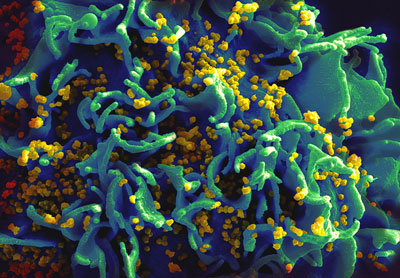
Study offers new way to discover HIV vaccine targets
Researchers develop a method to identify weak points in viral proteins that could be exploited for vaccine development.
March 22, 2013 Read more
Synthetic biology remains a mystery, survey shows
National survey finds three out of four adults have heard little or nothing about the emerging technology.
March 20, 2013 Read more
Research explores road signs on the intracellular highway
The road signs that direct traffic on the highways - collectively known as the cytoskeleton - are a mystery, and now the subject of research for Lee Ligon, associate professor of biology at Rensselaer Polytechnic Institute.
March 19, 2013 Read more
DNA catalysts do the work of protein enzymes
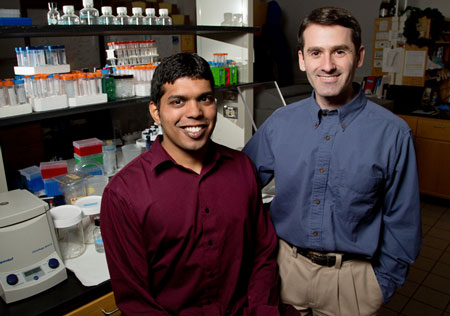
Illinois chemists have used DNA to do a protein's job, creating opportunities for DNA to find work in more areas of biology, chemistry and medicine than ever before.
March 19, 2013 Read more
How proteins read meta DNA code
Scientists have accurately calculated the sliding mechanism for deciphering the second genetic code written within the DNA base pair sequence.
March 19, 2013 Read more