

Nanotechnology News – Latest Headlines
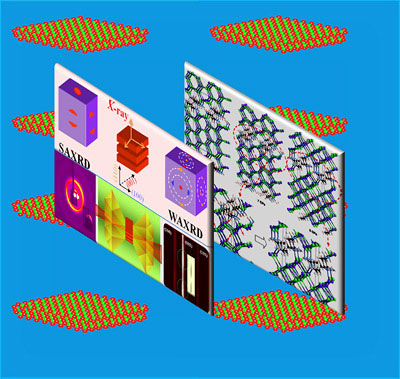
Watching nanosheets and molecules transform under pressure could lead to stronger materials
By understanding the process behind the transformation itself, from both experimental and theoretical perspectives, researchers have taken a potential step toward creating a new class of exceptionally strong, durable materials that maintain their high-pressure properties -- including strength and superconductivity -- in everyday low-pressure environments.
October 20, 2010 Read more

Scientists take first step toward electronically interfacing microbes with inorganic materials
Scientists with the Lawrence Berkeley National Laboratory (Berkeley Lab) have designed an electrical link to living cells engineered to shuttle electrons across a cell's membrane to an external acceptor along a well-defined path. This direct channel could yield cells that can read and respond to electronic signals, electronics capable of self-replication and repair, or efficiently transfer sunlight into electricity.
October 20, 2010 Read more
Wirkstoffkandidaten im Blut testen
Ein Team um den LMU-Biophysiker Professor Dieter Braun und Wissenschaftler des LMU Spin-off NanoTemper Technologies GmbH haben eine Methode entwickelt, die erstmals die Interaktionen biologischer Molekuele aller und auch sehr unterschiedlicher Groessen untersuchen laesst - selbst der bislang nur schwer zu erforschenden Small Molecules.
October 20, 2010 Read more
Artificial metalloenzymes, the chemical synthesis of the future
Researchers at CEA, Joseph Fourier University and CNRS have developed a new approach combining protein crystallography and biomimetic chemistry for observing they key steps of a process essential to life: oxygen activation. This was achieved by creating a complex artificial metalloenzyme composed of a chemical catalyst and a protein and observing it via X-ray crystallography at the European Synchrotron Radiation Facility (ESRF).
October 20, 2010 Read more
University of Leeds gets $6.3 million electron-beam lithography facility
One of the highest resolution electron-beam lithography systems in Europe will soon be helping scientists in Yorkshire break new ground in nanotechnology.
October 20, 2010 Read more
Measuring the electrical properties of nanocrystals
UK scientists help to create standards for measuring electric materials on the nanoscale.
October 20, 2010 Read more
Cornerstone ceremony for King Abdullah Institute for Nanotechnology in Saudi Arabia
The King Abdullah Institute for Nanotechnology (KAIN) will be equipped with state-of-the-art laboratories and facilities constructed over an area of 8,000 square meters.
October 20, 2010 Read more
New equation could advance research in solar cell materials
A groundbreaking new equation developed in part by researchers at the University of Michigan could do for organic semiconductors what the Shockley ideal diode equation did for inorganic semiconductors: help to enable their wider adoption. Without the Shockley equation, the computers of today would not be possible.
October 20, 2010 Read more
Short-range scattering in quantum dots
Chinese researchers have described a new breakthrough in understanding the way electrons travel around quantum dots. This might lead to promising new fabrication methods of novel quantum devices.
October 20, 2010 Read more
Early Detection Research Network NCI Biomarker Development Laboratory Grant for magneto-nanosensor
Canary Foundation researchers at Stanford University received the National Cancer Institute (NCI) Early Detection Research Network (EDRN) Biomarker Development Laboratory (BDL) Grant. This award came at the same time as the U.S. Food and Drug Administration (FDA) approved an eIND for Canary Foundation research in the testing of molecular imaging agents for lung cancer.
October 20, 2010 Read more
Open day on nanotechnology in Brussels
In the framework of the ongoing work of the High-Level Expert Group on Key Enabling Technologies (KETs), this Open Day is organised by the Working Group on Nanotechnologies in order to consult a broad stakeholder audience on the needs and challenges of the sector, contributing to the development of appropriate policy measures to promote the industrial deployment of KETs.
October 20, 2010 Read more
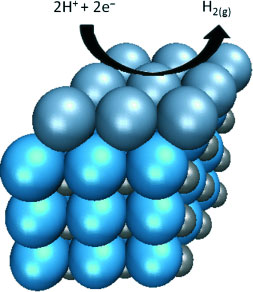
Saving platinum
Monolayer of platinum atoms on a tungsten carbide support catalyzes the electrolytic production of hydrogen effectively and cheaply.
October 20, 2010 Read more
Nanomachines make sugar juice flow
Plants play an important role as producers of sugar and carbohydrates. Scientists from the University of Wuerzburg are conducting research in this area - with the long-term goal of influencing sugar levels in agricultural crop plants.
October 20, 2010 Read more
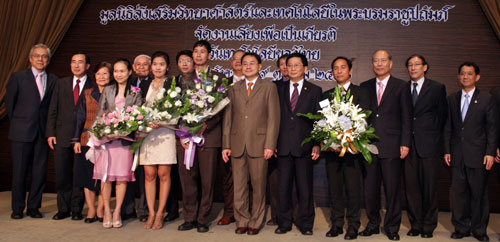
Thailand 2010 Technologist Award
Four recipients received the 2010 Technologist Award in Bangkok.
October 20, 2010 Read more
Imec sets up R+D activity in Taiwan
Imec Taiwan today signed the co-funding contract with the Taiwanese Ministry of Economic Affairs (MOEA) for its R+D activity Imec Taiwan Innovation Centre (ITIC). ITIC's goal is to expedite applied research projects with industry and academia that will result in electronic designs, components and technology solutions.
October 20, 2010 Read more
Nanotube thermopower
Efforts to store energy in carbon nanotubes described at AVS Meeting in Albuquerque.
October 20, 2010 Read more
 Subscribe to our Nanotechnology News feed