

Nanotechnology News – Latest Headlines
ACEN launches collaborative website on societal issues raised by nanotechnology
The Citizen Alliance on the ChallEnges of Nanotechnologies (CACEN) (in French 'Alliance Citoyenne sur les Enjeux des Nanotechnologies': ACEN) has just opened a new website nano.acen-cacen.org where citizens can find and share information, questions, and analyses about societal issues raised by nanotechnologies.
June 17, 2010 Read more
Invitation to 1st July nanotechnology enabled solar energy harvesting workshop
The Technology Strategy Board and EPSRC led cross-Research Council programme on nanotechnology are working closely together to stimulate the development and commercialisation of exciting new ideas in next generation solar energy harvesting.
June 17, 2010 Read more
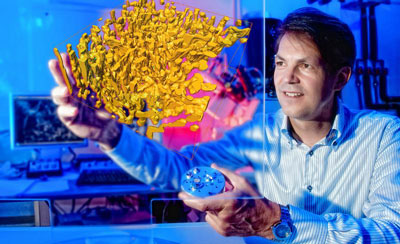
Neues Regionalforum Materialographie Saar
Im Regionalforum Materialographie Saar haben sich jetzt Firmen, die Werkstoffe pruefen und ihre Qualitaet ueberwachen, mit der universitaeren Forschung vernetzt. Auf Initiative von Frank Muecklich, Professor fuer Funktionswerkstoffe der Universitaet des Saarlandes und Direktor des Steinbeis-Zentrums fuer Materialforschung (MECS), werden sich Metallographen, Werkstoffpruefer, Techniker und Ingenieure kuenftig regelmaessig ueber neue Verfahren austauschen.
June 17, 2010 Read more
Silicon chips to enter world of high speed optical processing
Physicists at the University of Sydney have brought silicon chips closer to performing all-optical computing and information processing that could overcome the speed limitations intrinsic to electronics, with the first report published of an on-chip all-optical temporal integrator.
June 17, 2010 Read more
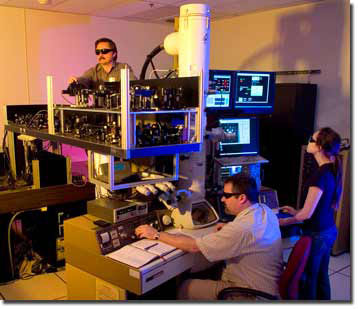
Peering into the inner workings of catalyst nanoparticles
Scientists can now peer into the inner workings of catalyst nanoparticles 3,000 times smaller than a human hair within nanoseconds. The findings point the way toward future work that could greatly improve catalyst efficiency in a variety of processes that are crucial to the world's energy security, such as petroleum catalysis and catalyst-based nanomaterial growth for next-generation rechargeable batteries
June 17, 2010 Read more

Jell-O lab-on-a-chip devices to spark interest in science careers
With hands-on experiences in childhood and adolescence having sparked so many science careers, scientists in Canada are describing a quick, simple, safe, and inexpensive way for kids to participate in making microfluidic devices.
June 16, 2010 Read more
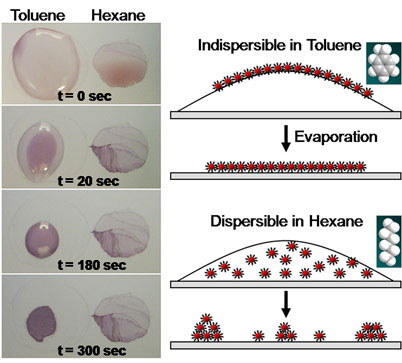
New process for creating monolayers of gold nanoparticles holds promise for nanoelectronics
Researchers at Rensselaer Polytechnic Institute have developed a new, ultra-simple method for making layers of gold that measure only billionths of a meter thick. The process, which requires no sophisticated equipment and works on nearly any surface including silicon wafers, could have important implications for nanoelectronics and semiconductor manufacturing.
June 16, 2010 Read more
Towards nanowire solar cells with a 65-percent efficiency
TU/e researchers want to develop solar cells with an efficiency of over 65 percent by means of nanotechnology. In Southern Europe and North Africa these new solar cells can generate a substantial portion of the European demand for electricity. The Dutch government reserves EUR 1.2 million for the research.
June 16, 2010 Read more
Geometry affects drift and diffusion across entropic barriers
A new paper quantifies the effects of periodic constrictions on drift and diffusion in systems experiencing a driving force.
June 16, 2010 Read more
Fully epitaxial microcavities open the door to quantum optoelectronic effects in GaN-based system
For the very first time, a team of researchers in Germany has introduced quantum dots in fully epitaxial nitride laser structures without the need for hybrid systems - effectively eliminating the cumbersome method of combining different materials from epitaxy and evaporation.
June 16, 2010 Read more
Analytical applications of enzymatic growth of quantum dots
Scientists report on a new analytical approach in which the enzymatic generation of quantum dots can be applied to the detection of enzymatic activities.
June 16, 2010 Read more
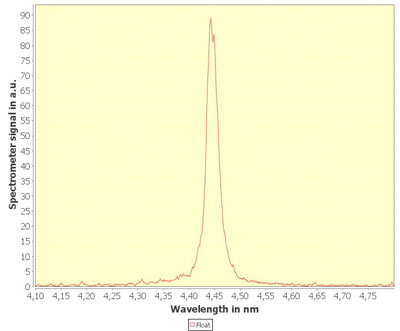
First lasing below 4.5 nanometres at DESY's free-electron laser
For the first time, FLASH produced laser light with a wavelength of 4.45 nanometres; thus, DESY's free-electron laser for soft X-ray light considerably beat its previous record of 6.5 nanometres.
June 16, 2010 Read more
Rapid increase in the number of worldwide nanotechnology degree programs
Academic nanosciences and nanotechnologies programs now exceed 250 individual degree offerings around the globe.
June 16, 2010 Read more
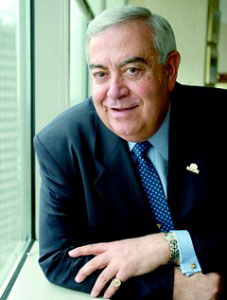
Melissaratos opens Institute for NanoBioTechnology summer seminar series, June 16
Aris Melissaratos, senior advisor to the president for enterprise development at Johns Hopkins Technology Transfer, will speak at the summer's first Professional Development Seminar hosted by the Johns Hopkins Institute for NanoBioTechnology (INBT) on June 16 at 11 a.m. in Maryland Hall 110.
June 16, 2010 Read more
New type of quantum computer could bring the technology closer to reality
Molecules in quantum states are very fragile. Scientists have devised a way to separate the molecules into their component parts so that the processor's results can be read from the more easily controllable individual atoms. By using lasers, they were able to break down the molecules without compromising the data encoded in them.
June 16, 2010 Read more
Nanoparticle scientist speaks on new discoveries at Goldschmidt Conference
Findings released during the annual Goldschmidt Conference at the University of Tennessee, Knoxville.
June 16, 2010 Read more
 Subscribe to our Nanotechnology News feed