

Nanotechnology News – Latest Headlines
Laser adds extra dimension to lab-on-chip
A European research project has shown how to build optical sensors directly into the structure of labs-on-chips. The breakthrough paves the way for on-the-spot medical diagnostics.
April 13, 2010 Read more
European Research Council slams EU bureaucracy
The work of Europe's scientific funding body has been marred by ongoing tensions with the European Commission and 'stupid' bureaucratic rules, agency representatives have told MEPs.
April 13, 2010 Read more

DTU Nanotechnology's annual report 2009 now available
The Annual Report (pdf download) marks yet another successful year for DTU Nanotech. They have seen an increase in research funding, an increase in the number of citations of our papers, and an increase in the number of students.
April 13, 2010 Read more

Nanophysics work earns NSF Early Career Award
Katherine Aidala, the Clare Boothe Luce Assistant Professor of Physics at Mount Holyoke College, has won the National Science Foundation's prestigious Early Career Award for her work in nanophysics - work aimed at finding cost-effective solutions to the world's energy problems.
April 13, 2010 Read more
UAlbany NanoCollege receives NSF award to fuel growth in green energy businesses
$600,000 grant through NSF's Partnerships for Innovation Program supports economic and workforce development through nanotechnology-enabled innovations in clean energy.
April 13, 2010 Read more
Biological engineers devise a way to measure how single cells accumulate mass
Using a sensor that weighs cells with unprecedented precision, MIT and Harvard researchers have for the first time measured the rate at which single cells accumulate mass - a feat that could shed light on how cells control their growth and why those controls fail in cancer cells.
April 12, 2010 Read more
'Smart' insulin molecule massively reduces insulin-related cancer risk
Zinc stapling of insulin exemplifies a general strategy to modify the pharmacokinetic and biological properties of a subcutaneous protein depot. The engineering of novel lattice contacts in protein crystals can enable control of supramolecular assembly as a therapeutic protein nanotechnology.
April 12, 2010 Read more
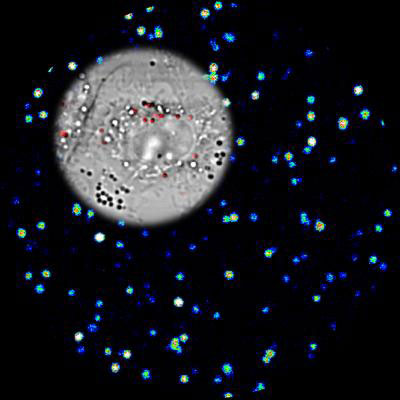
Ultrasensitive imaging method uses gold-silver nanocages
New research findings suggest that an experimental ultrasensitive medical imaging technique that uses a pulsed laser and tiny metallic 'nanocages' might enable both the early detection and treatment of disease.
April 12, 2010 Read more
Scientists create 'molecular paper' just two molecules thick
Berkeley Lab scientists have made the largest two-dimensional polymer crystal self-assembled in water to date. This entirely new material mirrors the structural complexity of biological systems with the durable architecture needed for membranes or integration into functional devices.
April 12, 2010 Read more
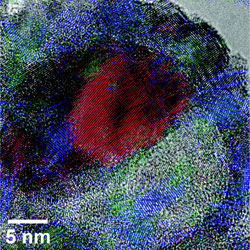
Size affects structure of hollow nanoparticles
A new study from North Carolina State University shows that size plays a key role in determining the structure of certain hollow nanoparticles. The researchers focused on nickel nanoparticles, which have interesting magnetic and catalytic properties that may have applications in fields as diverse as energy production and nanoelectronics.
April 12, 2010 Read more
Mutations directly identifiable in active genes
Researchers at Uppsala University have developed a new method for identifying genetic variation, including mutations, in active genes. Hopes are strong that the method represents an important research tool that will lead to the development of new diagnostic tests.
April 12, 2010 Read more
Inaugural prize awarded for outstanding AFM research in surface science
At the German Physical Society's annual Spring meeting the organization's Surface Science division selected Dr. Leo Gross, IBM Research - Zurich, for the Gerhard Ertl Young Investigator Award, a new scientific prize created and supported by Surface Science, a journal of Reed Elsevier. Gross was selected as the prize recipient for his work on charge measurement of atoms and atomic resolution of molecules with noncontact atomic force microscopy.
April 12, 2010 Read more
SEMATECH Litho Forum to focus on economic challenges facing the future of semiconductor lithography
Leaders in the semiconductor industry will focus on economic challenges in advanced lithography during the fourth biannual SEMATECH Litho Forum May 10-12 at the Marriott Marquis in New York, NY.
April 12, 2010 Read more
Powerful new method allows scientists to probe gene activation
NYU Langone Medical Center researchers have developed a powerful new method to investigate the discrete steps necessary to turn on individual genes and examine how the process goes wrong in cancer and other diseases.
April 12, 2010 Read more
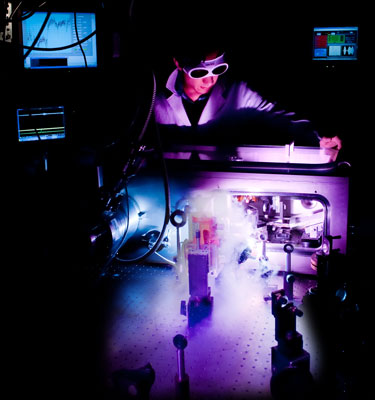
Negative mass and high speed: How electrons go their own ways
Physicists of the Max Born Institute in Berlin report that electrons in semiconductor crystals have a negative inertial mass when strongly accelerated in an electric field.
April 12, 2010 Read more
Using fullerenes as a 'cushion' for nanoparticles
Nanoparticles are recognized as promising building blocks for future applications, however their fixation on surfaces or in a matrix is everything else than a simple task. Now physicists observed that a double layer of spherical C60 carbon-molecules, called fullerenes, is an ideal substrate for these microscopic particles.
April 12, 2010 Read more
 Subscribe to our Nanotechnology News feed