

Nanotechnology News – Latest Headlines
Magnetic nanoparticles show promise for combating human cancer
Scientists at Georgia Tech and the Ovarian Cancer Institute have further developed a potential new treatment against cancer that uses magnetic nanoparticles to attach to cancer cells, removing them from the body.
February 1, 2010 Read more
UK and US organizations collaborate to develop enabling technology for printed flexible displays
The Flexible Display Center (FDC) at Arizona State University today announced that the Printable Electronics Technology Center (PETEC) has become an Associate Member to collaborate on high-performing organic thin film transistors (OTFTs) for flexible display applications.
February 1, 2010 Read more
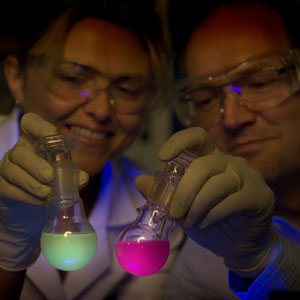
Detecting cancer early with biofunctionalized nanoparticles
A new testing method is being developed to detect cancer soon after the tumor has formed. It will identify characteristic substances in the blood which accompany a certain type of tumor. The first steps in the development have already been completed.
February 1, 2010 Read more
18 cutting-edge A*STAR aerospace technologies showcased at Singapore Airshow 2010
The Agency for Science, Technology and Research (A*STAR) announced today the successful induction of four new members namely Bombardier, Bodycote, Roesler and a local SME, Addvalue Technologies, into its Aerospace Programme. Including the new members, there are now 18 companies in the consortium, of which seven are local companies
February 1, 2010 Read more
Scientific symposium for nanomeasurement-driven research announced
Agilent Technologies Inc. has announced that the first Nano Measure Scientific Symposium (Nano Measure 2010) will take place June 3-4 at Jagiellonian University in Krakow, Poland. The two-day event will feature some of the most prestigious scientists presenting leading-edge, nanomeasurement-driven research.
January 30, 2010 Read more
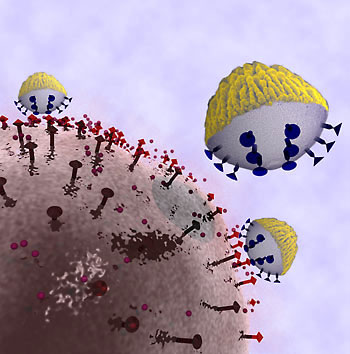
Engineers develop cancer-targeting nanoprobe sensors
Scientists at the University of California, Berkeley, have created smart nanoprobes that may one day be used in the battle against cancer to selectively seek out and destroy tumor cells, as well as report back on the mission's status.
January 30, 2010 Read more
Engineers explore environmental concerns of nanotechnology
Linsey Marr and Peter Vikesland, faculty members in the Via Department of Civil and Environmental Engineering at Virginia Tech, are part of the national Center for the Environmental Implications of NanoTechnology (CEINT), funded by the National Science Foundation (NSF) in 2008. Along with Michael Hochella, University Distinguished Professor of Geosciences, they represent Virginia Tech's efforts in a nine-member consortium awarded $14 million over five years, starting in 2008. Virginia Tech's portion is $1.75 million.
January 29, 2010 Read more
14 challenges the world must address to ensure the planet's survival
Engineers from around the world will hold discussions at The University of Texas at El Paso to address critical problems affecting the planet.
January 29, 2010 Read more
Neuronal microchip helps identify neurotoxins
Scientists from Dortmund/Germany have invented an analytical method for the rapid neurotoxicity screening. They grow neurons on a microchip and check for substances that inhibit the formation of a network between the cells.
January 29, 2010 Read more
New knowledge about the deformation of nanocrystals offers new tools for nanotechnology
With new, advanced equipment, scientists at Riso DTU have shown that materials to produce micro-and nanocomponents react very differently depending on whether crystals are large or small.
January 29, 2010 Read more
A*STAR, EDB partner with Stanford University to nurture next-generation Asian leaders in medical device innovation
The Stanford University Biodesign Program is partnering with the Agency for Science, Technology and Research (A*STAR) and the Singapore Economic Development Board (EDB) to establish a new training program called Singapore-Stanford Biodesign. This program seeks to train the next generation of Asian leaders who can develop innovative medical devices to address Asia's growing healthcare needs.
January 29, 2010 Read more
Law, science center commemorates 25th anniversary with new name, programs
A quarter-century of academic study at the intersection of law and science was commemorated on Wednesday, Jan. 27, as the Sandra Day O'Connor College of Law unveiled its new Center for Law, Science and Innovation and announced programs that will reinvent the law school's role in solving global technological challenges.
January 29, 2010 Read more
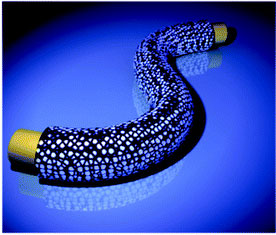
Coated carbon nanotubes could hold key to high-capacity batteries
Nano-sized cables made with titanium dioxide (TiO2)-coated carbon nanotubes could hold the key to developing new high-capacity batteries, report chemists in Germany and China.
January 29, 2010 Read more
Governor Rendell: $5.7 million investment in nanotechnology will build upon research, commercialization efforts
Governor Edward G. Rendell today announced a $5.7 million investment that will expand upon university research efforts, bring new products to the marketplace, and educate the next generation of high-tech workers.
January 28, 2010 Read more
The DIAMOND project - a semiconductor's best friend?
A new EU-funded project is set to simplify life for Europe's semiconductor and electronics industries by making it easier to detect and correct errors. Called DIAMOND ('Diagnosis, error modelling and correction for reliable systems design'), the EUR 3.8 million, 3-year project is funded under the Information and communication technologies (ICT) Theme of the Seventh Framework Programme (FP7).
January 28, 2010 Read more
Using magnetic toys as inspiration, researchers tease out structures of self-assembled clusters
Scientists have long studied how atoms and molecules structure themselves into intricate clusters. Unlocking the design secrets of Nature offers lessons in engineering artificial systems that could self-assemble into any desired form.
January 28, 2010 Read more
 Subscribe to our Nanotechnology News feed