

Nanotechnology News – Latest Headlines
UMass Lowell will receive $4 million for nanomanufacturing research and development
UMass Lowell Nanomanufacturing will receive $4 million under a defense appropriations bill passed by Congress Saturday and signed by President Obama Monday.
December 23, 2009 Read more
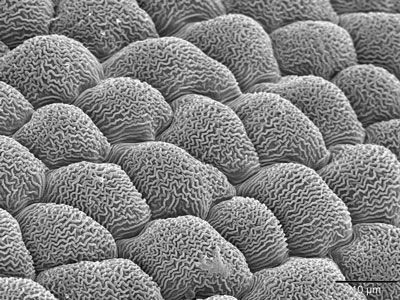
New study sheds light on plant cell nanoridges
Microscopic ridges contouring the surface of flower petals might play a role in flashing that come-hither look pollinating insects can't resist. Michigan State University scientists and colleagues now have figured out how those form.
December 23, 2009 Read more
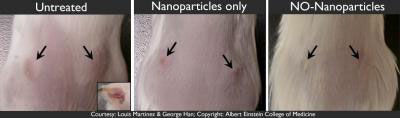
Novel nanotechnology heals abscesses caused by resistant staph bacteria
Topically applied therapy travels deep into the skin to combat MRSA infections.
December 22, 2009 Read more

Nanoscale changes in collagen are a tipoff to bone health
Using a technique that provides detailed images of nanoscale structures, researchers at the University of Michigan and Detroit's Henry Ford Hospital have discovered changes in the collagen component of bone that directly relate to bone health.
December 22, 2009 Read more
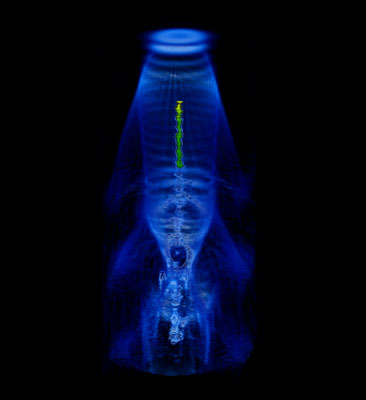
Accelerating with light
Sophisticated as it is, a superconducting linac is a conventional particle accelerator that, in a machine like the Next Generation Light Source (NGLS) now under study, can be used to produce superbright laser beams. The inverse is also true: powerful lasers can be used to accelerate charged particles - but in ways that are anything but conventional.
December 22, 2009 Read more
New techniques allow to make perfect catalysts
Leticia Espinosa Alonso put catalysts under the microscope and discovered a world of new possibilities.
December 22, 2009 Read more
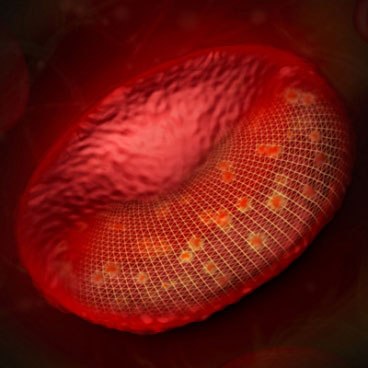
Chemical energy influences tiny vibrations of red blood cell membranes
MIT researchers present conclusive evidence that membrane vibrations in red blood cells require energy input from ATP (adenosine triphosphate), a chemical cells use to store and transfer energy.
December 22, 2009 Read more
Nanotechnology contact lenses that monitor blood glucose levels
Diabetics may soon be able to wear contact lenses that continuously alert them to variations in their glucose levels by changing colours - replacing the need to routinely draw blood throughout the day.
December 22, 2009 Read more
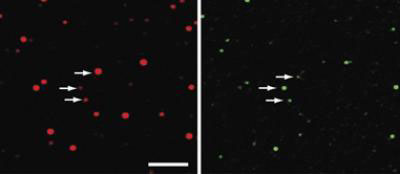
Nanotechnology researchers gain new insight in nerve cell communication
Communication between nerve cells is vital for our bodies to function. Part of this communication happens through vesicles containing signalling molecules called neurotransmitters.
December 22, 2009 Read more
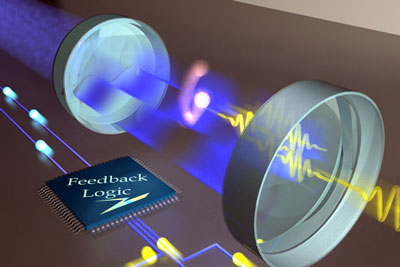
Atome in der Quantenschaukel
Physiker bremsen ein einzelnes Atom mit Hilfe einer optoelektronischen Rueckkopplung in Echtzeit.
December 22, 2009 Read more
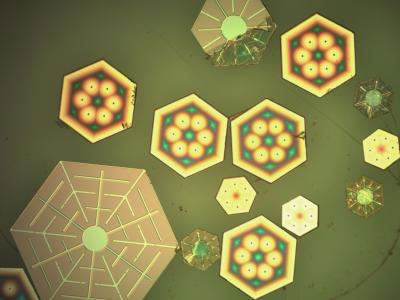
Glitter-sized solar photovoltaics could revolutionize solar enery applications
Sandia National Laboratories scientists have developed tiny glitter-sized photovoltaic cells that could revolutionize the way solar energy is collected and used.
December 22, 2009 Read more
Bacteria make the artificial blood vessels of the future
The cellulose produced by bacteria could be used for artificial blood vessels in the future as it carries a lower risk of blood clots than the synthetic materials currently used for bypass operations.
December 22, 2009 Read more
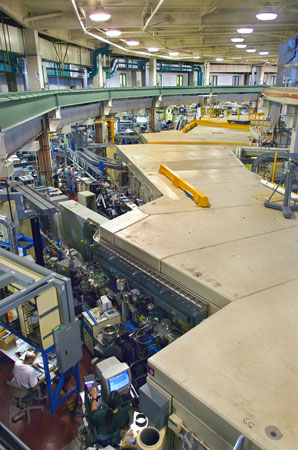
Accelerators and light sources of tomorrow
Strange but true: the recently restarted Large Hadron Collider, the most powerful accelerator in the world, is the direct descendant of Thomas Edison's light bulb. The light bulb was invented before electrons were discovered but nevertheless led to the first vacuum tubes, which for a long time were the principal means of accelerating and controlling charged particles in radios, medical x-rays, and other practical applications.
December 22, 2009 Read more
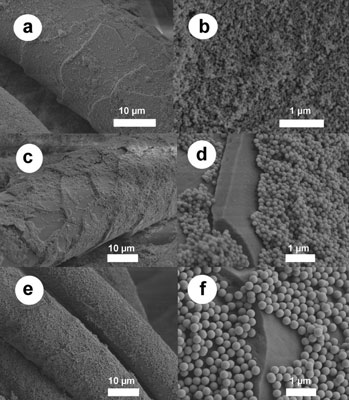
Silica nanoparticle coating makes wool superhydrophilic
Scientists in China are reporting an advance that may improve the natural wonders of wool - already regarded as the 'wonder fabric' for its lightness, softness, warmth even when wet, and other qualities.
December 22, 2009 Read more

Spider web glue spins society toward new biobased adhesives
New findings about spider silk are an advance toward a new generation of biobased adhesives and glues - 'green' glues that replace existing petroleum-based products for a range of uses.
December 22, 2009 Read more
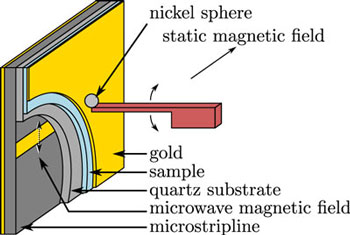
Researchers are on the path to creating nano-MRI images
Scientists at Cornell are devising methods to detect the magnetic fields of individual electrons and atomic nuclei, which they hope to use to make 3-D images - a nanoscale version of magnetic resonance imaging.
December 22, 2009 Read more
 Subscribe to our Nanotechnology News feed