

Nanotechnology News – Latest Headlines
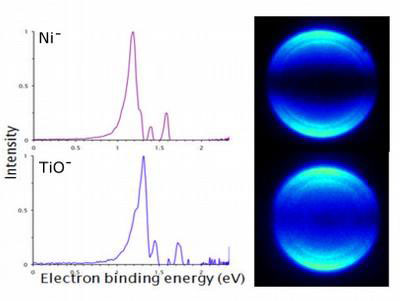
Superatoms mimic elements: Research gives new perspective on periodic table
Transforming lead into gold is an impossible feat, but a similar type of 'alchemy' is not only possible, but cost-effective too. Three Penn State researchers have shown that certain combinations of elemental atoms have electronic signatures that mimic the electronic signatures of other elements.
December 28, 2009 Read more
A 'fountain of youth' for stem cells?
Researchers from the University of Hong Kong and the Massachusetts Institute of Technology have published a study in the current issue of Cell Transplantation that explores ways to successfully keep stem cells 'forever young' during implantation by slowing their growth, differentiation and proliferation.
December 28, 2009 Read more

Chemical and biomolecular engineer Denis Wirtz named Smoot professor
Denis Wirtz, Johns Hopkins University professor of chemical and biomolecular engineering and director of the Engineering in Oncology Center, has been named the Theophilus Halley Smoot Professor in the Whiting School of Engineering.
December 28, 2009 Read more

Microcapsules to combat climate change
Researchers from the Fraunhofer Institute for Solar Energy Systems ISE teamed up with BASF to develop an environmentally-friendly alternative to air-conditioning systems. The team of researchers was nominated for the German Future Prize for their innovation comprising a microencapsulated latent heat storage material for construction materials.
December 26, 2009 Read more
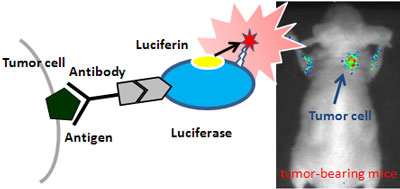
Method to detect cancer cells utilizing the bioluminescence reaction of Cypridina noctiluca
Researchers in Japan have developed a technique to locate cancer cells by synthesizing a near-infrared light-emitting protein and then conjugating it with a therapeutic antibody to produce a probe for cancer cells.
December 25, 2009 Read more
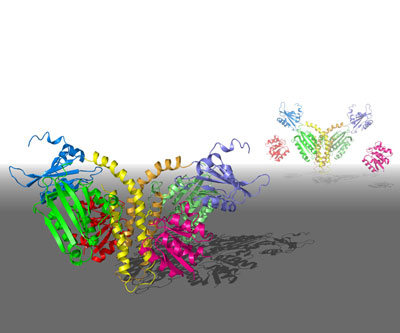
Structural details of an environment-sensing protein complex could guide development of new drugs
Many mysteries remain about TCS signaling mechanisms, partly because the proteins involved are complicated and contain floppy, mobile regions that make structural analysis arduous. Researchers in Japan recently achieved a breakthrough on this front, however, by assembling a high-resolution reconstruction of the ThkA/TrrA TCS complex from Thermotoga maritima.
December 25, 2009 Read more
Splitting fluorescent protein helps image clusters in live cells
Half a protein is better than none, and in this case, it's way better than a whole one. A Rice University lab has discovered that dividing a particular fluorescent protein and using it as a tag is handy for analyzing the workings of live cells, particularly in the way they employ iron-sulfur clusters.
December 25, 2009 Read more
DOE grant funds innovative nanotechnology research at University of Nebraska-Lincoln
Nanoscientists at the University of Nebraska-Lincoln have received a prestigious grant to develop new magnetic materials that could help reduce global warming and the nation's dependence on foreign resources.
December 24, 2009 Read more
TAPPI Announces 2010 International Conference on Nanotechnology for the Forest Products Industry
Finland designated as setting for internationally recognized nanotechnology event in September 2010.
December 23, 2009 Read more
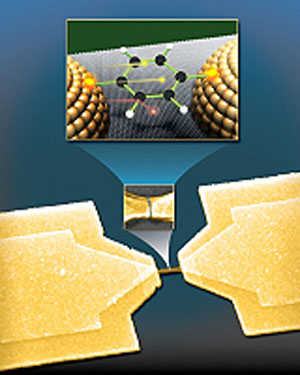
Scientists create the first transistor made from a single molecule
A group of scientists has succeeded in creating the first transistor made from a single molecule.
December 23, 2009 Read more
Novel imaging technique for graphene using the dye fluorescein
It's been used to dye the Chicago River green on St. Patrick's Day. It's been used to find latent blood stains at crime scenes. And now researchers at Northwestern University have used it to examine the thinnest material in the world.
December 23, 2009 Read more
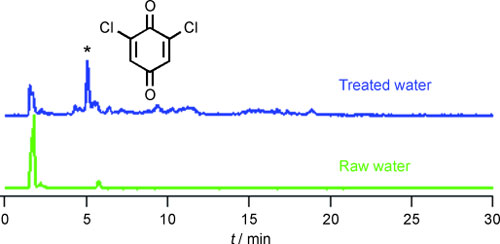
Tracing the traces - nano-concentrations of a toxic compound detected in chlorinated tap water
Scientists at the University of Alberta in Canada have now revealed a chlorination by-product of great interest in tap water: They were able to detect traces of the toxic compound dichloroquinone.
December 23, 2009 Read more
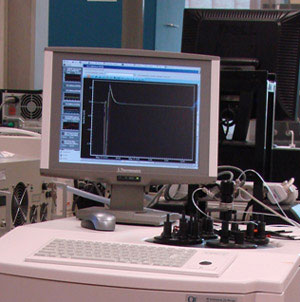
A combination of analytical techniques can trace the real-time progression of simultaneous chemical reactions
Researchers have combined calorimetry with vibrational spectroscopy - a technique that measures how molecules respond to certain light frequencies - to identify real-time heat evolutions during single and multiple chemical processes
December 23, 2009 Read more
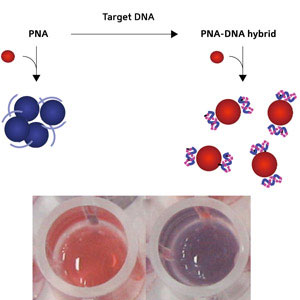
Thanks to nanoparticles, DNA detection by the naked eye is now possible
A sensitive yet uncomplicated method to detect differences in DNA strands using metal nanoparticle solutions has been developed by Roejarek Kanjanawarut and Xiaodi Su at the Institute of Materials Research and Engineering at A*STAR, Singapore.
December 23, 2009 Read more
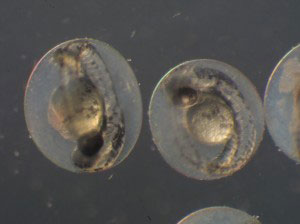
Bioluminescence imaging allows real-time monitoring of cancer spreading through the body
Scientists from A*STAR in Singapore and the USA have developed a fast bioluminescence imaging technique that may greatly assist in the search for drugs that target mobile - or metastatic - cancer cells.
December 23, 2009 Read more
Nano-electromagnets powered by light turn invisibility cloak into a possibility
A team of researchers at the FOM institute AMOLF has succeeded for the first time in powering an energy transfer between nano-electromagnets with the magnetic field of light. This breakthrough is of major importance in the quest for magnetic metamaterials with which light rays can be deflected in every possible direction.
December 23, 2009 Read more
 Subscribe to our Nanotechnology News feed