

Nanotechnology News – Latest Headlines
Organisms produce materials - towards new functional materials
Scientists from the University of Stuttgart are working in a cross-faculty research project to produce oxide ceramics by biological means.
July 22, 2009 Read more
Energy Department grants $2m to study catalytic reactions with high selectivity
Carnegie Mellon University's Andrew J. Gellman will use a $2 million research grant from the Department of Energy to continue developing atomically and molecularly structured surfaces that will have an enormous impact on the efficiency of catalysts used to create products for the specialty chemical and petroleum industries.
July 22, 2009 Read more
Who would ever dream of applying viruses to mining?
A researcher in Canada is enlisting the help of viruses and bacteria in copper mining.
July 22, 2009 Read more
Tracking individual nanoparticles as they make their way into target cells
EU-funded researchers in Germany have succeeded in tracking individual nanoparticles as they make their way into target cells, applying a highly sensitive, real-time microscopic technique that delivers high spatial and temporal resolution.
July 22, 2009 Read more
New silver nanoparticle skin gel for healing burns
Scientists in India are reporting successful laboratory tests of a new and potentially safer alternative to silver-based gels applied to the skin of burn patients to treat infections.
July 22, 2009 Read more
Greener electronics initiative launched by the SOI Industry Consortium
Companies collaborate to exploit semiconductor technology enabling 30% to 40% power reduction for chips and systems.
July 22, 2009 Read more
Nano-Tropfen nahe dem absoluten Nullpunkt
Nano-Teilchen bis nahe an den absoluten Nullpunkt abgekuehlt entwickeln dann eine eigene Wellen-Natur, die Forscher zu quantenphysikalische Versuchen nutzen.
July 22, 2009 Read more
The enigma of signaling in olfaction
Dr Jenny Brookes has been awarded a Sir Henry Wellcome Postdoctoral Fellowship from the Wellcome Trust. She will work to understand the mystery of olfaction at the London Centre for Nanotechnology.
July 22, 2009 Read more
Turn your mobile phone into a fluorescence microscope
Researchers at the University of California, Berkeley, are proving that a camera phone can capture far more than photos of people or pets at play. They have now developed a cell phone microscope, or CellScope, that not only takes color images of malaria parasites, but of tuberculosis bacteria labeled with fluorescent markers.
July 22, 2009 Read more
Developing a successor to flash memory
The race is on for a successor to the popular flash memory used in portable devices. European researchers think they have found a candidate in novel materials combined with a simple, easily fabricated 'crossbar' architecture.
July 21, 2009 Read more
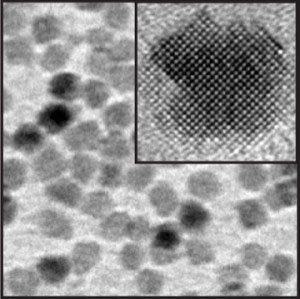
Blue light nanocrystals could play a role in long-term storage of carbon dioxide
Berkeley Lab researchers have produced non-toxic magnesium oxide nanocrystals that efficiently emit blue light and could also play a role in long-term storage of carbon dioxide, a potential means of tempering the effects of global warming.
July 21, 2009 Read more
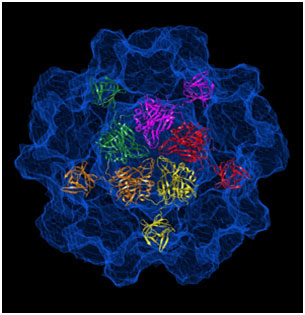
Fighting disease atom by atom
Rice lab's atomic map of hepatitis E may reveal strategies to fight it.
July 21, 2009 Read more
Better water purification possible by substituting a single atom in a molecule
By substituting a single atom in a molecule widely used to purify water, researchers at Sandia National Laboratories have created a far more effective decontaminant with a shelf life superior to products currently on the market.
July 21, 2009 Read more

$10 million grant to study enzyme motion in sub-milliseconds
The National Institutes of Health has awarded Albert Einstein College of Medicine of Yeshiva University a five-year, $10 million grant to study how the motion of atoms on both extremely small and long time scales contribute to enzyme function.
July 21, 2009 Read more
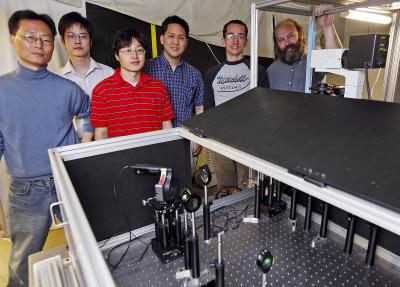
New approach to biomedical imaging with magnetically responsive gold nanostars
The nanostars gyrate when exposed to a rotating magnetic field and can scatter light to produce a pulsating or 'twinkling' effect. This twinkling allows them to stand out more clearly from noisy backgrounds like those found in biological tissue
July 21, 2009 Read more
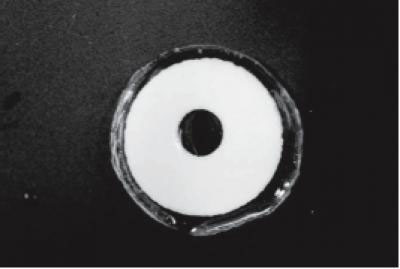
Contact lens gradually dispenses medication to the eye
Sustained-release could ease treatment of glaucoma and other conditions.
July 21, 2009 Read more
 Subscribe to our Nanotechnology News feed