

Nanotechnology News – Latest Headlines
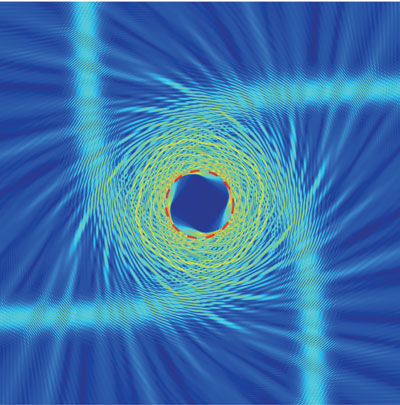
Artificial optical material might allow the study of the effects of general relativity in the lab
Even Albert Einstein might have been impressed. His theory of general relativity, which describes how the gravity of a massive object, such as a star, can curve space and time, has been successfully used to predict such astronomical observations as the bending of starlight by the sun, small shifts in the orbit of the planet Mercury and the phenomenon known as gravitational lensing. Now, however, it may soon be possible to study the effects of general relativity in bench-top laboratory experiments.
July 20, 2009 Read more
Holographic video allows 3-D movies of biomolecules
Physicists at New York University have developed a technique to record three-dimensional movies of microscopic systems, such as biological molecules, through holographic video. The work has potential to improve medical diagnostics and drug discovery.
July 20, 2009 Read more
Nanotechnology and the environment: A mismatch between claims and reality
Two international coalitions of NGOs, the European Environmental Bureau and the International POPs Elimination Network (IPEN) Nanotechnology Working Group, have challenged industry claims about the potential environmental benefits provided by nanotechnology products.
July 20, 2009 Read more
Elsevier announces the "Article of the Future"
Elsevier today announces the 'Article of the Future' project, an ongoing collaboration with the scientific community to redefine how a scientific article is presented online. The project takes full advantage of online capabilities, allowing readers individualized entry points and routes through content, while exploiting the latest advances in visualization techniques.
July 20, 2009 Read more
On-demand webcast with overview of ultracapacitors
Enable IPC Corporation today released an on-demand webcast designed as a brief introductory overview of ultracapacitors.
July 20, 2009 Read more
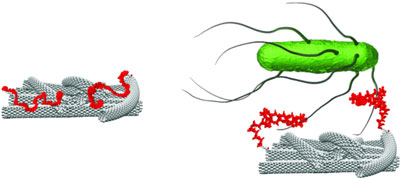
CNT-aptamer biosensor detects extremely low bacteria concentrations quickly, easily, and reliably
A Spanish research team has developed a novel biosensor with which they have been able to detect extremely low concentrations of the typhus-inducing Salmonella typhi.
July 20, 2009 Read more
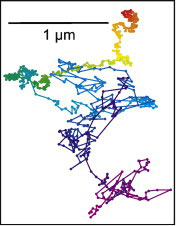
Microscope shows how nanoparticle cargo carriers invade cells
In future therapies, synthetic nanoparticles may well be able to ferry medicines and even genes to targets inside the body. These nanovehicles can now be directly tested and optimized using a highly sensitive microscopic method that can trace single particles all the way into a cell.
July 20, 2009 Read more
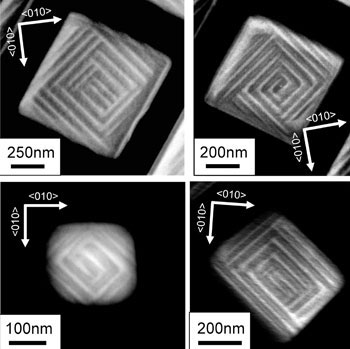
Scientists directly observe formation of nanodot domain state
British and German scientists claim they have directly observed how domain states form in nanometre-scale ferroelectric crystals for the first time.
July 20, 2009 Read more
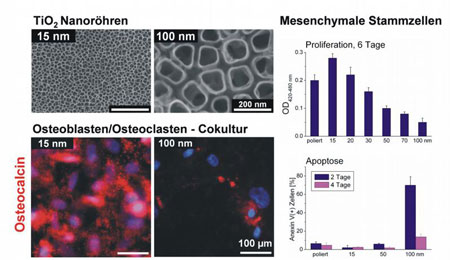
Zellen reagieren auf Nanostrukturen
Unterschiede im Bereich von einigen tausendstel Mikrometern bei einer Oberflaechenbeschichtung koennen darueber entscheiden, ob Implantate sich ihrer organischen Umgebung mehr oder weniger gut anpassen.
July 20, 2009 Read more
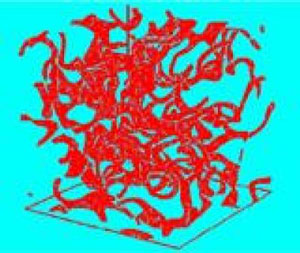
New results make it easier to characterize quantum turbulence
Scientists in Brazil report the controllable formation of quantum turbulence in an ultra-cold atom gas. The results may make it easier to characterize quantum turbulence
July 20, 2009 Read more
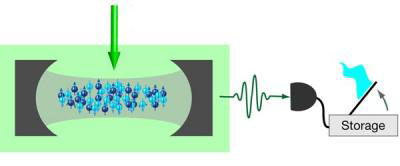
Key step towards a prototype for designing a quantum internet
Scientists at MIT have figured out a key step toward the design of quantum information networks.
July 20, 2009 Read more
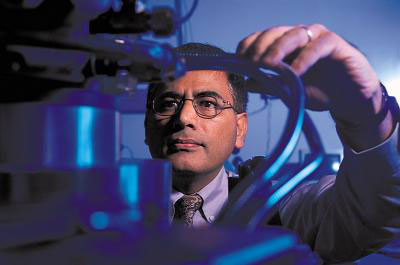
Funding expands research into nanostructured coatings for joint replacements
Newly announced National Institutes of Health (NIH) funding will expand the reach of ongoing University of Alabama at Birmingham research into a unique nanostructured coating to improve the performance and longevity of total joint replacement components.
July 19, 2009 Read more
New $14m research and product development centre for nanotechnology for Canada
Canada's National Institute for Nanotechnology will soon be home to a new electron microscopy research and product development center.
July 17, 2009 Read more
Researchers engineer first artificial graphene
The first artificial graphene has been created at the NEST laboratory of the Italian Institute for the Physics of Matter in Pisa. It is sculpted on the surface of a gallium-arsenide semiconductor, to which it grants the extraordinary properties of the original graphene.
July 17, 2009 Read more
Key European Nano2012 program will build on European leadership in CMOS platforms
Participating organizations celebrate the formal launch of the Nano2012 Research and Development program in France.
July 17, 2009 Read more
Iberia invests big in nanotechnology center
The leaders of Portugal and Spain on Friday opened a joint research center for nanotechnology that they hope will become one of the world's leading laboratories.
July 17, 2009 Read more
 Subscribe to our Nanotechnology News feed