

Nanotechnology Spotlight – Latest Articles
 Subscribe to our Nanotechnology Spotlight feed
Showing Spotlights 1833 - 1840 of 3579 in category All (newest first):

Snail-inspired nanosensor detects and maps mRNA in living cells
Presently, several techniques for detecting mRNAs are available,which include in situ hybridization and polymerase chain reaction. However, these single-point and end-point techniques require the killing of the cells and are thus unable to capture the expression of mRNA in real time and locality with high precision. In new work, scientists describe a new way of preparing functional DNA nanostructures that can provide accurate quantification and visualization of mRNA transcripts in living cells.
May 6, 2015
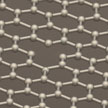
Improving the energy storage in graphene with defects
Counter intuitive to our idea of 'perfection equals best performance', researchers have shown that defects in nanocarbons could provide a breakthrough for increasing the quantum capacitance. By subjecting graphene layers to a reactive-ion etching process, the team has poked holes into graphene to create holey graphene, which can change the microscopic distribution of electrons and thereby increase the quantum capacitance of graphene by at least fourfold.
May 5, 2015

Design of ultra-strong and ultra-pure red upconversion materials for biomedical applications
Upconversion luminesce materials are promising for widespread application ranging from optical devices to biodetection and cancer therapy, the near-infrared light excited upconversion materials are attracting much research attention. Researchers have achieved an ultra-strong and ultra-pure red upconversion in erbium and ytterbium co-doped lutetium oxyfluorides through size and morphology control. These nanoparticles, with extremely strong and pure upconversion are promising candidates as novel luminescent reagents for high-contrast bio-imaging and bio-labeling.
May 4, 2015
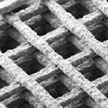
3D-printed graphene for electronic and biomedical applications
From a 3D printing perspective, graphene has been previously incorporated into 3D printed materials, but most of these constructs comprise no greater than about 20 volume % of the total solid of the composite, resulting in electrical properties that are significantly less than what has been achieced in new work. Here, researchers show that high volume fraction graphene composite constructs can be formed from an easily extrudable liquid ink into multi-centimeter scaled objects.
April 28, 2015
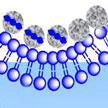
Novel material design principle for both tissue engineering and gene delivery by nanocomposites
Biomineralization is the formation of inorganic materials in a biological environment, as it is found in bones, teeth and shells. Certain biominerals are also often associated with pathogeneses of tissues. The correlation of the composition of biominerals with pathogeneses of tissues has not been investigated systematically. In new work, researchers examine how the composition of biominerals correlates with the production of inflammatory cytokines associated with the stimulation of intracellular DNA sensors and by biominerals themselves.
April 22, 2015
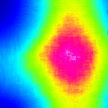
Real-time tunable plasmon laser
Plasmon lasers are promising nanoscale coherent sources of optical fields because they support ultra-small sizes and show ultra-fast dynamics. They can make possible single-molecule biodetectors, photonic circuits and high-speed optical communication systems. In new work, researchers have found a way to integrate liquid gain materials with gold nanoparticle arrays to achieve nanoscale plasmon lasing that can be tuned dynamical, reversibly, and in real time.
April 21, 2015
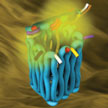
Fuzzy and Boolean logic gates based on DNA nanotechnology
Research related to molecular logic gates is a fast growing and very active area and molecular devices have become the new frontier in computing. Researchers now have designed and synthesized self-assembled DNA complexes that sense two environmental signals and produce a fluorescent outputs corresponding to the operation of all six Boolean logic gates AND, NAND, OR, NOR, XOR, and XNOR. This study could help improvements in the fields of molecular computation and intelligent drug delivery.
April 20, 2015
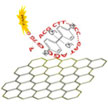
A nanotechnology sensor for one-step detection of Bishpenol A
While the actual toxicity of Bisphenol A (BPA) is still debated, the direct measurement of BPA is difficult because of the weak response given by conventional electrochemical sensors, and current optical analysis methods are susceptible to the influence of interfering substances. A novel aptamer/graphene oxide FRET biosensor now provides a method for the rapid detection and risk assessment of BPA with high sensitivity and selectivity.
April 13, 2015