

Nanotechnology Spotlight – Latest Articles
 Subscribe to our Nanotechnology Spotlight feed
Showing Spotlights 1865 - 1872 of 3579 in category All (newest first):

Elemental 2D analogues of graphene: silicene, germanene, stanene, phosphorene
A comprehensive analysis of the fundamental properties, synthesis approaches and the future prospects of silicene, germanene, stanene, and phosphorene. It covers the literature on the fundamental properties of graphene analogous elemental sheets, inclusive of both theoretical and experimental knowledge. Various bottom-up synthesis techniques and top-down exfoliation approaches for the fabrication of two-dimensional elemental sheets are discussed.
January 21, 2015
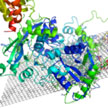
Biodegradable graphene can radio-thermally ablate radiation and chemo resistant cancer cells
Researchers have developed a simple method to thermally ablate highly resistant cancer cells using targeted biodegradable graphene nanoparticles. They found that graphene can convert non-ionizing radio waves - the same that are used in FM radios - into heat energy at microscopic levels. This heat is sufficient to completely destroy proteins and DNA inside individual cancer cells, irrespective of any kinds of resistant mechanisms that drives cancer cells at advanced stages.
January 16, 2015

First demonstration of micromotor operation and payload release in living organism (w/video)
New findings address the challenges of operating synthetic motors in living organisms through the use of biocompatible motors that are powered by body fluid (acidic stomach environment). As the zinc body of the motor is dissolved by the acid fuel, the motors are self-destroyed, leaving no harmful chemicals behind. The study reports on the distribution, retention, cargo delivery and toxicity profile of zinc/polymer-based microrockets in a mouse stomach.
January 15, 2015

Novel mono-elemental semiconductors: arsenene and antimonene join 2D family
Researchers have identified novel 2D wide-band-gap semiconductors with high stabilities, namely monolayer arsenene and antimonene. These materials are indirect wide-band-gap semiconductors, and under strain, they become direct band-gap semiconductors. For arsenene and antimonene, such dramatic transitions of electronic properties could open a new door for nanoscale transistors with high on/off ratio, blue/UV optoelectronic devices, and nanomechanical sensors based on new ultrathin semiconductors.
January 14, 2015

Liquid crystalline polymer dispersed liquid crystals
Polymer Dispersed Liquid Crystals (PDLCs) are micrometer-sized birefringent Liquid Crystal domains dispersed in an optically transparent continuous polymer matrix. The peculiarity of a PDLC system is that of scattering different amounts of an impinging light beam intensity, depending on the strength of an external electric field that is, eventually, applied to the system. A new generation of polymer-dispersed liquid crystals is based on a room temperature, polymerizable, nematic LC host.
January 13, 2015

Nanopore sensor for botulinum toxin detection
Botulinum neurotoxins (BoNTs) are the most poisonous substances known to humans, with a median lethal dose (LD50) of 1ng per kg of body weight and are the cause of the life-threatening neuroparalytic illness botulism. Recent assays are very promising for practical use, they require expensive and technically complex equipment. Meeting a need for further development of assays for detection of BoNTs, researchers now have developed a nanopore-based assay for detection of BoNT-B.
January 12, 2015

A one-pot strategy for synthesizing high-performance transparent conducting oxide nanocrystal inks
Researchers have now developed a simple high-throughput, one-pot procedure to prepare a series of nanocrystal inks that makes it a very attractive fabrication process for applications in a wide range of all-solution-processed, flexible, stretchable, and wearable optoelectronic devices. The proposed approach, which can easily be scaled up to 10g, is generic for various transparent conducting oxides as well as other oxides nanocrystal inks.
January 9, 2015

A risk-ranking tool for nanomaterials used by the military
Military organizations around the world, especially in the U.S., have been quicker than most to appreciate the potential of nanotechnology. More money is being spent on nanotechnology research for military applications than for any other area. Public releases about military nanotechnology research and development activities are full about sensors, batteries, wound care, filtration systems, smart fabrics, and lighter, stronger, heat-resistant nanocomposite materials etc. Naturally, nanomaterial safety has become an important issue for military organizations as well.
January 6, 2015