

Nanotechnology Spotlight – Latest Articles
 Subscribe to our Nanotechnology Spotlight feed
Showing Spotlights 2417 - 2424 of 3575 in category All (newest first):

Conflicting risk data complicates the use of carbon nanotubes as neural interfaces
There is a growing body of research on using carbon nanotubes (CNTs) and other nanomaterials in neural engineering. Scientists are already exploring the feasibility of using CNTs to probe neural activity. With this research comes the need to develop a unified approach when assessing the toxicity of CNT in neurons. However, a complex picture emerges from the reported data: is it feasible to develop CNT-based devices as drug delivery vectors? Ultimately, are soluble CNT neurotoxic, and, if yes, to what degree? Given the often conflicting results of research reports on the biocompatibility of soluble CNT when administered to neurons in the central nervous system, a review article helps to clarify which aspects (technical or methodological) of these studies may be responsible for their heterogeneous conclusions.
July 14, 2011

Fabrication of magnetic noble metal nanoparticles made simple
For more than 5000 years, noble metals have been known to be impervious to magnetic fields. Significant scientific breakthroughs in the recent past have led to making either 13 atoms clusters of platinum or organic molecule capped noble metal nanoparticles magnetic. By carefully controlling the size, shape, and composition of noble metals - especially in confined nanoscale systems - their properties can be modified, potentially leading to significantly advanced nanomaterial-based applications such as catalysis, self-assembly, novel metamaterials, improved MRI research, and spintronics. Now, researchers have developed simple method to make nano- and macro-particles of noble metals magnetic.
July 12, 2011

Superstrong carbon nanotubes are an effective storage medium for mechanical energy
Energy generation and storage is an important issue at the nanoscale. For tiny devices such as nano- and micro-electromechanical systems, autonomous power sources are crucial for practical applications. Progress is being made in designing and fabricating nanoscale power generators. But, as with the large, macroscale systems of future smart grids, there might be times when powered nanodevices need to bridge a slump in power generation/harvesting or they might be designed to run on stored energy altogether for a limited period of time. Researchers in China are now proposing that the high energy density and power density of carbon nanotubes makes them promising materials for the storage of mechanical energy. The team provides a structural model towards mechanical energy storage for nanodevices and also demonstrates a method to characterize and manipulate ultralong CNTs.
July 11, 2011

A pinch of silver and copper: metal combinations give biomedical silicone strong nano-properties
Silicone elastomers are widely used for biomedical applications and products. One major challenge for biomedical applications is to control the ingrowth of silicone-based implants and to avoid bacterial infections on device surfaces. The use of ions from metals like silver and copper is a promising, long-lasting method to achieve such bioactive effects. Researchers have now found a novel effect caused by a combination of copper and silver nanoparticles in silicone. By fabricating bioactive nanocomposite materials that release these ions in specific concentration levels and during a long time, manufacturers can control the bioactive effects of their medical devices or implants.
July 8, 2011

New study reveals molecular mechanism of carbon nanotubes' role in arterial thrombosis
Blood platelets are the structural and chemical foundation of blood clotting and they play a vital role in minor injuries when coagulation prevents the loss of blood at the injury site. If the proper function of these platelets gets disturbed, blood clotting can lead to thrombosis, which is a leading cause of death and disability in the developed world. In view of the rapid development of nanotechnology, the impact of the newly engineered nanomaterials as an additional thrombosis risk factor is not yet known but should not be underestimated. In fact, it has been reported that carbon nanotubes induce platelet aggregation and potentiate arterial thrombosis in animal model. However, a mechanism of thrombogenic effects of carbon nanotubes was not known. Researchers have now shown that show the molecular mechanism of carbon nanotubes' induced platelets activation.
July 7, 2011

Single-molecule nanomagnets enable novel graphene spintronics devices
The field of single-molecule magnets is very promising, since an individual magnetic molecule represent the ultimate size limit to store and processing information. Magnetic molecules are considered very promising for spintronics since they can store a bit of information in an extremely small volume. However, in order to make magnetic molecules work, one has to find a way to measure their magnetization. Usual approaches are often very invasive and may lead to a strong perturbation of the properties of the molecules. A European research team has now designed and realized a novel hybrid spintronic nanodevice where the state of the molecule is measured 'indirectly', through a sensor coupled with the molecule.
July 5, 2011

Patent analysis and product survey on use of nanomaterials in lithium-ion batteries
The efforts undertaken in developing renewable energy sources to reduce our dependence on fossil fuels include major research and investment in advanced electricity storage technologies. Among the various existing technologies, lithium batteries are considered as the most competitive power source because of their high energy density, superior power capability, design flexibility and longer lifespan. This article provides an overview of the current patent landscape of rechargeable Li-ion battery, with a focus on the recent developments on nanomaterials and nanotechnologies used for anode, cathode, and electrolyte materials, and the impact of nanomaterials on the performance of rechargeable lithium batteries. Effort has also been taken to identify key players, emerging trends and applications in this area.
July 1, 2011
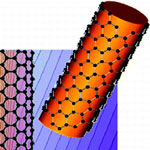
A single layer of graphene is the thinnest possible invisibility cloak
There has been tremendous interest in cloaking technology using metamaterials and there are two exciting possibilities to obtain drastic scattering reduction from moderately-sized objects. One is the concept of plasmonic cloaking, which is based on the use of a thin metamaterial cover to suppress the scattering from a passive object. The second one is the concept of mantle cloaking, which is based on a simple impedance surface to achieve similar effects. Now, new research shows that even a single layer of atoms, with the exciting conductivity properties of graphene, may achieve similar functionality in planar and cylindrical geometries. Once realized, this concept represents the 'thinnest' possible cloak, operating in the THz spectrum.
June 30, 2011