

Nanotechnology Spotlight – Latest Articles
 Subscribe to our Nanotechnology Spotlight feed
Showing Spotlights 2745 - 2752 of 3574 in category All (newest first):
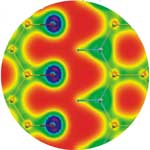
Protein-inspired graphene design bridges nano- to macroscale
Nanostructures present novel material properties and interesting insight into new physical phenomena. However, from a technical and commercial application point of view, a successful bridging between the nanoscale specific significance with large-scale applications must be made to obtain these benefits. One of the 'hottest' nanomaterials at the moment is graphene, a one-atom thick sheet of carbon. Ribbons made from graphene, basically stripes that look like molecular chicken wire, show even more unconventional properties than graphene, especially when they are less than 100 nm wide. Any material approach to use graphene nanoribbons for larger-scale applications must be able to assemble them into macroscopic materials, while preserving their physical significance and novel properties at these larger scales. Researchers at MIT have addressed this issue by proposing hierarchical assemblies of graphene nanoribbons through hydrogen bonds, inspired by biological structures found in nature such as proteins and DNA macromolecules.
October 2, 2009
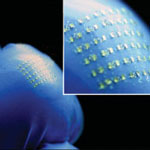
Nanotechnology electronics at the tip of your gloved finger
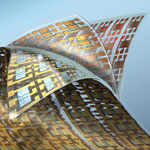
Imagine this: Chip-based credit cards and other smart cards on paper; intelligent sensors and electronics on doctors' surgical gloves; health monitors printed on T-shirts; diagnostic devices embedded in your baby's diapers; human machine interfaces on workers' leather gloves. These are just some of the systems that researchers envision today and that will become reality tomorrow thanks to research teams like John Rogers' group at the University of Illinois. Nanotechnology-enabled electronics of the future will be invisible, i.e. transparent, or flexible, or both. One of the areas Rogers' group focus on is creating materials and processes that will allow high-performance electronics that are flexible and stretchable. The group has now demonstrated examples of CMOS circuits on paper, fabric, leather and vinyl.
October 1, 2009
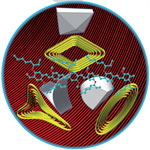
Nanotechnology fabrication with 'coffee rings'
To date, a number of nanotechnology fabrication studies have focused on creating hierarchically ordered nanostructures using lithographic techniques. However, lithographic methods involve high processing and maintenance costs, and require an iterative, multi-step procedure that makes the structure formation process more complex and less reliable. By contrast, a novel nanofabrication method is fast and cost-effective, dispensing with the need for multistage lithography and externally applied fields. This new technique needs only a drop of diblock polymer solution, a curved upper surface and a flat silicon substrate, and a selective solvent. This is the first study of creating hierarchically ordered nanostructures composed of block copolymers with unprecedented regularity by controlled evaporative self-assembly.
September 30, 2009
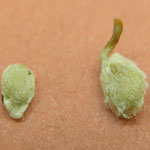
Nanotechnology dramatically affects plant growth
To what degree nanoparticles are uptaken by plants and what their effect is on plant development is an important issue in determining the environmental impact of nanomaterials. Previously we have covered several research projects that have begun to explore nanotechnology's impact on major food crops and some of them have demonstrated quite a negative impact. But some research results also show a possible positive effect, like a recent study that demonstrates that carbon nanotubes (CNTs) can dramatically accelerate the germination and growth of tomato seeds. Work like this contributes to an important body of interdisciplinary research where nanotechnology, plant biology and biotechnology converge to open new perspectives for solving some of the important challenges of our times such as increased food and biofuel production.
September 29, 2009
Nano-Society - Pushing the boundaries of technology
Here is the book you all have been waiting for: Nano-Society - Pushing the boundaries of technology. Written by Nanowerk's Michael Berger, this book puts a spotlight on some of the scientists who are pushing the boundaries of technology and it gives examples of their work and how they are advancing knowledge one little step at a time. Nano-Society is the latest addition to RSC Publishing's Nanoscience and Nanotechnology series. Edited by Sir Harry Kroto, Paul O'Brien, and Harold Craighead, the series provides a comprehensive source of information on research associated with nanostructured materials and miniaturized lab-on-a-chip technologies. The book covers 122 very specific research projects that are happening in laboratories around the world and provides commentaries from the scientists in their own words.
September 28, 2009

Preparing for life after oil - top research in the desert
Sand. Shrubs. Burst tires. More sand. The last thing you would expect as you drive along the Red Sea near Mecca is to encounter an ultramodern science city. Yet there it is. Appearing after an 80 kilometer drive from Jeddah, Saudi Arabia's second-largest city, the 36 square kilometer campus of King Abdullah University for Science and Technology (KAUST) appears like a Fata Morgana out of the desert sand. Yesterday, September 23rd, King Abdullah of Saudi Arabia officially opened the country's most modern and ambitious university near the old fishing village of Thuwal. Nanowerk was invited to attend the spectacular opening ceremony. Much more than a future elite university, the vision behind KAUST is to create the nucleus of a modern society, free from the strict religious dictates of a conservative Islamic culture, and laying the foundation for a science and technology based society of future generations.
September 24, 2009
Cell surface engineering with DNA nanotechnology
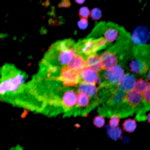
Bionanotechnology researchers are experimenting with techniques for attaching DNA nanoarrays to cell surfaces for various reasons: to label cell surfaces with functionalized micrometer-sized patches; to deliver materials such as nanoparticles or carbon nanotubes to cell surfaces; to deliver nucleic acids into the cell for gene silencing; or to engineer microtissues of cell/cell networks by using self-hybridizing properties of single stranded DNA molecules. A team of scientists in California has now successfully attached self-assembled DNA structures to cancer cells using two different methods. This is one of the first illustrations of the biomedical relevance of DNA arrays.
September 22, 2009
Next generation nanotechnology data storage with room temperature AFM lithography
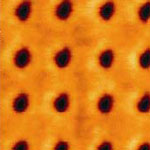
In developing next generation data storage devices, researchers are employing a variety of nanotechnology fabrication and patterning techniques such as electron-beam lithography, photolithography, microcontact printing, nanoimprinting and scanning probe microscope-based lithography. A decade ago, IBM for instance introduced the Millipede Project, a thermomechanical AFM-based nanopatterning technique that was aimed at data storage systems. While this system required an AFM tip heated to 350 degrees centigrade, researchers in Korea have now demonstrated that the writing, reading, and erasure of nanoscopic indentations on a polymeric film can be achieved by using an AFM tip at room temperature - no heating required.
September 18, 2009