

Biotechnology News – Latest Headlines
 Subscribe to our Biotechnology News feed
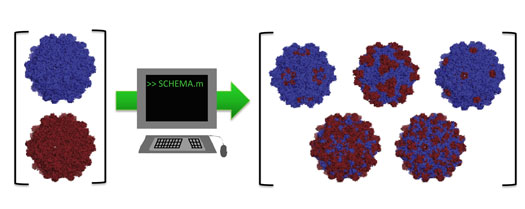
Researchers write rules for gene-therapy vectors
Researchers are making strides toward a set of rules to custom-design Lego-like viral capsid proteins for gene therapy.
August 12, 2013 Read more
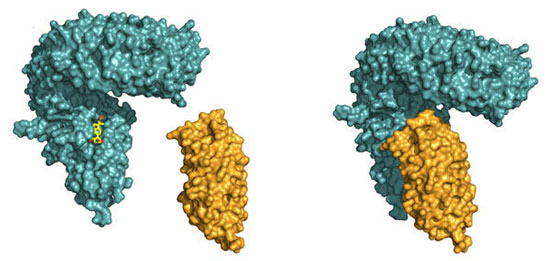
Atomic insights into plant growth
Researchers resolve how a plant steroid hormone makes plants grow.
August 8, 2013 Read more
Scientific breakthrough reveals how vitamin B12 is made
A scientific breakthrough by researchers at the University of Kent has revealed how vitamin B12/antipernicious anaemia factor is made - a challenge often referred to as 'the Mount Everest of biosynthetic problems'.
August 8, 2013 Read more
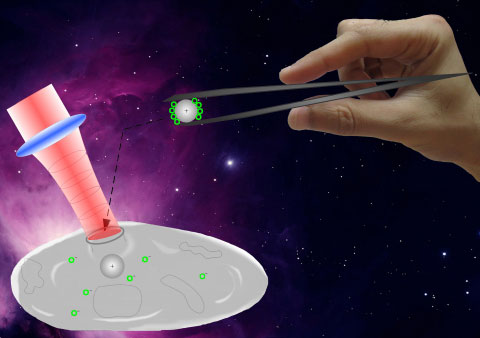
New high-tech laser method allows DNA to be inserted 'gently' into living cells
The method combines two high-tech laboratory techniques and allows the researchers to precisely poke holes on the surface of a single cell with a high-powered femtosecond laser and then gently tug a piece of DNA through it using optical tweezers, which draw on the electromagnetic field of another laser.
August 8, 2013 Read more
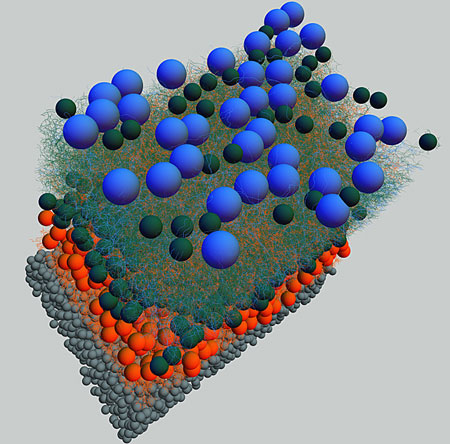
Making connections in the eye
Wiring diagram of retinal neurons is first step toward mapping the human brain.
August 7, 2013 Read more

Super sunscreen from fjord bacteria
A microorganism living in Trondheim Fjord will provide you with better protection against skin cancer and malignant melanomas.
August 6, 2013 Read more
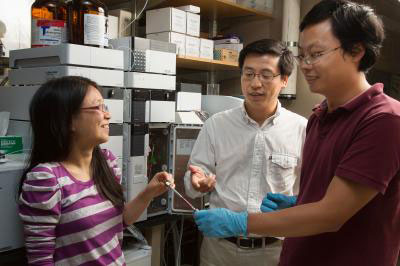
Scientists add new bond to protein engineering toolbox
By adding covalent bonds to proteins, researchers can design new drugs, imaging agents, or molecules that aid basic research.
August 5, 2013 Read more
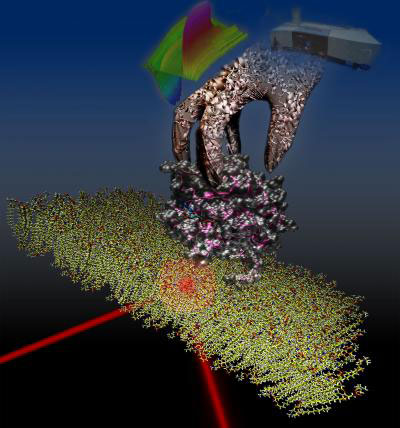
Proteins hoist the anchor
Researchers have for the first time successfully reproduced the recycling process of proteins regulating cellular transport in a biophysical experiment.
August 5, 2013 Read more
World's first lab-grown beef burger tasted in London today
Scientists on Monday unveiled the world's first lab-grown beef burger, serving it up to volunteers in London in what they hope is the start of a food revolution.
August 5, 2013 Read more
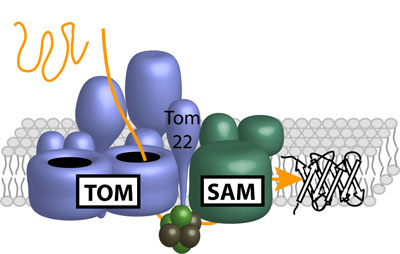
Protein team produces molecular barrels
Researchers show that two protein machineries collaborate on the development of barrel structures in the mitochondria.
August 5, 2013 Read more
Mechanism that allows bacteria to infect plants may inspire cure for eye disease
By borrowing a tool from bacteria that infect plants, scientists have developed a new approach to eliminate mutated DNA inside mitochondria - the energy factories within cells. Doctors might someday use the approach to treat a variety of mitochondrial diseases, including the degenerative eye disease Leber hereditary optic neuropathy.
August 4, 2013 Read more
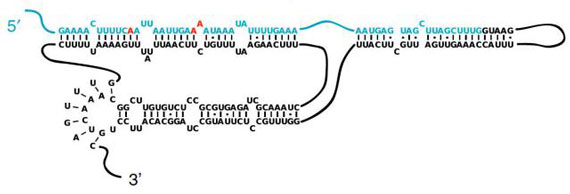
Fly study finds 2 new drivers of RNA editing
A new study finds that RNA editing is not only regulated by sequences and structures near the editing sites but also by ones found much farther away. One newly discovered structure gives an editing enzyme an alternate docking site. The other appears to throttle competing splicing activity.
August 1, 2013 Read more
Cells reprogrammed on the computer
Scientists have developed a model that makes predictions from which differentiated cells - for instance skin cells - can be very efficiently changed into completely different cell types - such as nerve cells, for example. This can be done entirely without stem cells.
July 31, 2013 Read more
Microfluidic breakthrough in biotechnology
Chemical flasks and inconvenient chemostats for cultivation of bacteria are likely soon to be discarded. Researchers from the Institute of Physical Chemistry of the Polish Academy of Sciences in Warsaw were first to construct a microfluidic system allowing for merging, transporting and splitting of microdroplets.
July 31, 2013 Read more
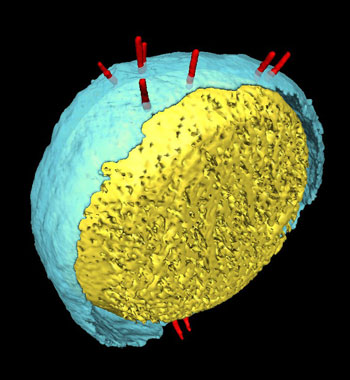
3D molecular syringes
Abdominal pain, fever, diarrhoea - these symptoms could point to an infection with the bacterium Yersinia. The bacterium's pathogenic potential is based on a syringe-like injection apparatus called injectisome. For the first time, researchers have unraveled this molecular syringe's spatial conformation.
July 31, 2013 Read more
Reprogramming patients' cells offers powerful new tool for studying, treating blood diseases
First produced only in the past decade, human induced pluripotent stem cells (iPSCs) are capable of developing into many or even all human cell types. In new research, scientists reprogrammed skin cells from patients with rare blood disorders into iPSCs, highlighting the great promise of these cells in advancing understanding of those challenging diseases - and eventually in treating them.
July 30, 2013 Read more
Tooth generated from stem cells
Chinese scientists have successfully grown tooth-like structures from induced pluripotent stem cells (iPS cells), the Chinese Academy of Sciences (CAS) said.
July 30, 2013 Read more
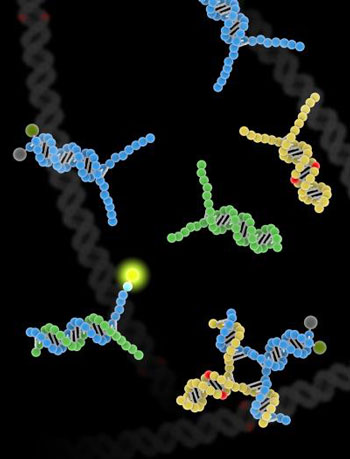
Breakthrough in detecting DNA mutations could help treat tuberculosis, cancer
Researchers have developed a new method that can look at a specific segment of DNA and pinpoint a single mutation, which could help diagnose and treat diseases such as cancer and tuberculosis. These small changes can be the root of a disease or the reason some infectious diseases resist certain antibiotics.
July 28, 2013 Read more