

Nanotechnology News – Latest Headlines
The (nano)grass is greener: Porous silicon nanoneedles for your health
A newly discovered nanomaterial could improve healthcare devices by increasing energy storage, help realize implantable microchips or make better drugs.
August 2, 2010 Read more
New catalyst of platinum nanoparticles could lead to conk-out free, stable fuel cells
In the quest for efficient, cost-effective and commercially viable fuel cells, scientists at Cornell University's Energy Materials Center have discovered a catalyst and catalyst-support combination that could make fuel cells more stable, conk-out free, inexpensive and more resistant to carbon monoxide poisoning.
August 2, 2010 Read more
BMBF stellt 2,5 Millionen Euro zur Risikobewertung von eingeatmeten Kohlenstoff-Nanopartikeln bereit
BMBF foerdert Marburger Verbundprojekt zur Nanoforschung an der Klinik fuer Pneumologie.
August 2, 2010 Read more
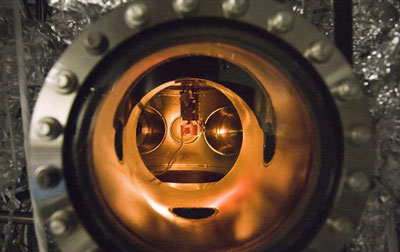
New solar energy conversion process could revamp solar power production
A new process that simultaneously combines the light and heat of solar radiation to generate electricity could offer more than double the efficiency of existing solar cell technology. The process, called 'photon enhanced thermionic emission', or PETE, could reduce the costs of solar energy production enough for it to compete with oil as an energy source.
August 2, 2010 Read more
Novel bee venom derivative forms a nanoparticle 'smart bomb' to target cancer cells
New research shows that a peptide derived from bee venom can deliver liposomes bearing drugs or diagnostic dyes to specific cells or tissues.
August 2, 2010 Read more
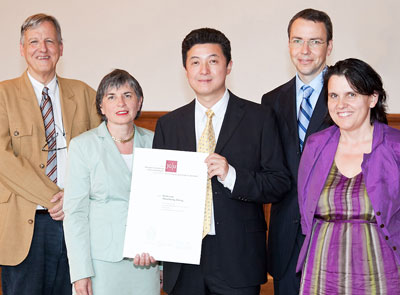
Journey to new worlds: Electronics of the future and quantum computers
The Graduate School of Excellence 'Materials Science in Mainz' of Johannes Gutenberg University Mainz, Germany, honored Professor Shoucheng Zhang of Stanford University, California, USA, with the 2010 Gutenberg Research Award.
August 2, 2010 Read more
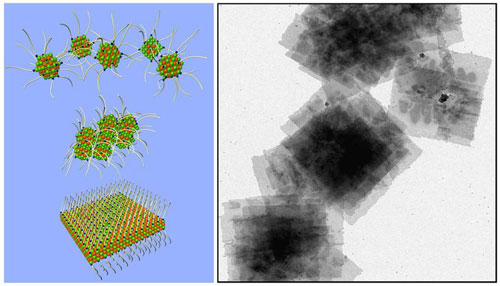
Zweidimensionale Nanostrukturen durch Selbstorganisation
Einer internationalen Forschungsgruppe ist erstmals die Herstellung von Nanokristallen gelungen, die durch Selbstorganisation zu leitfaehigen zweidimensionalen Nanostrukturen zusammenfinden.
August 2, 2010 Read more
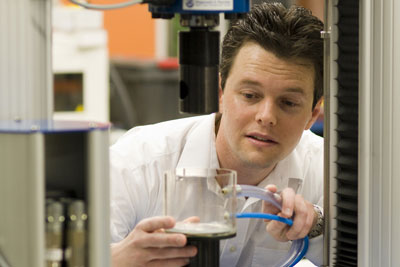
Hydrogen causes metal to break
Hydrogen is considered the fuel of the future. Yet this lightest of the chemical elements can embrittle the metals used in vehicle engineering. The result: components suddenly malfunction and break. A new special laboratory is aiding researchers' search for hydrogen-compatible metals.
August 2, 2010 Read more
Scientists find gas pedal - and brake - for uncontrolled cell growth
Researchers at the University of California, San Diego School of Medicine have identified a new way to regulate the uncontrolled growth of blood vessels, a major problem in a broad range of diseases and conditions.
August 2, 2010 Read more
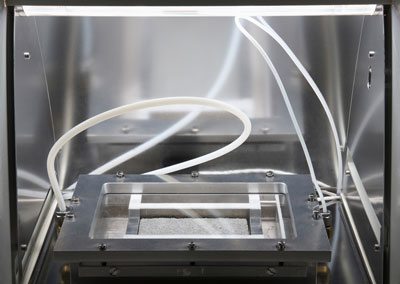
Nanoparticle-coated pavement that cleans the air
The concentrations of toxic nitrogen oxide that are present in German cities regularly exceed the maximum permitted levels. That's now about to change, as innovative paving slabs that will help protect the environment are being introduced. Coated in titanium dioxide nanoparticles, they reduce the amount of nitrogen oxide in the air.
August 2, 2010 Read more
The future of microtechnology is green in Japan, too
The third German-Japanese Micro/Nano Business Forum at the Exhibition Micromachine last Thursday in Tokyo attracted more than 300 Japanese industry representatives.
August 2, 2010 Read more
Internationale Kooperation fuer die Nanosysteme der Zukunft
Das Internationale Graduiertenkolleg 'Materialien und Konzepte fuer fortschrittliche Metallisierungssysteme' geht in die zweite Runde.
August 2, 2010 Read more
'Water from Neptun' soon in laboratories
The conditions experienced by water molecules on Neptune might be simulated in 2015.
August 2, 2010 Read more
International Conference on Bioengineering and Nanotechnology to boost interdisciplinary research
Over 300 delegates expected at the 5th SBE International Conference on Bioengineering and Nanotechnology organized by IBN in Singapore.
August 2, 2010 Read more
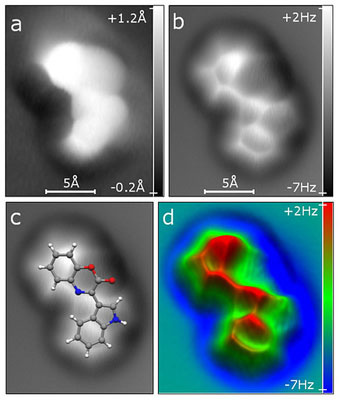
For the first time, atomic force microscopy helps scientists reveal the exact chemical structure of a natural compound
In a pioneering research project, for the first time, scientists at IBM and the University of Aberdeen have collaborated to 'see' the structure of a marine compound from the deepest place on the Earth using an atomic force microscope (AFM). The results of the project open up new possibilities in biological research which could lead to the faster development of new medicines in the future.
August 2, 2010 Read more
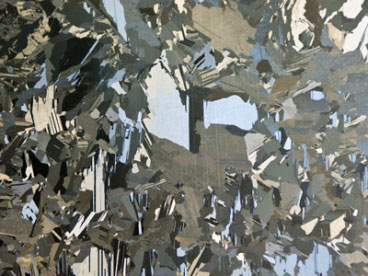
Silicon can be made to melt in reverse
Researchers have found that silicon, the most widely used material for computer chips and solar cells, can exhibit this strange property of 'retrograde melting' when it contains high concentrations of certain metals dissolved in it.
August 2, 2010 Read more
 Subscribe to our Nanotechnology News feed