

Nanotechnology News – Latest Headlines
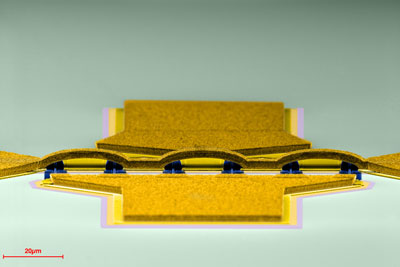
Fast aluminium-gallium-nitride transistors could save energy
Transistors, the cornerstone of electronics, are lossy and therefore consume energy. Researchers from the ETH Zurich and EPF Lausanne have developed transistors targeting high switching speeds and higher output powers. The devices can be used more efficiently as conventional transistors, so as to reduce energy consumption and CO2 emissions.
April 19, 2010 Read more
Frontiers in neuroengineering - call for papers
We invite Authors to participate with contributions in all topics related to Neuroengineering, from novel (nano)materials interfacing the nervous system or as tools for basic research, to novel enabling technologies, and from basic neurobiology and electrophysiology to neuroprosthetics. We aim at covering topics across levels of investigations, from the single-neuron to the network- and the system levels.
April 18, 2010 Read more
How to split a water molecule
A research team at RIKEN has succeeded for the first time in selectively controlling for reaction products in the dissociation of a single water molecule on an ultrathin film.
April 18, 2010 Read more
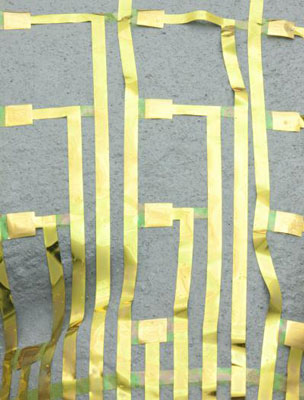
A brain-recording device that melts into place
Scientists have developed a brain implant that essentially melts into place, snugly fitting to the brain's surface. The technology could pave the way for better devices to monitor and control seizures, and to transmit signals from the brain past damaged parts of the spinal cord.
April 18, 2010 Read more
Three-dimensional cell culture: Making cells feel right at home
A team of Houston scientists has unveiled a new technique that uses magnetic nanobeads to levitate cells, allowing them to grow into three-dimensional structures.
April 17, 2010 Read more
Nanoparticles provide a targeted version of photothermal therapy for cancer
Using easily prepared gold nanocages that are able to escape from the blood stream and accumulate in tumors, a team of investigators from the Washington University in St. Louis has shown that they can use laser light to kill human tumors in mice.
April 17, 2010 Read more
Nanofibers carry toxic peptides into cancer cells
Researchers have long known that certain peptides are capable of killing cells by inserting themselves into the cell membranes and disrupting normal membrane structure and function. Now, researchers have learned how to deliver these cytotoxic peptides to tumor cells using self-assembling nanofibers that can slip into cancer cells and allow the toxic peptides to do their job from inside the cell.
April 17, 2010 Read more
Radioactive gold nanoparticles destroy prostate tumors, leaving healthy tissue untouched
One of the promises of nanoparticles as delivery agents for cancer therapeutics is that they will attack tumors while sparing healthy tissue from the damage normally associated with today's anticancer therapies. That promise is closer to realization thanks to the results of a study in which tumor-bearing mice were treated with a single dose of radioactive gold nanoparticles.
April 17, 2010 Read more
RNA interference delivered using nanoparticles hits target in human patients
A multi-institutional team of researchers and clinicians has published the first proof that a targeted nanoparticle can traffic into tumors, deliver double-stranded small interfering RNAs (siRNAs), and turn off the production of an important cancer protein using a mechanism known as RNA interference (RNAi).
April 17, 2010 Read more
Iran to publish an ISI journal for nanotechnology
Iranian authorities are due to publish an ISI journal in the field of nanotechnology named as Scientia Nanotechnology.
April 17, 2010 Read more
Australia-India partnership to establish a bionanotechnology research center in New Delhi
A new research centre to study food and water security and health care is to be established by Deakin University in partnership with The Energy and Resources Institute of India (TERI).
April 16, 2010 Read more
2010 TIP competition focuses on manufacturing technologies
The U.S. Commerce Department's National Institute of Standards and Technology (NIST) today announced a new competition for high-risk, high-reward research funding under the Technology Innovation Program (TIP). The new TIP competition offers cost-shared funding for innovative research on 'Manufacturing and Biomanufacturing: Materials Advances and Critical Processes'.
April 16, 2010 Read more
Catching electrons in the act
Many advances in energy, green chemistry, and human health must start with understanding the movement of electrons - making frame-by-frame movies of changing molecular bonds during chemical reactions, or the correlated behavior of electrons in complex solids. This will only be possible by freezing time within a few quintillionths of a second.
April 16, 2010 Read more

Microsensors without microfabrication
By building a six-dimensional motion sensor from a tiny metal bead in a tiny hole, MIT researchers introduce a new class of microdevice.
April 16, 2010 Read more
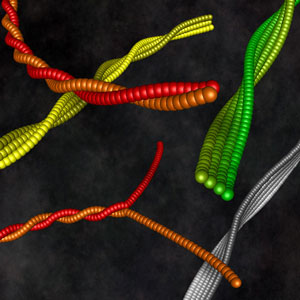
The assembly of protein strands into fibrils
Researchers have evidenced a basic general mechanism describing how filamentous proteins assemble into ribbon like structures, the so-called Amyloid fibrils. Combining experiments and theory, they could explain how denatured milk proteins assemble into ribbon like structures composed of up to five filaments.
April 16, 2010 Read more
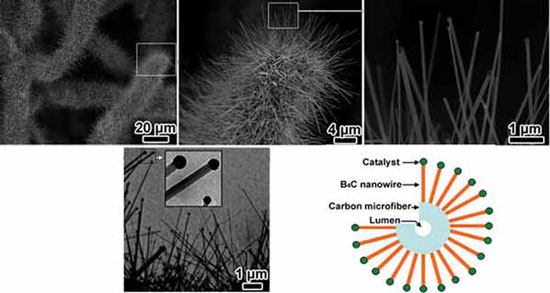
Boron cotton - tough but not yet bullet-proof
Cotton reinforced with boron carbide is tough and hard but nonetheless elastic. These properties indicate future promise, but this material is not yet bulletproof.
April 16, 2010 Read more
 Subscribe to our Nanotechnology News feed