

Nanotechnology News – Latest Headlines
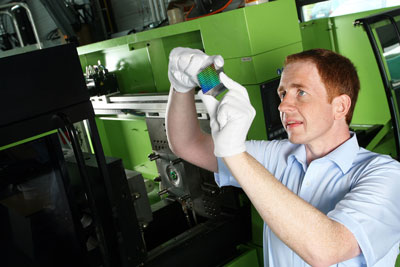
Explosive embossing for structuring of metal surfaces
Product piracy causes billions worth of damage worldwide. A combination of visible and invisible copy protection is really effective against this. Explosive embossing is an economical procedure and can be used for mass-produced goods.
June 25, 2009 Read more
Two innovative water quality monitoring technologies receive S$4 million funding
Two projects from Nanyang Technological University receive up to S$4 million in research fund from the Environment and Water Industry Development Council under its second Challenge Call for Request-for-Proposals in the area of rapid microbial detection.
June 25, 2009 Read more
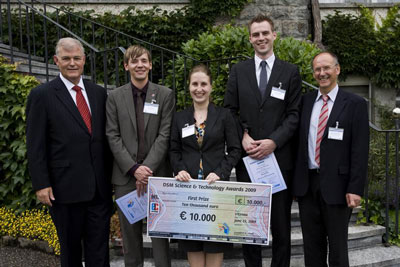
Swiss nanotechnology researcher wins first prize in DSM Science and Technology Awards
An international judging committee selected Alexandra Teleki, who obtained her doctorate from the Swiss Federal Institute of Technology ETH Zurich, for her PhD research on the production and application of coated nanoparticles.
June 25, 2009 Read more
Promising nanobiotechnology research towards commercialization of diabetes treatment
The state of Maryland announced 12 winning research projects that will receive part of $3 million in nanobiotechnology research funding from the 2009 Maryland Nanobiotechnology Research and Industry Competition Grants.
June 25, 2009 Read more
Streaming sand grains help define essence of a liquid
Water forms droplets because attractive interactions between molecules produce surface tension. If macroscopic objects - say, grains of sand - replace the molecules, the relative strength of this attraction would dramatically drop. What vestiges of liquid behavior remain in such ultra-low surface tension limit?
June 24, 2009 Read more
Giant Rydberg molecules with a bond as large as a red blood cell
The characteristics of the macroscopic molecules make them ideal candidates for probing quantum gases, properties of the electromagnetic field, and determining how Rydberg molecules interact.
June 24, 2009 Read more
Proteins in gel on biochip
Research scientists have developed a gel that they can apply to the surface of a biochip for protein analyses.
June 24, 2009 Read more
Salt block unexpectedly stretches
To stretch a supply of salt generally means using it sparingly. But researchers from Sandia National Laboratories and the University of Pittsburgh were startled when they found they had made the solid actually physically stretch.
June 24, 2009 Read more
Winners of the NWO/Spinoza Prize 2009 announced
The Netherlands Organisation for Scientific Research (NWO) has announced the winners of the NWO/Spinoza Prize for 2009.
June 24, 2009 Read more

Brookhaven Lab scientist Yimei Zhu elected Inaugural Fellow of the Microscopy Society of America
Yimei Zhu, a scientist at the U.S. Department of Energy?s Brookhaven National Laboratory, has been elected the inaugural Fellow of the Microscopy Society of America (MSA), an affiliate of the American Institute of Physics and the American Association for the Advancement of Science.
June 24, 2009 Read more

Mirkin awarded the $500,000 Lemelson-MIT Prize for revolutionary advancements in nanotechnology
Mirkin, the George B. Rathmann Professor of Chemistry at Northwestern University (NU), will accept the prize and present his accomplishments to the public at the Massachusetts Institute of Technology during the Lemelson-MIT Program?s third-annual EurekaFest, a multi-day celebration of the inventive spirit, June 25-27.
June 24, 2009 Read more
Holweck Medal awarded for advances in electron inspection of nanostructures
French physicist Dr Christian Colliex from Laboratoire de Physique des Solides, Université Paris Sud at Orsay, is the 2009 recipient of the Holweck Medal and Prize for his pioneering use of the electron microscope to further our understanding of the electronic structure of nanomaterials.
June 24, 2009 Read more
Declining growth in downstream markets slows projected growth for nanomaterials
All boats fall in an ebbing tide, and nanotech?s ship is no different. As the economic downturn drains demand in several nano-enabled product market segments, it is eroding growth along the entire value chain, from nanointermediates to nanomaterials, according to Lux Research's latest report.
June 24, 2009 Read more
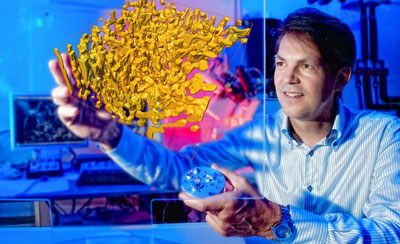
Nano-Tomographie: Einblick in das Innenleben von Materialien
Nano-Tomographie bietet einen bisher unbekannten Einblick in das Innere der Werkstoffe.
June 24, 2009 Read more
Rapid Prototyping in regenerative medicine at the 4th Fraunhofer Life Science Symposium
On October, 29 the 4th Fraunhofer Life Science Symposium will be held in Leipzig. This year's topic is "Rapid Prototyping and Scaffolds - New Techniques for Tissue Engineering".
June 24, 2009 Read more
Hong Kong focus on developing nanotechnology
Hong Kong had laid a firm foundation for developing biotechnology and nanotechnology in the years to come, a Hong Kong official said on Monday.
June 24, 2009 Read more
 Subscribe to our Nanotechnology News feed