

Nanotechnology News – Latest Headlines
Carbon nanotubes continue to show promise in battle against cancer
Carbon nanotubes, one of the original engineered nanomaterials, also may prove to be among the most versatile, as numerous teams of investigators continue to develop novel nanotube-based therapeutic and diagnostic tools. Over the past month, three new research papers have highlighted the potential of nanotubes as weapons against cancer.
June 27, 2009 Read more
Nanofluidic biopsy detects subtle changes in cancer cells
By taking two standard laboratory techniques - capillary electrophoresis and antibody-based protein detection - and shrinking them to the nanoscale, researchers at the Stanford University School of Medicine have created a new method for detecting miniscule changes in the levels of proteins associated with cancer.
June 27, 2009 Read more
Nanoscale holes provide speed boost for diagnostic tests
A grid of 30 x 30 flow-through nanoscale holes create a highly responsive sensor system that can detect biomolecules of interest without requiring the additional use of an optical label.
June 27, 2009 Read more
A better way to deliver cancer drugs directly to tumors
Researchers used specially engineered nanoparticles that can inhibit a signaling pathway and deliver a higher concentration of medication to the specific area.
June 27, 2009 Read more
Harnessing nanoparticles to track cancer cell changes
A Stanford University School of Medicine team led by Cathy Shachaf, Ph.D., has for the first time used specially designed dye-containing nanoparticles to simultaneously image two features within single cells. Although current single-cell flow cytometry technologies can provide up to 17 simultaneous visualizations, this new method has the potential to do far more.
June 27, 2009 Read more
Early detection of pancreatic cancer closer thanks to multifunctional nanoparticles
Researchers have created tools for the early diagnosis of pancreatic cancer by attaching a molecule that binds specifically to pancreatic cancer cells to iron oxide nanoparticles that are clearly visible under magnetic resonance imaging (MRI).
June 27, 2009 Read more
Computer-guided nanoparticle therapy destroys tumors
Gold nanoshells are among the most promising new nanoscale therapeutics being developed to kill tumors, acting as antennas that turn light energy into heat that cooks cancer to death. Now, a multi-institutional research team has shown that polymer-coated gold nanorods one-up their spherical counterparts, with a single dose completely destroying all tumors in a nonhuman animal model of human cancer.
June 27, 2009 Read more
Norway's companies asked to declare nanomaterials
The Norwegian Pollution Control Authority (SFT) establishes a scheme for Norwegian businesses to report their use of nanomaterials in chemical products.
June 26, 2009 Read more
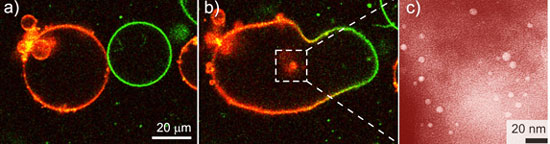
Two new construction manuals for the world's smallest lamps
Two new construction manuals are now available for the world's smallest lamps. Based on these protocols, scientists from the Max Planck Institute of Colloids and Interfaces have tailor-made nanoparticles that can be used as position lights on cell proteins and, possibly in the future as well, as light sources for display screens or for optical information technology.
June 26, 2009 Read more
Cells use import machinery to export their goods as well
In the bustling economy of the cell, little bubbles called vesicles serve as container ships, ferrying cargo to and from the port - the cell membrane. Some of these vesicles, called post-Golgi vesicles, export cargo made by the cell's protein factory. Scientists have long believed that other, similar vesicles handle the reverse function, importing life-supporting nutrients and proteins through an independent process. By using a finely honed type of microscopy to more precisely examine these transactions, new research shows the processes are not as independent as assumed: certain molecules handle cargo moving in both directions.
June 26, 2009 Read more
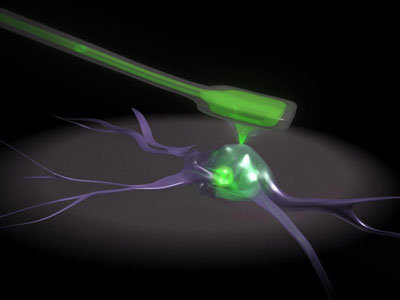
Nanospritze injiziert Wirkstoffe in Zellen
Wissenschaftler vom Institut für Biomedizinische Technik der ETH Zürich haben eine Nanospritze entwickelt, mit welcher Medikamente, DNA und RNA in eine einzelne Zelle injiziert werden können, ohne diese zu verletzen.
June 26, 2009 Read more
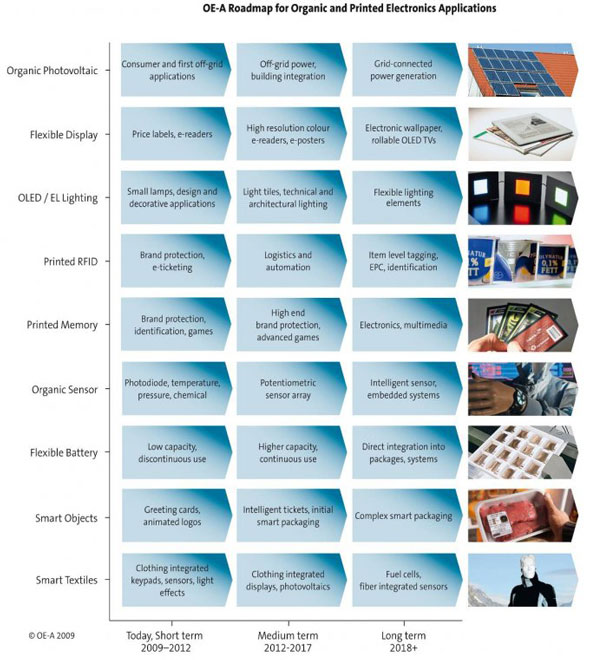
Market for organic and printed electronics expected to grow rapidly
The market for organic and printed electronics will grow to a multi-billion Euro market in the next ten years.
June 26, 2009 Read more
Significant New Use Rules (SNUR) on nanomaterials from EPA
EPA is promulgating further significant new use rules (SNUR) under section 5(a)(2) of the Toxic Substances Control Act (TSCA) for 23 chemical substances which were the subject of premanufacture notices.
June 26, 2009 Read more
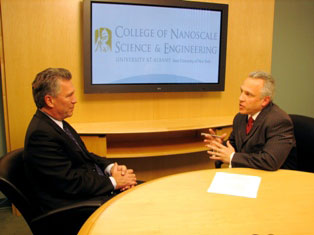
Web series explores nanotechnology
A look inside the pioneering world of nanotechnology, presented by the University at Albany's College of Nanoscale Science and Engineering.
June 26, 2009 Read more
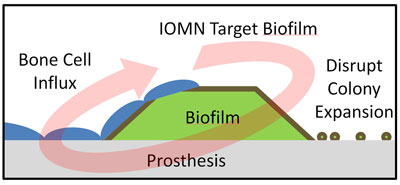
Implant bacteria, beware: Researchers create nano assassins
Researchers have created a nano-sized headhunter that zeroes in on the implant, penetrates s. epidermidis's defensive wall and kills the bacteria.
June 26, 2009 Read more
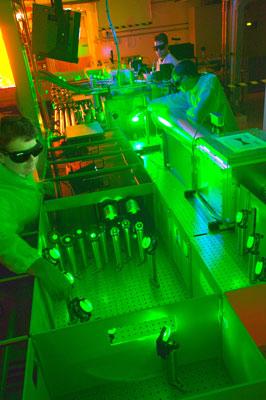
BELLA: Accelerating science by accelerating electrons
Berkeley Lab scientists stunned the world in 2006 when they proved they could accelerate electrons to very high energies (1 GeV, or a billion electron volts) in a distance of centimeters rather than hundreds of meters. Using the same concepts, those scientists plan to take the project to the next level and build a laser-based accelerator capable of zapping electron beams to energies exceeding 10 GeV in a distance of just one meter.
June 26, 2009 Read more
 Subscribe to our Nanotechnology News feed