

Nanotechnology News – Latest Headlines
IME Launches 10th Electronic Packaging Research Consortium to address 3-dimensional integrated circuits
The Institute of Microelectronics (IME), a research institute of the Agency for Science, Technology and Research (A*STAR), today announced the launch of the 10th Electronic Packaging Research Consortium (EPRC-10) to address key integration challenges of 3-dimensional Packaging and Embedded Module technologies.
June 30, 2009 Read more
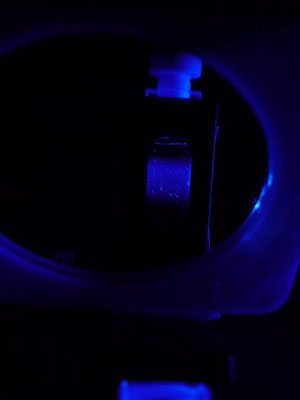
Fluorescent silicon nanoparticles may ultimately track the uptake of drugs by the body's cells
Researchers in the Department of Physics and Astronomy at the University of Leicester have developed a new synthesis method, which has led them to the discovery of fluorescent silicon nanoparticles and may ultimately help track the uptake of drugs by the body's cells.
June 30, 2009 Read more
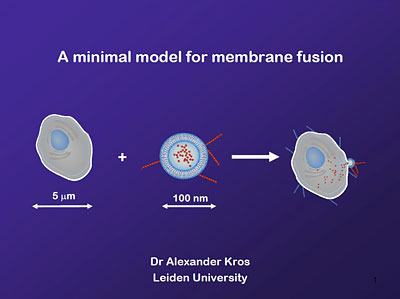
Major European subsidy for membrane fusion
The European Research Council (ERC) has awarded chemist Dr Alexander Kros a Starting Independent Researcher Grant of 1.4 million euro. He will be using the grant to study how molecules penetrate the natural barrier of a cell membrane. If his research is successful, it will in time bring about a revolution in how medicines are administered.
June 30, 2009 Read more
The sound of light: Innovative technology shatters the barriers of modern light microscopy
Researchers have rendered three-dimensional images through at least six millimeters of tissue, allowing whole-body visualization of adult zebra fish.
June 30, 2009 Read more

Ein Teilchen in der Falle
Ein wichtiger Schritt auf dem Weg zur Untersuchung grundlegender Quanteneffekte ist Forschern der Universität Erlangen-Nürnberg und des Erlanger Max-Planck-Instituts für die Physik des Lichts gelungen.
June 30, 2009 Read more

Ultra-thin material absorbs all the light
It appears to be a paradox: ultra-thin material that absorbs all the incident light. Nonetheless, it does exist.
June 30, 2009 Read more
University of Houston to offer a new hands-on nanoengineering program this fall
The University of Houston is expanding its nanoscience and nanotechnology offerings this fall with the launch of a unique program intended to give undergraduates in-depth training and access to state-of-the-art equipment.
June 30, 2009 Read more
Quantum of sol - the next generation of solar cells
Researchers from Imperial College London are developing the next generation of solar panels to harness the sun to provide clean and affordable electricity.
June 30, 2009 Read more
Australian scientists call for control of nano-silver use
ABC in Australia carries a report on its website that quotes Australian scientists saying that widespread use of antibacterial silver nanoparticles in consumer products should be kept in check.
June 30, 2009 Read more
It's tough to make big bucks with tiny technology
Three firms have licensed nanotechnology from the University of Minnesota - with varying results. But the long-term potential remains promising.
June 30, 2009 Read more
A quicker, cheaper way to sort isotopes
Isotopes, the atomic clues used to solve crimes, date ancient artifacts and identify chemicals.
June 30, 2009 Read more
First step to converting solar energy using artificial leaf
An international team of researchers has modified chlorophyll from an alga so that it resembles the extremely efficient light antennae of bacteria.
June 30, 2009 Read more
Advanved composite materials for renewable energy technologies
Advanced composite materials are playing a vital role in improved design and reduced operating costs for renewable energy technologies. Research presented today [Tuesday 30 June] will highlight how wind, marine and solar power could address these challenges within the renewable energy industry.
June 30, 2009 Read more
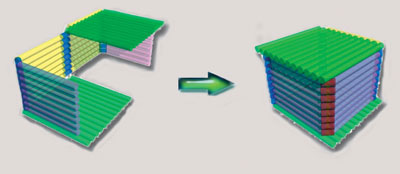
DNA boxes to encapsulate nanomaterials
Until now, researchers have focused on 2D origami, but Makoto Komiyama and Akinori Kuzuya at the University of Tokyo have shifted their focus to 3D structures. The pair folded DNA strands into an open-box shape and identified it using atomic force microscopy.
June 29, 2009 Read more
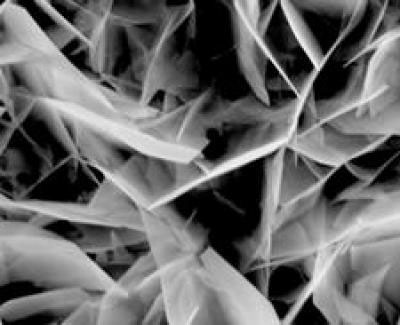
New method vastly improves nanotechnology coatings for implants
Tel Aviv University researcher Prof. Noam Eliaz of the TAU School of Mechanical Engineering has developed an electrochemical process for coating metal implants which vastly improves their functionality, longevity and integration into the body.
June 29, 2009 Read more
Secure and sustainable Nanotechnology as a motor for innovation in Switzerland and Europe
The Swiss NanoConvention 2009 will offer an excellent opportunity for fascinating, controversial discussion, and you are invited to Zurich to be a part of it.
June 29, 2009 Read more
 Subscribe to our Nanotechnology News feed