

Nanotechnology News – Latest Headlines
How to construct molecular architectures with nanoscale dimensions at whim
The book, entitled Bionanodesign, discusses the design of nanostructures using Nature for inspiration. The main mission of the publication is to satisfy the demands that motivate the search for first principles in engineering biologically inspired nanostructures.
June 29, 2009 Read more

Bringing a nanotechnology to market: a faculty perspective
Tim Weihs of the Johns Hopkins University Whiting School of Engineering will be the next guest speaker for the Institute for NanoBioTechnology (INBT) Professional Development Seminars on July 8.
June 29, 2009 Read more
Bio-inspired and nanoscale integrated computing
Within the area of nanotechnology, the study of nanoscale and bio-inspired integrated computing has attracted major attention in recent years. This is the first book to specifically focus on the computing aspects of nanotechnology for engineers, computer engineers, and biomedical engineers who are interested in designing faster and denser computing architectures and algorithms.
June 29, 2009 Read more
Nanotechnology supported by Brain Tumour Foundation research grant
Brain Tumour Foundation of Canada is assisting Canadian research nationally in the mission to find a cause of and cure for brain tumours with the announcement of its annual grants-in-aid program recipients.
June 29, 2009 Read more
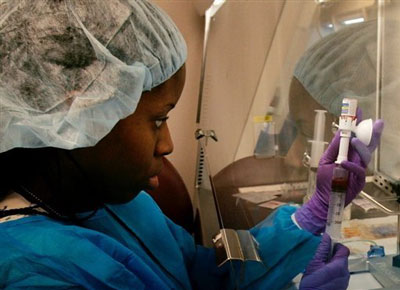
Nano trojan horse to kill cancer cells
Australian researchers are set to begin human trials of a tiny nano-cell that acts as a "Trojan horse" against cancer cells, a breakthrough they say may curb the need for debilitating chemotherapy.
June 29, 2009 Read more
Ununbium is latest element added to the periodic table
The International Union of Pure and Applied Chemistry (IUPAC) has officially recognised the element 112 as a new element.
June 29, 2009 Read more
Film 'MEMS: Making Micro Machines' provides inside look at MEMS manufacturing
Award-winning filmmaker premieres film at SEMICON West, with introduction by MEMS Industry Group.
June 29, 2009 Read more
Informationen zu Nanopartikel im Internetportal des BGIA
Umfassende Informationen zu Nanopartikeln und ultrafeinen Stäuben bietet das Institut für Arbeitsschutz (BGIA) der Deutschen Gesetzlichen Unfallversicherung kostenlos in einem neuen Internetportal an.
June 29, 2009 Read more
Singapore pumps S$16 million into training 150 integrated circuit designers over 5 years
Post-graduate scholarship is aimed at students in the schools of Electrical and Electronic Engineering and Electrical and Computing Engineering.
June 29, 2009 Read more
Laser-created temporal lens could lead to movies of molecular processes
A team at the University of Nebraska-Lincoln has figured out a possible way to observe and record the behavior of matter at the molecular level. That ability could open the door to a wide range of applications in ultrafast electron microscopy used in a large array of scientific, medical and technological fields.
June 29, 2009 Read more
Weighing a single atom with carbon nanotubes
How can you weigh a single atom? European researchers have built an exquisite new device that can do just that. It may ultimately allow scientists to study the progress of chemical reactions, molecule by molecule.
June 29, 2009 Read more
Nanotechnology combats fatal brain infections
Minute antibacterial particles destroy drug-resistant germs.
June 28, 2009 Read more

Scientists create first electronic quantum processor
A team led by Yale University researchers has created the first rudimentary solid-state quantum processor, taking another step toward the ultimate dream of building a quantum computer.
June 28, 2009 Read more
Mathematical model predicts factors driving tumor invasion
Using a sophisticated mathematical model that relates a wide variety of biological variables to disease progression, a research team has shown that accounting for the shape and physical characteristics of the tumor margin and invasiveness of the tumor accurately predicts how a particular tumor will develop and metastasize.
June 27, 2009 Read more
Expanding quantum dot utility in cancer diagnosis and treatment
Quantum dots (QDs), nanoparticles that shine with extraordinary brightness when excited by light energy, have shown promise as new tools for detecting cancer at its earliest appearance, but concerns about potential toxicities have limited their clinical development. Researchers at the University of Buffalo may have found an answer to this limitation with their development of a new way to create QDs. Their work comes at an opportune time, because a team of investigators from the University of Texas at Arlington (UTA) has shown that QDs can function as nanoscale thermometers to guide the numerous nanoparticle-based thermal therapies being developed to treat cancer.
June 27, 2009 Read more
Nanoscale 'fountain pen' draws therapeutic nanodiamonds
A research team at Northwestern University has developed a tool that can precisely deliver tiny doses of drug-carrying nanomaterials to individual cells. The tool, called the nanofountain probe, functions in two different ways. In one mode, the probe acts like a fountain pen with drug-coated nanodiamonds serving as the ink, allowing researchers to create devices by 'writing' with it. The second mode functions as a single-cell syringe, permitting direct injection of biomolecules or chemicals into individual cells.
June 27, 2009 Read more
 Subscribe to our Nanotechnology News feed