

Nanotechnology News – Latest Headlines
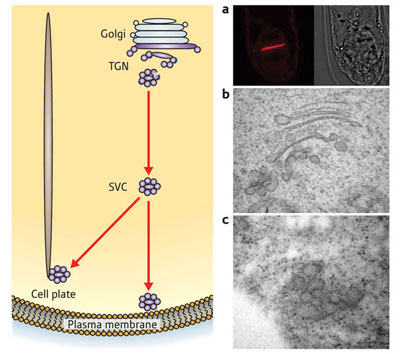
Taking proteins for a ride
Ken Matsuoka and co-workers at the RIKEN Plant Science Center in Yokohama, Kyushu University in Fukuoka and Niigata University have discovered a subcellular structure in plants that carries proteins and glycans to the correct locations, especially outside of the cell.
June 26, 2009 Read more
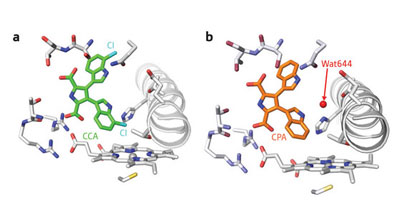
Water molecules at the heart of a key enzyme facilitate biosynthesis of an antitumor drug
An international team, led by Shingo Nagano from the RIKEN SPring-8 Center in Harima and Hiroyasu Onaka from Toyama Prefectural University, has uncovered the vital role of water in the generation of the antitumor drug staurosporine.
June 26, 2009 Read more
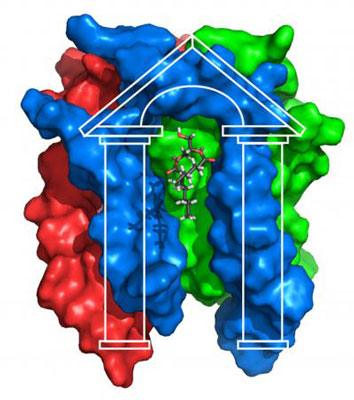
NMR methods applied to largest membrane protein to date
In a landmark technical achievement, investigators in the Vanderbilt Center for Structural Biology have used nuclear magnetic resonance (NMR) methods to determine the structure of the largest membrane-spanning protein to date.
June 25, 2009 Read more
Sticky nanocapsules deliver drugs to target cells
It is now possible to engineer tiny containers the size of a virus to deliver drugs and other materials with almost 100 percent efficiency to targeted cells in the bloodstream.
June 25, 2009 Read more
Singularity University selects first 40 students
Singularity University - the new academic institution with the goal of preparing the next generation of leaders to address "humanity's grand challenges" - today announced the selection of 40 students to represent the inaugural class for the Graduate Summer Program.
June 25, 2009 Read more
Productivity of solar cells could be increased by biomimetic coatings
A project under way at the U.S. Department of Energy's Savannah River National Laboratory will study how special coatings that mimic structures found in nature can increase the usefulness of solar energy as a vital part of the nation's future energy strategy.
June 25, 2009 Read more
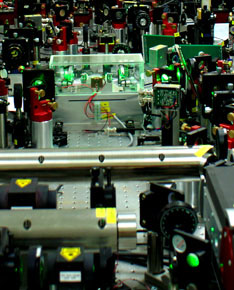
Breakthrough approach to generate quantum entanglement
A research team based at The Australian National University has developed a breakthrough approach to generate quantum entanglement, where information is coded in the physical relationship between two objects.
June 25, 2009 Read more
Scientist creates model to design radiation-resistant materials
Composite materials such as fiberglass, which take on a mix of properties of their constituent compounds, have been around for decades. Now, an MIT materials scientist is taking composites to the nanoscale, where entirely new properties, not found in any of the original compounds, can emerge.
June 25, 2009 Read more
'Nano 2012' program is underway with 2.3 bilion euro funding
Nano 2012 is a cooperation program which aims to boost the technological lead and competitive position of the Grenoble area in the changing conditions of the global semiconductor industry and consolidate its leadership position in the development of (32 and 22 nm) CMOS technologies and derivative technologies for system-on-chips.
June 25, 2009 Read more
Call for papers for special issue on 'Nanotechnologies and the Consumer'
The objective of this special issue of Journal of Consumer Policy will be to discuss the impact of nanotechnologies on consumer behaviour, policy and law.
June 25, 2009 Read more
University of Arkansas gets additional $1.5m for nanotechnology center
The University of Arkansas is receiving an additional $1.5 million toward construction of a new Nanotechnology Research Center, thanks to a decision by Arkansas Gov. Mike Beebe.
June 25, 2009 Read more
UAlbany NanoCollege in line to receive further federal funding
U.S. Senators Charles E. Schumer and Kirsten Gillibrand today announced that the Senate Subcommittee on Commerce, Justice, Science, and Related Agencies have approved the FY10 Appropriations Bill which includes $500,000 for the University at Albany's College of Nanoscience and Engineering.
June 25, 2009 Read more
Durchsichtige Graphen-Elektroden - ein Fenster für die Sonnenenergie
Graphen, ein zweidimensionaler Kristall, leitet Elektrizität und damit Wärme erstaunlich gut und gilt deshalb als vielversprechendes Material für immer kleiner werdende Elektronikkomponenten und für die Optoelektronik, die Information mit einer Kombination der herkömmlichen Elektronik und Licht verarbeitet.
June 25, 2009 Read more
ETH professor Nenad Ban awarded first Max Rössler Prize
Nenad Ban from the Institute of Molecular Biology and Biophysics has become the first person to win the Max Rössler Prize. The ETH Zurich professor won the award and 200,000 Swiss francs in prize money for his outstanding teaching and research in the field of molecular structural biology.
June 25, 2009 Read more
Protein stabilisation technique with nanoparticles could revolutionise therapeutic drug discovery
A revolutionary new protein stabilisation technique has been developed by scientists funded by the Biotechnology and Biological Sciences Research Council (BBSRC) which could lead to 30 per cent more proteins being available as potential targets for drug development - opening up exciting possibilities in drug discovery
June 25, 2009 Read more
Virus filters for medical diagnosis
While developing new types of micropumps without movable parts, scientists from the Fraunhofer Institute for Biomedical Engineering IBMT came across an unexpected phenomenon: stable turbulence structures formed in the microscale pump channels. The nano- and microparticles actually intended to verify the pump effect accumulated in large quantities in the channels.
June 25, 2009 Read more
 Subscribe to our Nanotechnology News feed