

Nanotechnology News – Latest Headlines

Electron family creates previously unknown state of matter
Scientists demonstrated a completely novel state of matter in a metal. It is created by the combination of four electrons - until now, only electron pairs were known. This discovery could lead to a new type of superconductivity, an entirely new research direction, and revolutionary technologies such as quantum sensors.
November 5, 2021 Read more

Scanning a single protein, one amino acid at a time
Using nanopore DNA sequencing technology, researchers have managed to scan a single protein: by slowly moving a linearized protein through a tiny nanopore, one amino acid at the time, the researchers were able to read off electric currents that relate to the information content of the protein.
November 4, 2021 Read more

Creating solar cells and glass from wood - or a billion tons of biowaste
Researchers map out how biomass from plants could replace unrenewable resources in optical applications.
November 4, 2021 Read more

Working through a mental Bloch
Scientists experimentally reconstruct Bloch wavefunction for the first time.
November 4, 2021 Read more

Graphene research sounds out new possibilities for electronic technologies
A team of researchers have revealed that sonic boom and Doppler-shifted sound waves can be created in a graphene transistor, giving new insights into this world-famous material and its potential for use in nanoscale electronic technologies.
November 4, 2021 Read more

The intriguing behaviour of magnets with an extra bit of oxygen
Tracking the behavior of magnetite nanoparticles for three years, researchers shed some light on an 80-year-old dilemma.
November 4, 2021 Read more

Nanoscale self-assembling salt-crystal 'origami' balls envelop liquids
Researchers have developed a technique whereby they can spontaneously encapsulate microscopic droplets of water and oil emulsion in a tiny sphere made of salt crystals - sort of like a minute, self-constructing origami soccer ball filled with liquid. The process could be used in a range of fields from more precise drug delivery to nanoscale medical devices.
November 4, 2021 Read more

Machine learning a useful tool for quantum control, finds new study (w/video)
Researchers show through simulations, that reinforcement learning, a type of machine learning, can be used to produce accurate quantum control even with noisy measurements.
November 4, 2021 Read more

A new dimension in magnetism and superconductivity launched
An international team of scientists has launched a new paradigm in magnetism and superconductivity, putting effects of curvature, topology, and 3D geometry into the spotlight of next-decade research.
November 3, 2021 Read more
Quantum physics in proteins
Artificial intelligence affords unprecedented insights into how biomolecules work.
November 3, 2021 Read more

New method to predict stress at atomic scale
The amount of stress a material can withstand before it cracks is critical information when designing aircraft, spacecraft, and other structures. Aerospace engineers used machine learning for the first time to predict stress in copper at the atomic scale.
November 3, 2021 Read more

Color-changing indicator predicts algal blooms
Researchers have developed an indicator that changes color when exposed to rising levels of alkaline phosphatase - an enzyme that forecasts phytoplankton's exponential growth. This change can be detected by the naked eye or a smartphone.
November 3, 2021 Read more
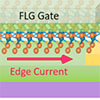
Quantifying spin in WTe2 for future spintronics
Determining spin quantization axis, an essential element for fabricating spintronic devices, in 2D topological insulator WTe2 by measuring anisotropic magnetoresistance.
November 3, 2021 Read more

Engineers invent ultra-fast manufacturing technology
Researchers have figured out a way to speed up production of wearable, electronic sensorswithout having to use polymer binders - the industry standard in printing flexible sensors, which are often used to monitor vital signs in health care settings.
November 3, 2021 Read more

Developing medicines - software incorporates the motion of atoms
In order for medicines to be effective, researchers need precise information about the surface molecules of viruses or bacteria, for example. Often, the motion of the atoms of these molecules is neglected while developing medicines. But this can have consequences for its effectiveness. A team of researchers is working on software that incorporates such motions.
November 3, 2021 Read more

An artificial material that can sense, adapt to its environment
Researchers have developed an artificial material, called a metamaterial, which can respond to its environment, independently make a decision, and perform an action not directed by a human being.
November 2, 2021 Read more
 Subscribe to our Nanotechnology News feed