

Nanotechnology Spotlight – Latest Articles
 Subscribe to our Nanotechnology Spotlight feed
Showing Spotlights 1625 - 1632 of 3580 in category All (newest first):
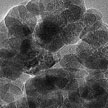
Tuning crystallinity to realize high energy density in supercapacitors
Supercapacitors, a rapidly emerging type of energy storage device, hold great potential due to their interesting characteristics: high power density, fast charge and discharge rates, and long-term cycling life. However, the use of supercapacitors is severely limited by their low energy density, which is one to two magnitudes lower in comparison with Li-ion batteries. In new work, researchers have developed a low-crystalline FeOOH nanoparticle anode with excellent comprehensive electrochemical performances at both low and high mass loadings as potential replacements for carbon negative electrodes in full supercapacitor devices.
May 15, 2017
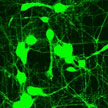
Brain-on-a-chip built on nanowire scaffolds
Growing neurons outside the brain but with predictable synaptic connectivity between other neurons could provide for an efficient platform for fundamental research and design of neuroprosthetics. Various neuromorphic engineering research efforts are underway to do this. A team now has built a Brain-on-a-chip where they demonstrated guided growth of neurons on semiconductor nanowire scaffolds. Providing an environment were scientists could study a less complex neuronal circuit as opposed to a fully functioning circuit in a living mammalian brain will open up a new experimental paradigm of understanding how the neurons are influenced by the mechanical properties of the brain as they grow and form circuits.
May 12, 2017
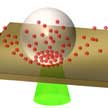
Bubble-printed patterning of quantum dots on plasmonic substrates
The use of quantum dots (QDs) in practical applications relies on the ability to precisely pattern QDs on substrates with desired optical properties. Typical direct-write printing techniques such as inkjet and gravure printing are limited in resolution (micron-scale), structural complexity, and require significant post-processing time. In new work, researchers use laser-induced bubble printing to pattern CdSe/CdS QDs on plasmonic substrates with submicron resolution, high throughput, and strong QD-substrate adhesion.
May 11, 2017
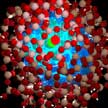
Overview of synthesizing hybrid nanomaterials with microfluidics
Hybrid nanomaterials (nanohybrids) are composed of two or more components - at least one of which is nanoscale - exhibiting many distinct physicochemical properties and hold great promise for applications in optics, electronics, magnetics, new energy, environment protection, and biomedical engineering. Different types of nanohybrids have been successfully synthesized via microfluidic processes or hybrid microfluidic-batch processes. The synthesis of nanohybrids using microfluidic-based processes can fulfill many challenges present in conventional bottle batch methods.
May 9, 2017
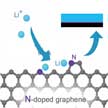
Design of lithium plating matrix for a dendrite-free lithium metal battery
Lithium metal anodes with ultrahigh theoretical specific capacity and the lowest negative electrochemical potential, have been considered the most promising electrode for next-generation rechargeable batteries, including rechargeable Li-S, Li-air batteries, and even Li metal batteries which utilize intercalation compounds as cathodes. Designing a Li plating matrix with a high surface area and lithiophilic surface maybe can help gain a dendrite-free metal anode.
May 5, 2017

Nanotechnology vaccines in cancer immunotherapy
Immunotherapy has become an important part of treating some types of cancer. It uses certain parts of a person's immune system to fight the cancer. Usually this is done by administering immune system components, such as man-made immune system proteins. In recent years, nanotechnology has played an increasingly important role in pursuing efficient vaccine delivery in cancer immunotherapy. This article discusses vaccine delivery by synthetic nanoparticles or naturally derived nanoparticles for cancer immunotherapy.
May 4, 2017
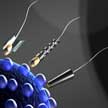
Spermbots - microrobotics meets sperm cells
Researchers show how spermatozoa can be useful parts of microdevices: As biocompatible propulsion source, but also entailing other functionalities such as their natural destiny for fertilization, their ability to respond to stimuli, or their ability to take up drugs open up fascinating new applications. They demonstrate first examples of using sperm cells as robotic components. The so-called spermbots are also systems that enable biophysical studies, e.g. of sperm motion in confinement.
May 3, 2017
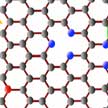
Defects in graphene enable selective permeability of gases
Despite their potential, the practical use of Li-O2 batteries is seriously limited by the corrosion of Li metal by ambient water vapor from air. One way to circumvent this issue is to use an oxygen selective membrane that allows only oxygen into the battery while stopping or slowing water vapor intake. The membrane must be mechanically robust and yet sufficiently thin and light so as to not increase deadweight of the battery. Researchers now have discovered a way to make the thinnest possible oxygen selective membrane using graphene.
April 25, 2017