

Nanotechnology Spotlight – Latest Articles
 Subscribe to our Nanotechnology Spotlight feed
Showing Spotlights 1609 - 1616 of 3580 in category All (newest first):
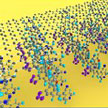
Current state of fabricating molecular electronics
Since the early days of molecular electronics, tremendous progress has been achieved both theoretically and experimentally by scientists and engineers who were fascinated by intriguing physical, chemical phenomena, and potential device applications of molecular junctions. In a recent paper, scientists review recent experimental efforts for pursuing high-yield functional molecular devices, in which a bundle of molecules (the contacted molecules number more than 1000) is contained in a junction.
June 14, 2017

Nanotechnology in healthcare
Nanotechnology is becoming a crucial driving force behind innovation in medicine and healthcare, with a range of advances including nanoscale therapeutics, biosensors, implantable devices, drug delivery systems, and imaging technologies. This article provides a comprehensive overview of healthcare advances that may be possible through nanotechnology, ranging from fitness monitoring, prevention, diagnosis to therapy, and everything in between.
June 13, 2017
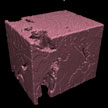
Accurate simulations at the nanoscale depend on choosing appropriate interatomic potentials
The robustness, accuracy, and validity of an atomistic simulations hinge on the appropriate choice of force fields. Force fields are key for modeling the interaction between atoms of a matter under study, and the challenge is to have an accurate force field working for any specific material at any desired temperature. To serve this objective and make a benchmark as well as a shortcut for users to find their best force fields, scientists have examined a number of force fields for materials that are popular in micro- and nanotechnologies.
June 12, 2017
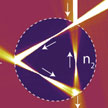
A two-dimensional electron microscope inside graphene
Modern-day electronics or communication technology would not exist without electron microscopy, and the same can be said for many other types of technology. Beyond imaging, the focused beam of electrons is also used for analysis of the chemical composition, the crystal structure, and many other useful things. In new work, researchers have proposed to use graphene as a two-dimensional vacuum chamber, and build a two-dimensional electron microscope, where the electrons fly from the electron gun to the target without ever leaving the graphene sheet.
June 9, 2017

The hidden talent of mushrooms for solar steam generation
Steam is important for desalination, hygiene systems, and sterilization; and in remote areas where the sun is the only source of energy, being able to generate steam with solar energy could be very useful. Researchers now have found that the mushroom structure can surprisingly benefit solar steam generation. The stipe of the mushroom can serve as efficient water supply path, meanwhile, due to the extreme small ratio of the areas of fibrous stipe and black pileus, only little heat (useless heat loss) conducted into water.
June 6, 2017
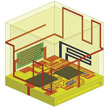
3D-printed, fully integrated wireless sensor devices
Researchers have demonstrated a fully integrated and packaged wireless sensor for environmental monitoring applications. The disposable sensor was developed using low-cost additive manufacturing technologies; namely, inkjet printing and 3D printing. This is a demonstration of 3D-printed fully-integrated System-on-Package (SoP) employing inkjet-printed sensors. This work could pave the way for low-cost disposable fully integrated wireless sensor nodes.
June 2, 2017

Making skin sensors stick
Research groups around the world are taking big strides towards developing ultrathin and flexible sensor devices that could be attached to the skin, or even organs, and monitor vital body functions. However, the adhesion to skin of many of these sensor patches is weak. A new milestone study on skin adhesives for wearable devices is about to change that. It demonstrates that it is possible to strongly and non-invasively attach soft wearable sensors and other devices to dry or wet skin.
June 1, 2017
Holey two-dimensional nanosheets for efficient energy storage
In new work, a research team has developed a general synthesis strategy by employing graphene oxide as a sacrificial template to prepare various 2D holey transition metal oxide (TMO) nanosheets, including mixed metal oxides and simple metal oxides. This approach is universal for the synthesis of various 2D holey TMO nanosheets including mixed transition-metal oxides and simple oxides. This unique holey structure can minimize the restacking of 2D nanosheets and provide more active sites for alkali-ion storage.
May 31, 2017