

Nanotechnology Spotlight – Latest Articles
 Subscribe to our Nanotechnology Spotlight feed
Showing Spotlights 1601 - 1608 of 3580 in category All (newest first):
Plasmonic nanosensor gels to detect therapeutic levels of radiation
Ionizing radiation (e.g. X-rays) is widely used in the treatment of cancer, but can cause significant damage to healthy cells. The overarching goal of radiotherapy is to safely, accurately and efficiently deliver ionizing radiation in order to treat diseases, typically cancer. A novel sensor technology can help medical physicists and oncologists effectively plan fractionated radiotherapy in the clinic, reduce accidental overexposures, and reduce radiation-induced toxicity.
June 29, 2017
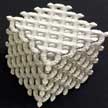
3D-printing catalytic applications
Three-dimensional (3D) printing, also known as additive manufacturing, is a fabrication method that creates structures from digital models. Unlike conventional fabrication methods, 3D printing processes are bottom-up fabrication methods which are based on the incremental addition of layers of materials. Recently, 3D-printing has also been shown to be advantageous to catalytic applications since a printing approach can achieve better control of the fine structure of the target material. It is expected that 3D printing fabrication will provide new solutions for preparing catalysts with new structures in a more economical and energy-efficient way.
June 27, 2017

Synthesis of 2D metal oxides and hydroxides - high-yield, efficient, fast and low-cost
As two-dimensional (2D) materials gain more and more importance - thanks to their exotic electronic properties and abundant active sites - the development of high-yield, efficient, fast and low-cost synthesis methods to advance these materials from the laboratory to industry has become an urgent issue. Now, researchers have developed a general and rapid molten salts method that can synthesize various ion-intercalated 2D metal oxides and hydroxides, such as cation-intercalated manganese oxides, cation-intercalated tungsten oxides, and anion-intercalated metal hydroxides.
June 23, 2017
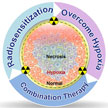
Enhancing radiation therapy with nanotechnology
A look at the emerging roles of nanotechnology in the rapidly evolving domain of modern/future radiation therapy. In an effort to devise novel and more effective anticancer regimes, a rapidly growing community of researchers is applying the unique properties of nanomaterials to combat the unmet challenges posed by classical radiation therapy - which has become one of the most effective and frequently applied cancer therapies. However, despite a plethora of preclinical studies, nanoparticle mediated combination RT/phototherapy has not yet been translated in the clinic.
June 22, 2017
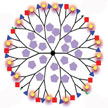
Dendrimer nanomedicine - developing efficient therapeutic strategies for the treatment of neurological disorders
Dendrimers have emerged as a powerful class of nanomaterials in nanomedicine due to their unique structural features: globular, well-defined, highly branched and controllable nanostructures where the presence of several terminal groups can be functionalized with different ligands simulating the multivalency present in different biological systems. A recent review article identifies the currently existing dendritic systems and discusses their strengths and caveats in the context of attaining efficient therapeutic strategies for the treatment of neurological disorders.
June 21, 2017

Self-propelled swimming nanodiamonds for biological applications
Sometimes nanoscale diamonds contain a specific type of impurity: a single nitrogen atom where a carbon atom should be, with an empty space right next to it, resulting from a second missing carbon atom. This nitrogen-vacancy (NV) impurity gives each nanodiamond special optical and electromagnetic properties. Nitrogen vacancy centers in nanodiamonds require a method to manipulate their electron spin orientations physically. Recent work demonstrates a general active NV system: Nanodiamond swimmers that self-propel.
June 20, 2017
Moisture enhances ammonia sensitivity of carbon nanotubes
In spite of the numerous research efforts regarding the development of miniaturized, low-cost, and highly sensitive sensors based on different organic and semiconducting materials, carbon nanotubes still remain the most promising ones. An international team of researchers has now developed a simple way for fabrication and operation of carbon nanotube-based chemical sensors. The sensor consists of carboxylated single-walled carbon nanotubes, which were spin-coated over the polymer substrate between sputtered metal electrodes.
June 19, 2017
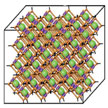
Capturing carbon dioxide and storing methane with metal-organic frameworks
Metal-organic frameworks (MOFs) are well-ordered, lattice-like crystals. The nodes of the lattices are metals, which are connected by organic molecules. The most impressive features of MOFs are their extremely high surface area, high porosity, and tunable pore sizes, which are remarkable advantages over other porous materials (e.g., zeolites and carbons). With their special structure and large surface area, MOFs open up new opportunities for alternative systems for gas and energy storage (e.g. carbon dioxide and hydrogen storage), in catalysis, chemical sensing, as nanoreactors, and in drug delivery, making them hugely interesting for both university research and industry.
June 15, 2017