

Nanotechnology Spotlight – Latest Articles
 Subscribe to our Nanotechnology Spotlight feed
Showing Spotlights 1593 - 1600 of 3580 in category All (newest first):

A true random number generator based on solution-processed semiconducting carbon nanotubes
New work demonstrates that one of the most important security primitives, i.e. a true random number generator (TRNG), can be realized within the rigorous constraints required for future Internet-of-Things electronics. The solution-processability of semiconducting single-walled carbon nanotubes allows to meet these strict constraints by simultaneously enabling small-scale, low cost fabrication of low-power, ultra-thin, printable, and mechanically flexible security devices. This presents a significant milestone in enabling higher level cryptographic solutions using scalable solution processing.
July 12, 2017
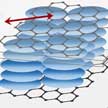
Using graphene as transparent electrodes and alignment layers for liquid crystal devices
In conventional liquid crystal displays (LCD), the liquid crystal (LC) material is contained in conventional LC cells, where the polyimide layers are used to align the LC homogeneously in the cell, and the transmissive indium tin oxide (ITO) electrodes are used to apply the electric field to reorient the LC along the field. Now, researchers have experimentally demonstrated that monolayer graphene films on the two glass substrates can function concurrently as the LC alignment layers and the transparent electrodes to fabricate an LC cell, without using the conventional polyimide and ITO substrates.
July 11, 2017
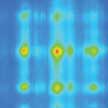
Controlling multi-modal nanolasing with plasmonic superlattices
Multi-modal lasers can emit at different wavelengths simultaneously and are important for applications ranging from multiplexed signal processing to multi-color biomedical imaging. To achieve multi-wavelength capabilities, however, the single-color lasers need to be operated as an array of lasers, which dramatically increases the unit cost and precludes their integration with compact photonic devices. Researchers now have demonstrated that multi-modal lasing with control over the different colors can be achieved in a single device.
July 10, 2017
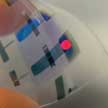
Flexible sensors
Flexible sensors hold great promise for various innovative applications in fields such as medicine, healthcare, environment, and biology. Over the past decade, the development of flexible and stretchable sensors for various functions has been accelerated by rapid advances in materials, processing methods, and platforms. For practical applications, new expectations are arising in the pursuit of highly economical, multifunctional, biocompatible flexible sensors.
July 7, 2017

Portable energy harvester for self-powered devices
With a focus on using eco-friendly materials such as fabrics worn in daily life (nylon, jeans, cotton, etc.), researchers have developed and demonstrated an innovative product for scavenging biomechanical energy. The team's Smart Mobile Pouch Triboelectric Nanogenerator (SMP-TENG) can generate electricity from lateral sliding and vertical contact and separation with freestanding fabrics; it also can serve as a self-powered emergency flashlight and self-powered pedometer.
July 6, 2017
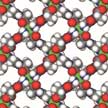
Integrating biomolecules with metal-organic frameworks
With their special structure and large surface area, MOFs open up new opportunities in drug delivery. The ability to exchange the metal centers and organic linkers even provide an extensive library of MOF materials. As a result, the integration of small guest molecules within the MOF pores, such as small molecule drugs and biomolecules, have shown promise for delivery applications to treat diseases. A recent review article discusses current proceedings on integrating diverse biomolecules within MOFs.
July 4, 2017

New insights into the electrical properties of liquid crystals doped with nanoparticles
Many of the electronic devices we use in our daily life rely on liquid crystal display (LCD) technologies. LCDs get their name from the special liquid crystal solution that is contained between two thin glass plates inside the display. An electric field applied across the liquid crystal layer changes optical properties of the liquid crystals thus enabling their use in displays. A new paper reports several interesting size effects including monotonous and non-monotonous dependence of the total concentration of mobile ions in liquid crystals on the thickness of the cell and/or on the concentration of nanoparticles.
June 30, 2017
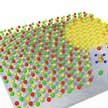
Self-organizing graphene nanodots
The ultimate challenge of nanotechnology is to control the structure of matter with atomic precision. The better we are at shaping and structuring material on a small scale, the more powerful technology we can dream of. Unfortunately, the atomic scale is entirely out of range for conventional patterning. Researchers now report that they have achieved nanoscale self-assembly within a two-dimensional layer. Dosing of ethylene and borazine near a hot iridium surface, leads for self-organising of a two-dimensional superlattice of graphene dots.
June 29, 2017