

Nanotechnology Spotlight – Latest Articles
 Subscribe to our Nanotechnology Spotlight feed
Showing Spotlights 1713 - 1720 of 3579 in category All (newest first):

Plasmonic photothermic solar-powered seawater catalysis and desalination
Newly developed nanocomposites possess efficient photothermic properties for highly targeted interfacial phase transition reactions that are synergistically favorable for seawater catalysis and desalination. The nanocomposites are seawater and photostable for practical solar conversion of seawater to simultaneously produce clean energy and water. This work defines the forefront of plasmonic photothermic technology, which is vastly untapped and has broad implications in other fields.
July 12, 2016

Longitudinal acoustic vibrational modes favour new applications of metallic nano-objects
A theory analysis of energy / momentum conservation laws in a spatially confined coupled system of nearly free electrons and phonons hints that the absorption of electromagnetic waves by a metallic nano-object hosting longitudinal vibration modes may allow channeling the absorbed energy either into heat or into terahertz radiation, depending on the nano-objects' shape and size. This offers an explanation for the size selectivity of small nanoparticles in radio frequency hyperthermia, and suggests design for novel terahertz radiation sources.
July 11, 2016
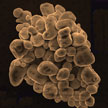
Room temperature cyclable healing of inorganic perovskite films
Although developed only recently, inorganic halide perovskite quantum dot systems have exhibited comparable and even better performances than traditional quantum dots in many fields. They are expected to be applied in display and lighting technologies. Researchers now have reported an interesting cyclable surface dissolution and recrystallization phenomenon of inorganic perovskite crystals. This allows them to freely change size between nanometer and micrometer scales, and can be used to healing the defects inside perovskite films and hence improve the performances of optoelectronic devices.
July 7, 2016
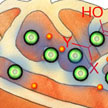
Nanotechnology-based approach to repair the cancer cell suicide mechanism
Studies show hat mitochondrial metabolism theoretically is a plausible target for cancer therapy. Mitochondria are the primary controllers of cellular suicide; however, cancer cells trick this normal cellular mechanism and evade this process leading to uncontrolled cellular growth. To trigger the suicide switch back on, new work uses a highly selective nanotechnology-based approach to deliver a widely available small molecule commonly found as a by-product of a water chlorination process.
July 6, 2016

A guide to the nanotechnology used in the average home
There is an often-asked question: 'When are we finally going to start seeing nanotechnology products on the market?' As a matter of fact, the average home is already filled with products enhanced or reliant upon nanotechnology. In fact, there are several online repositories listing the more than 2,000 commercially available products that incorporate nanotechnology. The application of nanotechnology in some areas, such as batteries, microelectronics and sunscreens is relatively well known. Let's take a virtual tour through a home to see what else we can find.
July 5, 2016
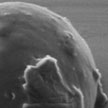
Graphene coated microbubbles as superior photoacoustic imaging contrast agent
Researchers have demonstrated that the coupling of pristine graphene sheets on practically any polymer surface can be accomplished in mild reaction conditions and in aqueous medium. The method leaves intact the 2D planar structure of graphene preserving its original features. This novel hybrid construct enables in vivo photoacoustic signal enhancement and is a very promising step forward for an implementation of photoacoustic imaging, a powerful preclinical diagnostic tool.
June 30, 2016
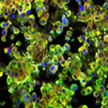
Overcoming adaptive resistance in cancer with a 2-in-1 nanoparticle approach
Currently in the clinic and in clinical development, there is heavy emphasis placed on understanding how drugs can be 'complementary'. That is to say, what combination of drugs will be most effective in killing tumor cells and overcome potential resistance mechanisms. In fact, adding synergistic combinations of drugs is reshaping how cancer is treated, even in the context of immunotherapy. A new study provides critical evidence that complementary drugs must be in spatial proximity to truly exert their synergistic potential.
June 28, 2016

Nanotechnology education for the leaders of tomorrow
Education has long been recognized as an important factor for growing the fields of nanoscience and nanotechnology and solidifying and expanding their roles in the global economy. Leading researchers from the field discuss innovative learning models that are being applied at the undergraduate level in order to train future leaders at the interface of engineering and management. They have a set of five recommendations to improve the current situation.
June 21, 2016