

Nanotechnology Spotlight – Latest Articles
 Subscribe to our Nanotechnology Spotlight feed
Showing Spotlights 1889 - 1896 of 3579 in category All (newest first):

Food chemistry synthesis of copper nanowires with chocolate-like aroma
The food chemistry Maillard reaction is responsible for many colors and flavors in foods - roasting of coffee, baking of bread and sizzling of meat. Scientists have made use of this ingenious food chemistry to 'cook' their copper nanowires. This green approach that formulates copper atoms in water to form untangled metallic state nanowires. Naturally, a lingering chocolate-like aroma was detected during the copper nanowires synthesis.
November 21, 2014

Nanotechnology in the 'green' economy - opportunities and risks
A new review article examines opportunities and practical challenges that nanotechnology applications pose in addressing the guiding principles for a green economy. There is a general perception that nanotechnologies will have a significant impact on developing 'green' and 'clean' technologies with considerable environmental benefits. The associated concept of green nanotechnology aims to exploit nanotech-enabled innovations in materials science and engineering to generate products and processes that are energy efficient as well as economically and environmentally sustainable.
November 18, 2014
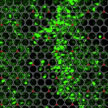
Graphene electrodes for simultaneous electrophysiology and neuroimaging
Studying the complex wiring of neural circuits and identifying the details of how individual neural circuits operate in epilepsy and other neurological disorders requires real-time observation of their locations, firing patterns, and other factors. These observations depend on high-resolution optical imaging and electrophysiological recording. Researchers have now developed a completely transparent graphene microelectrode that allows for simultaneous optical imaging and electrophysiological recordings of neural circuits.
November 13, 2014
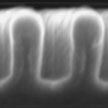
Nanoimprint lithography for the fabrication of efficient low band gap polymer solar cells
In recent years, polymer solar cells have drawn considerable research interest due to their attractive features including flexibility, semi-transparency, and manufacturability using cost-effective continuous printing processes. However, one challenge limiting their commercialization is the relatively low power conversion efficiency when compared to inorganic solar cells. New work shows that low bandgap polymer solar cells with high efficiency of 5.5% can be fabricated using nanoimprint lithography.
November 12, 2014

Optical transmittance of multilayer graphene films
Researchers are confident that graphene may outperform existing transparent conductive materials. However, monolayer graphene might not be sufficient for fabricating a highly conductive electrode. The dilemma is that the transmittance of graphene film decreases as the number of layers increases. It therefore is of great importance to have a fast and reliable method to determine the number of layers in the fabrication and measurement of multilayer graphene.
November 11, 2014

Fully 3D-printed quantum dot LEDs
Researchers have demonstrated that they can print interwoven structures of quantum dots, polymers, metal nanoparticles, etc, to create the first fully 3D printed LEDs, in which every component is 3D printed. At the fundamental level, 3D printing should be entirely capable of creating spatially heterogeneous multi-material structures by dispensing a wide range of material classes with disparate viscosities and functionalities, including semiconducting colloidal nanomaterials, elastomeric matrices, organic polymers, and liquid and solid metals.
November 5, 2014
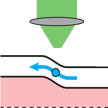
The photothermal response of nano-devices: Electrons rolling 'uphill' in a carbon nanotube
There has been a long debate in the nanotube community regarding the photocurrent generation mechanisms in individual nanotube devices. In early optoelectronic studies with single-walled carbon nanotubes, the interpretation of photocurrent was mostly based on photovoltaic mechanisms. In new work, researchers use the extra tunability of a double-gated device to conclusively demonstrate that strong photothermal effects are present in carbon nanotube devices.
November 4, 2014

Understanding springs at the nanoscale: a step towards nanorobots
Inspired by nature's ingenious biological designs, researchers have persistently attempted to mimic these biofunctionalities to bring technological breakthroughs. One of these morphologies - the unique shape of a helical coil - is not only interesting from a scientific standpoint but also pivotal, offering DNA its distinctive properties and propelling flagella in viscous fluids, to name a few. With the advent of personalized medicine on the horizon, researchers are now trying to use tiny springs made of carbon nanotubes, i.e. nanocoils, to propel nanorobots to perform microsurgeries.
October 31, 2014