

Nanotechnology Spotlight – Latest Articles
 Subscribe to our Nanotechnology Spotlight feed
Showing Spotlights 1945 - 1952 of 3577 in category All (newest first):

Ingenuity Lab has sights set on revolutionary health advances
Defined as a clouding of the lens of the eye, cataracts affect more than 20 million people worldwide and accounts for 51 per cent of world blindness. In fact, this debilitating eye disease has been identified as the leading cause of blindness today. A multidisciplinary team of researchers is busy trying to understand the fundamental mechanisms of how the aggregates that cause cataracts form, and how nanotechnology may be used to prevent or at least inhibit them.
July 4, 2014

Biomimetic nano-environments as templates for skin regeneration
Cellular functions within living organisms are extremely complex processes and researchers have been using nanopatterned substrates to control and monitor cellular functions in order to design and fabricate nanoscale biotechnological systems. Especially stem cell research has benefitted from nanopatterned surfaces. Nevertheless, despite the intense scientific efforts to achieve precise control of stem cell fates with engineered nanopatterned substrates, reliable and cost effective control of stem cell behavior remains a challenge. Researchers have now fabricated biomimetic substrates that are similar to that of the native extracellular matrix in the epidermis which assists proliferation, differentiation, and biosynthesis of the keratinocyte (i.e. human outer skin) cells.
July 3, 2014
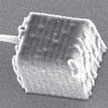
Controlling nanotube orientation in 3D architectures
The microstructures of carbon nanotube assemblies determine their properties, for example, highly graphitized CNTs exhibit excellent mechanical and electrical properties; while CNTs with defects and poor crystallinity are beneficial for research on field emission property and hydrogen storage capacity. Therefore, it is of vital importance to control the CNT microstructures effectively for desired applications. A new technique can solve a problem of three-dimensional orientation control of CNTs in microscopic scale.
June 30, 2014
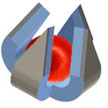
Untethered active microgripper for single-cell analysis
There are a wide range of passive devices such as beads, wells and tubes that can be used to capture and confine single cells. Previous active cell grippers with moving parts have relied on electrical modalities which can be challenging to implement off-chip and in a highly parallel manner. Researchers have now, for the first time, demonstrated an untethered active microgripper that can be used to capture and contain single cells.
June 25, 2014

Embedded 3D printing for soft robotics fabrication
A significant challenge in soft robotics involves fabricating soft sensors and actuators which, so far, have been very tedious to produce. Building soft sensors used by roboticists usually requires a multi-step, manual molding-lamination-sealing-infilling process. As a result, the design and fabrication process is cumbersome; the sensor form factors are unnecessarily limited; and there are issues with mechanical robustness. Now, though, researchers have demonstrated a new method for creating highly stretchable sensors based on embedded 3D printing of a carbon-based resistive ink within an elastomeric matrix.
June 24, 2014
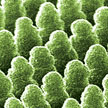
The promise of nanotechnology for the next generation of lithium-ion batteries
Nanotechnology has the potential to deliver the next generation lithium-ion batteries (LIBs) with improved performance, durability and safety at an acceptable cost. At present, there is a great deal of interest to upgrade the existing LIBs with improved properties and arrive at a battery technology that would permit smart-storage of electric energy. Futuristic smart electric grids that can provide an uninterruptible power supply to a household for 24 hours can replace the currently used lead acid battery systems by performing better in terms of longer back up time and reduced space requirements. With the advent of next generation LIBs, electric vehicles are expected to cover longer distances with shorter charging times; mobile phones and laptops are expected to be charged within minutes and last longer.
June 18, 2014
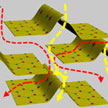
Layered nanosheet membranes for ultrafast molecule separation
Researchers have developed a new separation membrane with 2D layered transition metal dichalcogenides (tungsten disulfide) for size-selective separation of small molecules of about 3 nm. The as-prepared WS2 membranes exhibit 5 times higher water permeance than graphene oxide membranes with similar rejection. To further improve the water permeance, they team employed ultrathin metal hydroxide nanostrands to create more fluidic channels while keeping the rejection rate of specific molecules unchanged.
June 17, 2014

Complete solar cells printed by inkjet
Researchers report for the first time the fabrication and measurement of all-inkjet-printed, all-air-processed organic solar cells. Organic photovoltaic technologies have the potential to become a thin-film alternative to inorganic silicon photovoltaics due to their intrinsic potential for low-cost print processing from solution - high-speed and at low temperature. Organic solar cells can be integrated into building facades and windows because they are optically translucent and can be manufactured on large areas at high throughput.
June 16, 2014