

Nanotechnology Spotlight – Latest Articles
 Subscribe to our Nanotechnology Spotlight feed
Showing Spotlights 3017 - 3024 of 3574 in category All (newest first):
Nanotechnology standards
Numerous standard setting organizations around the world are active in defining voluntary nanotechnology and nanomaterial standards, although no one standard has achieved dominance yet. These standards address terminology, property testing, and issues of health and safety.
May 16, 2008
Probing biomolecular interactions with single plasmonic nanoparticles
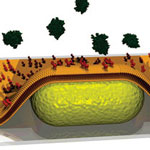
The phenomenon behind many color-based biosensor applications is the excitation of surface plasmons by light - called surface plasmon resonance for planar surfaces or localized surface plasmon resonance (LSPR) for nanoscale metallic structures. Surface plasmon resonance of metallic nanoparticles, in particular gold, has become a popular nanotechnology-enabled technique to build increasingly sensitive and fast biosensors. All the nanostructures used for the biosensing applications have two characteristics: Firstly, they contain certain recognition mechanisms specified to the analyte, for example antibodies or enzymes. Secondly, they are able to generate a distinguishing signal from the analyte and this signal could be generated by the nanostructures themselves or produced by signaling molecules immobilized or contained in the nanostructures. However, proper functionalization remains an issue when it comes to real-world applications, in particular, biological relevant samples such as membrane associated proteins and peptides.
May 15, 2008
The end of the silicon era? Carbon nanotubes, the next great leap
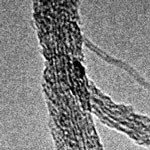
For a decade, researchers and industry professionals have been warning that the limits of silicon were quickly being approached. According to some, these limits have, effectively, already been reached. The age of the integrated microchip circuit - fabricated out of silicon - may be drawing to a close. But, is there any technology ready to fill the void? Is there any technology that could make circuits smaller or more powerful? They answer to this may very well be 'yes.' Although silicon holds numerous properties that make it a rather ideal conductor of electricity under certain conditions, it lacks one crucial characteristic, which may end-up making carbon the material of the future: The ability to form complex, tubular arrays on the scale of only a few nanometers. The age of the integrated nanochip circuit - made-up of composite carbon nanotubes - may have arrived.
May 14, 2008

Building better fuel cells with nanotechnology
Fuel cells have gained a lot of attention because they provide a potential solution to our addiction to fossil fuels. Energy production from oil, coal and gas is an extremely polluting, not to mention wasteful, process that consists of heat extraction from fuel by burning it, conversion of that heat to mechanical energy, and transformation of that mechanical energy into electrical energy. In contrast, fuel cells are electrochemical devices that convert a fuel's chemical energy directly to electrical energy with high efficiency and without combustion (although fuel cells operate similar to batteries, an important difference is that batteries store energy, while fuel cells can produce electricity continuously as long as fuel and air are supplied). Modern fuel cells have the potential to revolutionize transportation. One of the leading fuel cell technologies developed in particular for transportation applications is the proton exchange membrane fuel cell, also known as polymer electrolyte membrane fuel cells - both resulting in the same acronym PEMFC
May 13, 2008
High resolution surface potential imaging with ultrasharp carbon nanotubes
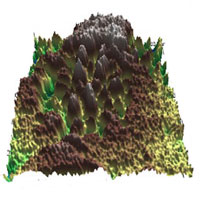
With the advance of nanotechnologies the demand for ever more precise instruments that measure, map and manipulate details at the nanoscale increases as well. For instance, the study of potential distributions with nanoscale resolution becomes increasingly important. In the early days of atomic force microscopy (AFM) the scanning force microscope was used to measure charges, dielectric constants, film thickness of insulating layers, photovoltage, and electrical potential of a given surface. Then, in 1991, the concept of a scanning contact potential microscope was introduced, allowing the simultaneous measurement of topography and contact potential difference. Named the scanning surface potential microscope (SSPM) - also often referred to as Kelvin probe force microscope - this is a variation of the AFM that measures the electrostatic forces (potential) between the probe tip and the surface of a material. Compared with other AFM techniques, the lateral resolution of traditional SSPM, from submicron down to 10 nm, is much lower.
May 12, 2008
Nanochemistry inside carbon nanotubes
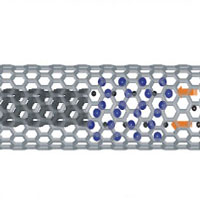
As far as test tubes go, it doesn't get any smaller than a single-walled carbon nanotube (SWCNT). Among the wide range of interesting properties exhibited by SWCNTs is their capacity to encapsulate molecules within their quasi one-dimensional cavity. The confinement offered by the nanotube could serve as a nanoscale test tube to constrain a chemical reaction. This was demonstrated in principle back in 1998, when the coalescence of adjacent fullerenes was observed by transmission electron microscopy. In the following years, scientists have extensively experimented with filling nanotubes with other fullerenes, atoms, molecules and, very recently, with organic molecules. Owing to their large variety with diverse chemical properties, the incorporated organic molecules can tune the properties of the SWCNTs. Scientists are intrigued by the possibilities that SWCNTs' use as a reaction tube offers for chemistry at the nanoscale. Nanochemistry - a key to control self-assembly processes prerequisite for nanotechnology - in essence would produce stable chemical reactions inside a confined nanoscale space. Encapsulated inside this nanoscale space, molecules are isolated from the outside environment, which allows one to identify and control the source and incidence of chemical reactions. Recent work has demonstrated this new chemistry by using SWCNTs as a nanometer-scale reaction furnace.
May 9, 2008

Overview of regulatory and voluntary measures for the handling of engineered nanomaterials in Europe
Regulations and legal provisions can serve several purposes. From a regulator's perspective priority is given to aspects of human safety and environment protection. For commercial firms, regulations on the one hand imply restrictions (compliance) and on the other hand offer a frame of reference and predictability of legal decisions. From a civil society's point of view regulations can be trust-building in the sense that it indicates a certain level of safety. A lack of regulations calls for voluntary measures in order to make sure that this kind of basic trust can be established. The following article aims at shedding light on this field of tension and gives an overview of the current state of European nanotechnology regulation.
May 8, 2008

Catalytic nanotransporters for nanotechnology applications outside biological systems
The catalytic conversion of chemical to mechanical energy is ubiquitous in biology, powering such important and diverse processes as cell division, skeletal muscle movement, protein synthesis, and transport of cargo within cells. Catalytic 'engines' will be key components of active micron- and sub-micron scale systems for controlled movement, particle assembly, and separations. A few days ago we took a look at catalytic nanomotors - sophisticated molecular-size biomotors have evolved in nature - and described an example where researchers supercharged their nanomotors by inserting carbon nanotubes into the gold and platinum nanowires (Speeding up catalytic nanomotors with carbon nanotubes). Today we show an example where catalytic nanomotors can, in principle, be tethered or coupled to other objects to act as the engines of nanoscale assemblies. Additionally, an object that moves by generating a continuous surface force in a fluid can, in principle, be used to pump the fluid by the same catalytic mechanism. Thus, by immobilizing these nanomotors, a group of scientists have developed micro/nanofluidic pumps that transduce energy catalytically.
May 7, 2008