

Biotechnology News – Latest Headlines
 Subscribe to our Biotechnology News feed
Scientists succeeded in describing in molecular detail the architecture of the central scaffold of human TFIID
The Human TFIID is a megadalton-sized multiprotein complex composed of TATA-box-binding protein (TBP) and 13 TBP-associated factors (TAFs). Despite its crucial role, the detailed architecture and assembly mechanism of TFIID remain elusive.
February 4, 2013 Read more
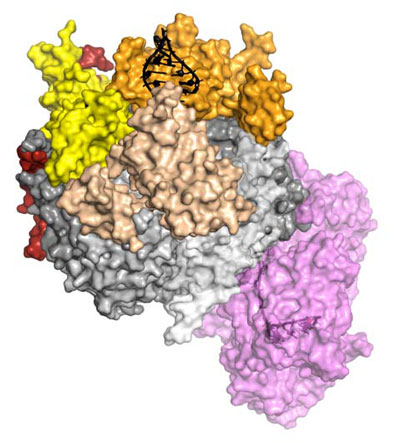
A macromolecular shredder for RNA
Max Planck Researchers unravel the structure of the machinery for RNA disposal.
February 4, 2013 Read more
Researchers reveal mechanism to halt cancer cell growth, discover potential therapy
University of Pittsburgh Cancer Institute (UPCI) researchers have uncovered a technique to halt the growth of cancer cells, a discovery that led them to a potential new anti-cancer therapy.
February 4, 2013 Read more
Imaging unveils temperature distribution inside living cells
A research team in Japan exploring the functions of messenger ribonucleic acid (mRNA) - a molecule that encodes the chemical blueprint for protein synthesis - has discovered a way to take a close look at the temperature distribution inside living cells. This discovery may lead to a better understanding of diseases, such as cancer, which generate extraordinary intracellular heat.
February 2, 2013 Read more
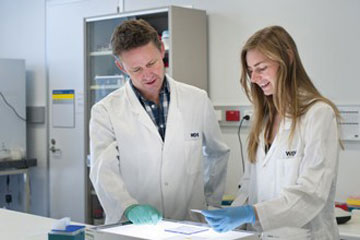
Caught in the act: Researchers capture key moments in cell death
Scientists at the Walter and Eliza Hall Institute have for the first time visualised the molecular changes in a critical cell death protein that force cells to die.
February 2, 2013 Read more

Researchers synthesise the first biologically effective perfume for partner selection
Max Planck researchers crack the olfactory code for partner selection and synthesise the first biologically effective perfume.
February 1, 2013 Read more
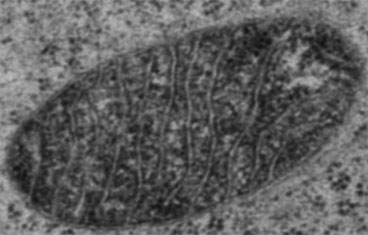
Mapping the living cell
New technique pinpoints protein locations, helping scientists figure out their functions.
February 1, 2013 Read more
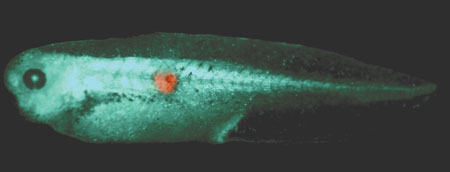
Bioelectric signals can be used to detect early cancer
Biologists at Tufts University School of Arts and Sciences have discovered a bioelectric signal that can identify cells that are likely to develop into tumors. The researchers also found that they could lower the incidence of cancerous cells by manipulating the electrical charge across cells' membranes.
February 1, 2013 Read more
Discovery in synthetic biology takes us a step closer to new 'industrial revolution'
Scientists report that they have developed a method that cuts down the time it takes to make new 'parts' for microscopic biological factories from 2 days to only 6 hours.
February 1, 2013 Read more
Sequencing hundreds of chloroplast genomes now possible
New method allows plant biologists to 'capture' and sequence the DNA of hundreds of complete chloroplast genomes at 1 time.
January 31, 2013 Read more
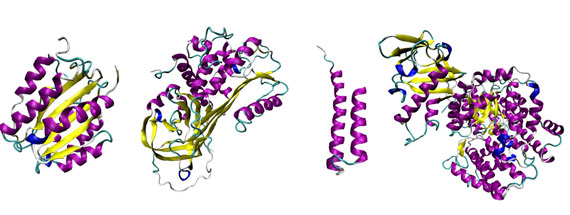
Protein origami: Quick folders are the best
The evolutionary history of proteins shows that protein folding is an important factor. Especially the speed of protein folding plays a key role.
January 31, 2013 Read more
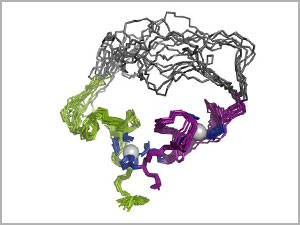
Researchers unveil first artificial enzyme created by evolution in a test tube
There's a wobbly new biochemical structure in Burckhard Seelig's lab at the University of Minnesota that may resemble what enzymes looked like billions of years ago, when life on earth began to evolve - long before they became ingredients for new and improved products, from detergents to foods and fuels.
January 30, 2013 Read more
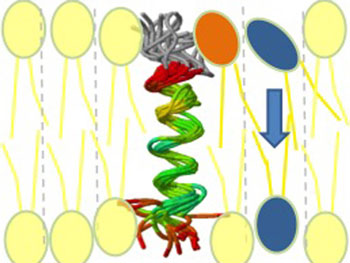
Pathway for membrane building blocks
Biomembranes consist of a mosaic of individual, densely packed lipid molecules. These molecules are formed inside the cells. But how do these building blocks move to the correct part of the membrane? Researchers from Technische Universität München (TUM) have discovered a mechanism to show how this is done.
January 30, 2013 Read more

Genetic Circuit Challenge winners announced
UCL's SynBioSoc announced the winner of their 2012 Genetic Circuit Challenge, an engineering design competition using life science 'ingredients' and sponsored by UCL Engineering.
January 30, 2013 Read more
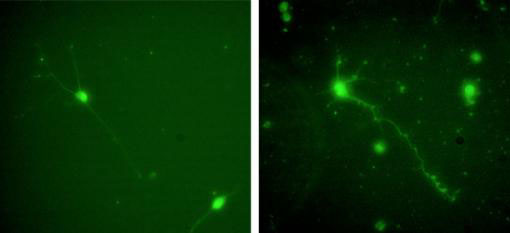
A better way to culture central nervous cells
A protein associated with neuron damage in Alzheimer's patients provides a superior scaffold for growing central nervous system cells in the lab. The findings could have clinical implications for producing neural implants and offers new insights on the complex link between the apoE4 apolipoprotein and Alzheimer's disease.
January 29, 2013 Read more
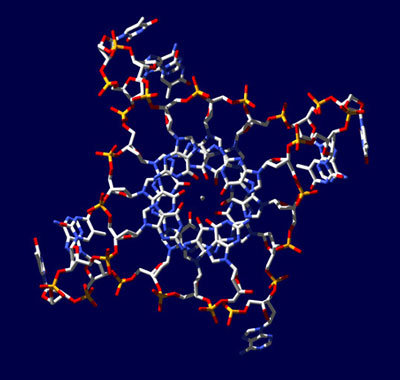
Quadruplex DNA found in human cells
60 years after Watson and Crick's ground breaking paper described the double helix structure of DNA, researchers at the University of Cambridge have observed four-stranded DNA structures within human cells. The discovery could open the door to novel cancer therapies and a new era for personalised medicine.
January 29, 2013 Read more
Scientists trick iron-eating bacteria into breathing electrons instead
Scientists have developed a way to grow iron-oxidizing bacteria using electricity instead of iron, an advance that will allow them to better study the organisms and could one day be used to turn electricity into fuel.
January 29, 2013 Read more
Learning the alphabet of gene control
Scientists from Karolinska Institutet in Sweden have made progress in understanding how human genes are regulated. In their study they have identified the DNA sequences, which bound to over four hundred proteins controlling the expression of genes.
January 28, 2013 Read more