

Nanotechnology News – Latest Headlines
Copper nanowires enable bendable displays and solar cells
A team of Duke University chemists has perfected a simple way to make tiny copper nanowires in quantity. The cheap conductors are small enough to be transparent, making them ideal for thin-film solar cells, flat-screen TVs and computers, and flexible displays.
June 1, 2010 Read more
'Biocomputing' advance demonstrates DNA computing circuits with artificial catalytic nucleic acids
EU-funded scientists have succeeded in demonstrating the feasibility of components for a kind of 'biocomputer', paving the way for new advances in the field of bioengineering.
June 1, 2010 Read more
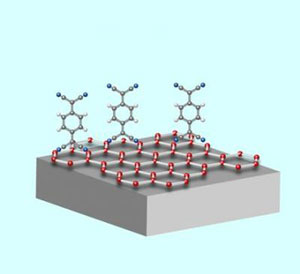
New graphene-based electronics could take a page out of the silicon electronics book
An organic molecule that has been found to be effective in making silicon-based electronics may be viable for building electronics on sheets of carbon only a single molecule thick.
June 1, 2010 Read more
NanoInk's NanoFabrication Systems Division Offers Free Nanotechnology Workshop at UCLA
Workshop will focus on tip-based lithography for bioengineers.
June 1, 2010 Read more
Nanotechnology methods allow to bust the mystery surrounding what happens when bubbles collide
The mystery surrounding what happens when bubbles collide has finally been busted. And knowing how bubbles bounce apart and fuse together could improve the quality of ice-cream and champagne as well as increase efficiency in the mining industry.
June 1, 2010 Read more
ICPC Nanonet Workshop 2010 Beijing - Register for the live webcast
The Second ICPC Nanonet Annual Workshop takes place on 14th and 15th June in Beijing, China, prior to the famous Dragon Boat Festival.
June 1, 2010 Read more
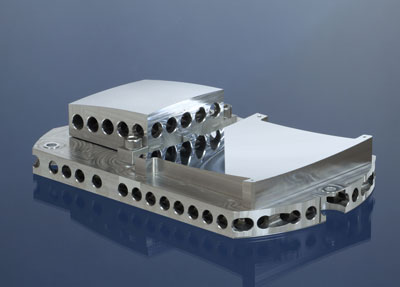
Ultra-precise optical systems for space
Metal mirrors made with extremely high precision and exactly positioned are the key elements of modern telescopes. A new production technique enables complex optical surfaces to be manufactured with excellent trueness of shape and hitherto unattained positional accuracy.
June 1, 2010 Read more

World of lights in the microcosmos
Light-emitting diodes are gaining ground: They are now being used as background lighting for displays. But the manufacturing of complex LED optics is still complex and expensive. A new technology is revolutionizing production: Large-scale LED components can now be manufactured cost-effectively.
June 1, 2010 Read more

Brilliant counterfeit protection
Counterfeit products create losses in the billions each year. Beside the economic damages, all too often additional risks arise from the poor materials and shoddy workmanship of 'knock-off artists'. Yet with the aid of fluorescing dyes, materials can be individually tagged and identified with certainty.
June 1, 2010 Read more
Nanomedicine takes up pace
On December 2 - 3, 2010 experts from all over the world will gather for the 7th NanoMed conference in Berlin to discuss the state of the art in biomedical applications of nanotechnology. This year's Focus Topic is Nanotechnology-Enabled Diagnosis and Treatment of Cancer.
June 1, 2010 Read more
New open-access journal of nanotechnology launched by Beilstein Institute
The Beilstein-Institut, a non-profit foundation, launches a scientific journal in the area of nanotechnology and nanoscience. The 'Beilstein Journal of Nanotechnology' is an Open Access Journal, which is globally available and publishes the latest research results and reviews. Publishing in this Journal is offered without any fees for authors and readers. The call for papers starts on June 1, 2010.
June 1, 2010 Read more
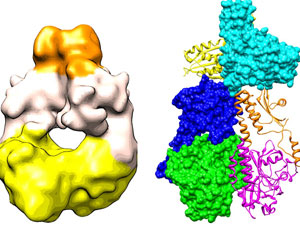
New findings will help scientists understand how plants respond to light
When the first warm rays of springtime sunshine trigger a burst of new plant growth, it's almost as if someone flicked a switch to turn on the greenery and unleash a floral profusion of color. Opening a window into this process, scientists have deciphered the structure of a molecular 'switch' much like the one plants use to sense light.
May 31, 2010 Read more

Perspectives on computational biology methods
There have been impressive advances in computational methods, allowing researchers to better understand biological and physiological systems at the atomic level. In its latest Perspectives in General Physiology series, the Journal of General Physiology (JGP) offers an in-depth look at several of these methods and the advantages of each as applied to membrane proteins, with special focus on ion channels.
May 31, 2010 Read more
In nano-optics breakthrough, researchers develop plasmonic amplifier
Researchers at the University of Iceland, University of Cologne and the Fraunhofer Institute Jena have demonstrated net optical amplification in a plasmonic waveguide.
May 31, 2010 Read more
Million-dollar grant supports development of multi-tasking nanocomposite material
A $3 million Ohio Third Frontier award to the University of Dayton Research Institute will fund the scale-up and production of a 'game-changing' new nanomaterial that will allow composites to multitask - a wind turbine tower that can de-ice its own blades in winter, or store energy to release on a calm day, powering a grid even when its blades are not moving.
May 31, 2010 Read more
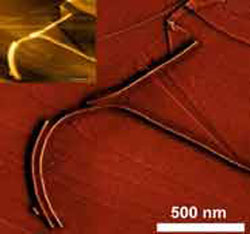
Novel self-assembly nanofabrication method relies on crystallization
A collaboration between researchers ha led to the discovery of a new self-assembly method for controlling the dimensions of cylinders created from polymer precursors which contain two chemically different segments joined together, so the length of the cylinders can be precisely controlled.
May 31, 2010 Read more
 Subscribe to our Nanotechnology News feed