

Nanotechnology News – Latest Headlines
Waseda University's Biosciences Reserach Institute in Singapore covers nanobiotechnology
Waseda and A*STAR to foster closer ties through scientific collaborations and student exchange.
September 14, 2009 Read more
Putting a strain on nanowires could yield colossal results
In finally answering an elusive scientific question, researchers with the Lawrence Berkeley National Laboratory have shown that the selective placement of strain can alter the electronic phase and its spatial arrangement in correlated electron materials.
September 14, 2009 Read more
Nanoscopic 3D images provide important insights into nanoscale structure of polymer solar cells
Researchers from the Eindhoven University of Technology and the University of Ulm have made the first high-resolution 3D images of the inside of a polymer solar cell. This gives them important new insights in the nanoscale structure of polymer solar cells and its effect on the performance.
September 13, 2009 Read more
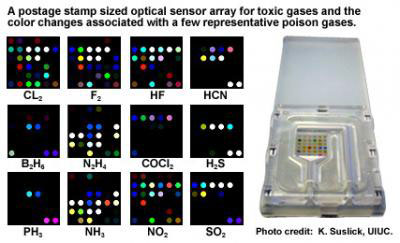
Postage stamp-sized electronic nose sniffs out poisonous gases
Imagine a polka-dotted postage stamp-sized sensor that can sniff out some known poisonous gases and toxins and show the results simply by changing colors.
September 13, 2009 Read more
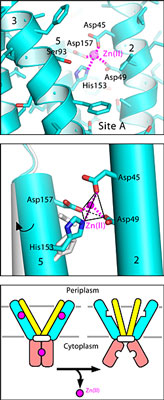
How much difference can a tenth of a nanometer make?
How much difference can a tenth of a nanometer make? When it comes to figuring out how proteins work, an improvement in resolution of that miniscule amount can mean the difference between seeing where atoms are and understanding how they interact.
September 13, 2009 Read more
When nano may not be nano
The same properties of nanoparticles that make them so appealing to manufacturers may also have negative effects on the environment and human health. However, little is known which particles may be harmful. Part of the problem is determining exactly what a nanoparticle is.
September 13, 2009 Read more
American Chemical Society announces winner of second nanotechnology video contest
The theme of the recent contest was 'How Will Nano Change the World'?
September 11, 2009 Read more
Department of Energy awards $486k to research superconductivity at the nanoscale
Using high tech equipment at Argonne National Laboratory, a group at Northern Illinoisd University is developing methods to synthesize a new class of free-standing superconducting nanowires and nanoribbons that are stable in atmosphere.
September 11, 2009 Read more
Launch of major European research project on efficiency increase in semiconductor industry
At the Fraunhofer Institute for Integrated Systems and Device Technology IISB in Erlangen as well as its project partners, the operations around the largest European joint research project on efficiency increase in semiconductor industry - IMPROVE - have been started.
September 11, 2009 Read more
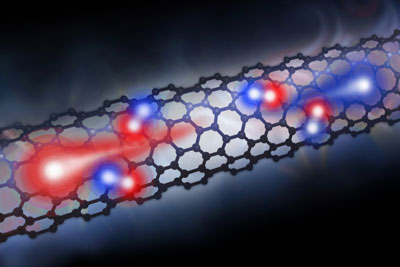
Replacing silicon with carbon nanotubes could make efficient solar cells
Using a carbon nanotube instead of traditional silicon, Cornell researchers have created the basic elements of a solar cell that hopefully will lead to much more efficient ways of converting light to electricity than now used in calculators and on rooftops.
September 10, 2009 Read more
First global online nanotechnology conference
The first online Nano-Globe Conference & Exhibition will be held simultaneously on 6 Continents from 22 to 25 March, 2010.
September 10, 2009 Read more
Metamaterials research lands cover of international journal
The groundbreaking work titled, 'Mimicking celestial mechanics in metamaterials,' links the newly emerging field of artificial optic materials with celestial mechanics in order to investigate celestial phenomenon in a controlled laboratory environment.
September 10, 2009 Read more
NSF grants $2.7 million to study nanomaterials and their biomedical applications
The University of Texas at San Antonio has received a five-year, $2.7 million grant from the National Science Foundation (NSF) to study nanomaterials and their biomedical applications.
September 10, 2009 Read more
New nanotube growth technique easier to integrate with semiconductor manufacturing processes
Researchers in the lab of MIT materials science professor Carl V. Thompson grew dense forests of crystalline carbon nanotubes on a metal surface at temperatures close to those characteristic of computer chip manufacturing.
September 10, 2009 Read more
Asylum Research offers 'AFM in Biology Class' Oct. 21-23
Asylum Research, a technology leader in scanning probe/atomic force microscopy (AFM/SPM) announces its AFM in Biology Class to be held October 21-23, 2009 in Santa Barbara, California. The class is open to all Atomic Force Microscopy users that want to increase their knowledge of AFM in biology and life sciences.
September 10, 2009 Read more
Superscanner Nanotom helps scientists see into the unknown
Researchers at The University of Nottingham have a new weapon in their arsenal of tools to push back the boundaries of science, engineering, veterinary medicine and archaeology.
September 10, 2009 Read more
 Subscribe to our Nanotechnology News feed