

Nanotechnology News – Latest Headlines
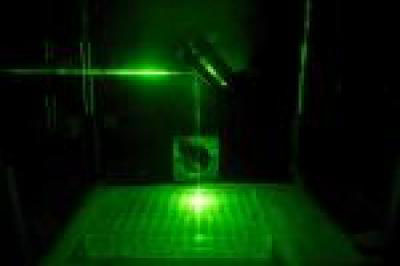
Novel nanotechnology drug delivery tool works with nanoparticles and lasers
Researchers at UC Santa Barbara have developed a new way to deliver drugs into cancer cells by exposing them briefly to a non-harmful laser.
September 10, 2009 Read more

Troublesome green algae serve as nanocoating substrate in record-setting battery
Unwanted blooms of Cladophora algae throughout the Baltic and in other parts of the world are not entirely without a positive side. A group of researchers at the Angstrom Laboratory at Uppsala University have discovered that the distinctive cellulose nanostructure of these algae can serve as an effective coating substrate for use in environmentally friendly batteries.
September 10, 2009 Read more
RNAs taking center stage
RNAs, serving as a mere intermediary between DNA and proteins, were long regarded as a poor relation by researchers, attracting little interest. However, following the discovery of small RNAs known as microRNAs, they have increasingly been moving into the limelight.
September 10, 2009 Read more
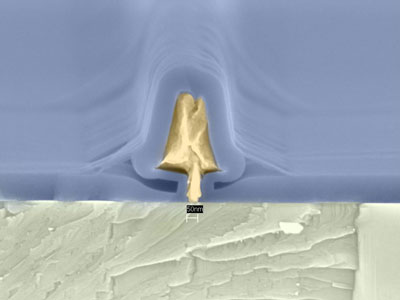
Fast transistors for a digital world
Our society is insatiable as far as the transfer of data is concerned. Consequently, increasingly faster and cheaper transistors are being developed. In row in recent months, researchers from ETH Zurich have now broken the world record for the switching speed of nitride-based transistors that use silicon as a substrate several times.
September 10, 2009 Read more
Universities receive $3 million grant to bolster diversity among materials scientists
Xavier University of Louisiana and New York University have received a $3 million grant from the National Science Foundation to bolster diversity among materials scientists through collaborative research and curriculum development.
September 10, 2009 Read more
How to control your quantum pulse
A new way of storing and 'echoing' pulses of light has been discovered by a team from The Australian National University, allowing bursts of laser to work as a flexible optical memory and potentially assist in extending the range of quantum information systems.
September 10, 2009 Read more
Cement's basic molecular structure finally decoded
A MIT team found that the calcium-silica-hydrate in cement isn't really a crystal. It's a hybrid that shares some characteristics with crystalline structures and some with the amorphous structure of frozen liquids, such as glass or ice.
September 9, 2009 Read more
International experts assess current and emerging challenges in protecting public health
Important issues surrounding the quality of food and drugs?including global supply chain management, the challenges of creating follow-on biologics and nanotechnology for drug delivery?will be the focus of the U.S. Pharmacopeial (USP) Convention's 2009 Annual Scientific Meeting
September 9, 2009 Read more

Highly charged tungsten ions may diagnose fusion energy reactors
Sodium-like tungsten ions could pepper - and conveniently monitor - the hot plasma soup inside fusion energy devices, potential sources of abundant, clean power.
September 9, 2009 Read more
NIST issues new call for white papers on critical national needs
The National Institute of Standards and Technology (NIST) has published a new request for white papers that outline or help define potential new funding competitions under the agency's Technology Innovation Program (TIP).
September 9, 2009 Read more
Calculations may improve temperature measures for microfluidics
If you wanted to know if your child had a fever or be certain that the roast in the oven was thoroughly cooked, you would, of course, use a thermometer that you trusted to give accurate readings at any temperature within its range. However, it isn't that simple for researchers who need to measure temperatures in microfluidic systems?tiny, channel-lined devices used in medical diagnostics, DNA forensics and lab-on-a-chip chemical analyzers?as their current 'thermometer' can only be precisely calibrated for one reference temperature.
September 9, 2009 Read more
Gunning for free electrons
The U.S. Department of Energy's Lawrence Berkeley National Laboratory and the SLAC National Accelerator Laboratory are collaborating to help define the most critical new technologies for the next generation of free electron lasers.
September 9, 2009 Read more
Drug development based on nature's gene-silencing mechanism
Putting the next generation of medicines on pharmacy shelves hinges on an intensive search for ways of safely and effectively delivering a silencing message to genes that are at the basis of innumerable diseases.
September 9, 2009 Read more
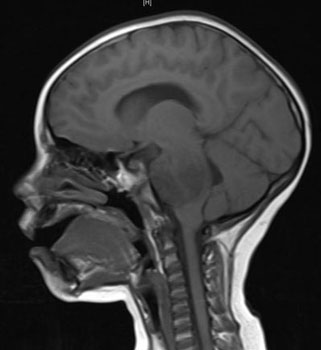
Toward a nanomedicine for brain cancer
In an advance toward better treatments for the most serious form of brain cancer, scientists in Illinois are reporting development of the first nanoparticles that seek out and destroy brain cancer cells without damaging nearby healthy cells.
September 9, 2009 Read more
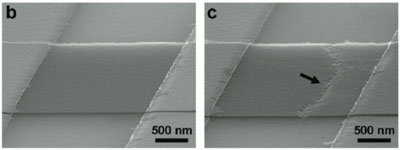
Researchers simplify fabrication of nano storage, chip-design tools
Advances by the Rice University lab of James Tour have brought graphite?s potential as a mass data storage medium a step closer to reality and created the potential for reprogrammable gate arrays that could bring about a revolution in integrated circuit logic design.
September 9, 2009 Read more
Avatars to be used in new science education software
Virtual characters, or avatars, will be part of a new learning tool designed to attract and retain young European science students. An EU-funded project is developing a programme that emphasises teaching scientific concepts in an interactive environment. The main purpose of the three-year project is to get students more involved in the learning process and to capture their interest in science.
September 9, 2009 Read more
 Subscribe to our Nanotechnology News feed