

Nanotechnology News – Latest Headlines
Argonne, North Dakota universities to form regional research partnership
The U.S. Department of Energy's Argonne National Laboratory, the University of North Dakota and North Dakota State University announced today that they are developing a regional partnership to explore complementary scientific research efforts.
August 13, 2009 Read more

New center in London sheds light on science of photonics
A new centre for doctoral training at UCL is preparing to train the next generation of experts in the growing science of photonics.
August 13, 2009 Read more
Molecules wrestle for supremacy in creation of superstructures
Research at the University of Liverpool has found how mirror-image molecules gain control over each other and dictate the physical state of superstructures.
August 13, 2009 Read more
Fachtagung NanoPatentierung: Wissensvorsprung in der Nanotechnologie sichern
Fundierte Entscheidungshilfe zum Umgang mit Nano-Know-how gibt die Fachtagung NanoPatentierung am 9. September 2009 in Darmstadt.
August 13, 2009 Read more
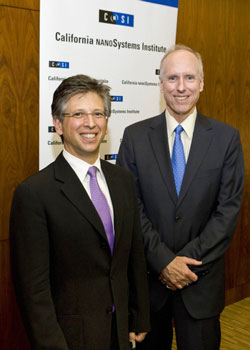
Paul Weiss named new director of California NanoSystems Institute
Leading nanoscientist Paul S. Weiss has been named director of the California NanoSystems Institute at UCLA, professor of chemistry and biochemistry, and holder of the Fred Kavli Chair in Nanosystems Sciences.
August 13, 2009 Read more
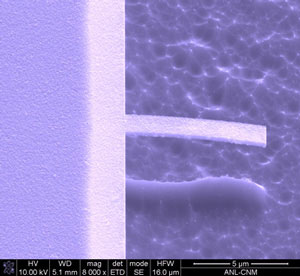
Mechanical energy dissipation in ultrananocrystalline diamond microresonators
Researchers have discovered that defects at the grain boundary in ultrananocrystalline diamond hold primary responsibility for the fundamental mechanism of energy dissipation.
August 12, 2009 Read more
The latest NIOSH nanotechnology research notes
Four recent accomplishments underscore the National Institute for Occupational Safety and Health's (NIOSH) internationally recognized leadership in working with diverse partners to further research on the occupational safety and health implications and applications of nanotechnology.
August 12, 2009 Read more
Camera flash turns graphite oxide into graphene
A Northwestern University professor and his students have found a new way of turning graphite oxide - a low-cost insulator made by oxidizing graphite powder - into graphene, a hotly studied material that conducts electricity.
August 12, 2009 Read more
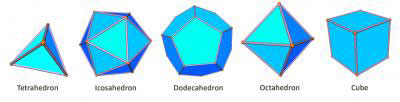
Princeton pair sets world record in sphere packing puzzle
Finding the best way to pack the greatest quantity of a specifically shaped object into a confined space may sound simple, yet it consistently has led to deep mathematical concepts and practical applications, such as improved computer security codes.
August 12, 2009 Read more
The convergence of nanotechnology and conventional microelectronics
The ProMiNaS Workshop on The Convergence of Conventional Microelectronics and Nanotechnology will be held in Grenoble, France, from Sept. 15 to 17, 2009, on the site of the Micro and Nanotechnologies Innovation Campus MINATEC.
August 12, 2009 Read more
Nanotechnology pioneer celebrates new book launch
Toronto professor Geff Ozin, one of the pioneers of what has now become nanoscience and nanotechnology, celebrated at the weekend the launch of his new book 'Concepts in Nanochemistry'.
August 12, 2009 Read more
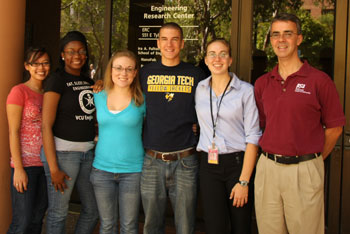
Students delve deep into advanced nanotechnology research at ASU
Five engineering students traveled to Arizona State University from across the country this summer for the opportunity to delve into advanced nanotechnology research with guidance from faculty of ASU's Ira A. Fulton Schools of Engineering.
August 11, 2009 Read more
Scientists control living cells with light - advances could enhance stem cells' power
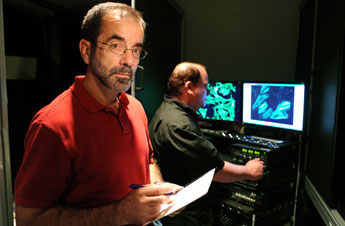
University of Central Florida researchers have shown for the first time that light energy can gently guide and change the orientation of living cells within lab cultures.
August 11, 2009 Read more
Unlocking secrets of magnetic microbes could accelerate bio-, nanotechnology research
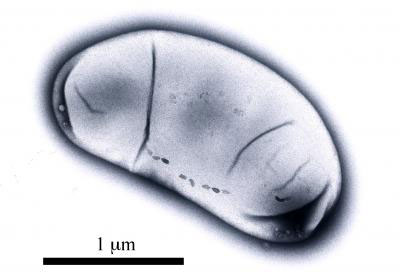
The smallest organisms to use a biological compass are magnetotactic bacteria, however mysteries remain about exactly how these bacteria create their cellular magnets.
August 11, 2009 Read more
Atoms in a lattice keep time
An experimental atomic clock based on ytterbium atoms is about four times more accurate than it was several years ago, giving it a precision comparable to that of the NIST-F1 cesium fountain clock, the nation's civilian time standard.
August 11, 2009 Read more
Novel temperature calibration improves microhotplate technology
Researchers at the National Institute of Standards and Technology (NIST) have developed a new calibration technique that will improve the reliability and stability of one of NIST's most versatile technologies, the microhotplate.
August 11, 2009 Read more
 Subscribe to our Nanotechnology News feed