

Nanotechnology News – Latest Headlines
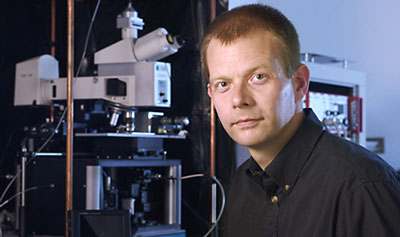
Light-absorbing nanowires may make better solar panels
A century after German physicist Gustav Mie derived the math to explain why the colors in some stained glass windows look especially resplendent in the sunlight, a team of Stanford engineers has built upon his work to potentially improve a means of harvesting energy from the sun.
July 7, 2009 Read more
EU scientific hearing on risk assessment of nanotechnologies
On 10 September 2009, the European Commission (DG Health and Consumers) is organising in Brussels a Scientific Hearing on the risk assessment of nanotechnologies.
July 6, 2009 Read more

Improving human health at the intersection of biology, chemistry and physics
Where biology, chemistry and physics intersect, a Kansas State University professor expects to find applications to improve human health.
July 6, 2009 Read more
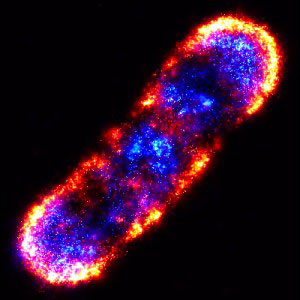
Scientists show how thousands of bacterial membrane proteins self-assemble into clusters that direct cell movement
Self-assembling and self-organizing systems are the Holy Grails of nanotechnology, but nature has been producing such systems for millions of years. A team of scientists has taken a unique look at how thousands of bacterial membrane proteins are able to assemble into clusters that direct cell movement to select chemicals in their environment.
July 6, 2009 Read more
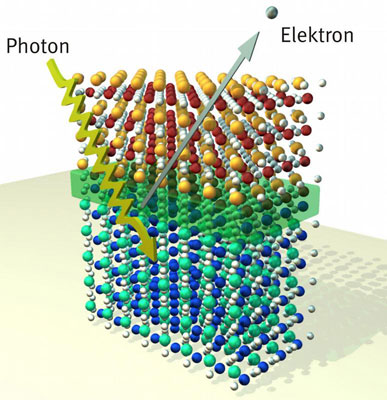
Physicists make electron gas visible
X-rays can be used to image hidden structures such as bones of the human body. But now, a team of physicists has succeeded in demonstrating the electronic structure of an interface in a solid for the first time
July 6, 2009 Read more
New 3-year study into impact of nanomaterials on aquatic ecosystems
A team of Canadian scientists and engineers, led by the University of Alberta and the National Research Council of Canada, will collaborate on a $3.39 million, three-year study to assess the potential effects of nanoparticles in specific water environments.
July 6, 2009 Read more
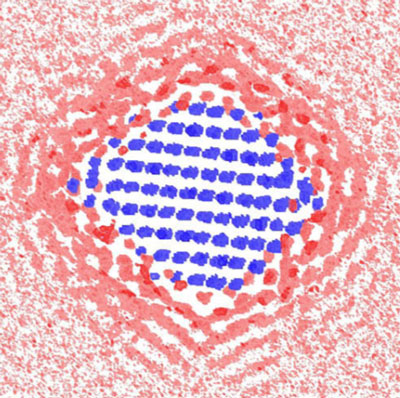
Computer simulations shed light on nanosized minerals
The red and blue images appear ghostly, like a fleeting glimpse of something that's never been seen before - which is true. Using computer simulations, Berkeley Lab scientists have developed the first predicted images of water molecules surrounding a nanoparticle, in this case an iron-oxide mineral called hematite.
July 6, 2009 Read more
New research accelerates development of high capacity hydrogen storage materials
Researchers at the U.S. Department of Energy's Savannah River National Laboratory have created a reversible route to generate aluminum hydride, a high capacity hydrogen storage material. This achievement is not only expected to accelerate the development of a whole class of storage materials, but also has far reaching applications in areas spanning energy technology and synthetic chemistry.
July 6, 2009 Read more
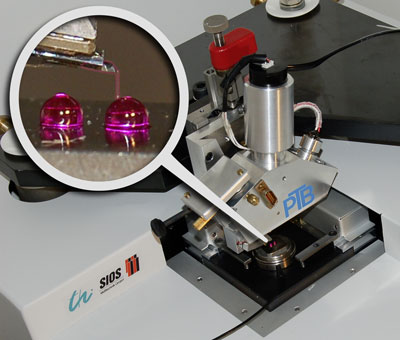
PTB develops micro and nano coordinate measuring instrument for 3D objects
Scientists at the Physikalisch-Technische Bundesanstalt (PTB) have developed a metrological scanning probe microscope into a micro and nano coordinate measuring instrument.
July 6, 2009 Read more
IMEC and Renesas to collaborate on on reconfigurable RF transceivers
Renesas Technology Corp., one of the world's leading semiconductor system solutions providers for mobile, automotive and PC/AV (Audio Visual) markets, has entered into a strategic research collaboration with IMEC, Europe's leading independent research center in the field of nanoelectronics, to perform research on 45nm RF transceivers targeting Gbit/s cognitive radios.
July 6, 2009 Read more
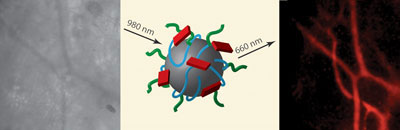
An alternative to quantum dots for bioimaging
Scientists have developed an in vivo imaging method that offers a potentially safer and more stable alternative to current methods.
July 6, 2009 Read more
Nanoengineering can give a boost to renewable energy technologies
The Economist print edition of last week carries an article that describes how nano-engineering can produce materials with unique properties that will give renewable energy a boost.
July 6, 2009 Read more

Exzellenzcluster 'Nano-Spintronik' bei der Hamburger Landesexzellenzinitiative erfolgreich
Wie die Behörde für Wissenschaft und Forschung letzte Woche bekannt gab, wird der Exzellenzcluster 'Nano-Spintronik' im Rahmen der Hamburger Landesexzellenzinitiative ab sofort für zunächst eineinhalb Jahre gefördert.
July 6, 2009 Read more
Europe's largest nanotechnology conference attracts top speakers
Europe's largest annual nanotechnology conference and exhibition, Nanotech Europe takes place in Berlin In its fifth year, Nanotech Europe will be held on 28 - 30 September 2009.
July 5, 2009 Read more
EU sponsored research to build nanotoxicology database
How nanoparticle toxicity affects the health and environment of Europeans is a concern that many researchers are currently investigating. Rising to the challenge is the NHECD ('Nano health-environment commented database') project, funded under the EU's Seventh Framework Programme to the tune of EUR 1.45 million. The project partners are seeking to create a critical and commented database on the health, safety and environmental impact of nanoparticles.
July 3, 2009 Read more
Novel method of imaging surface charges on individual biomolecules
A collaborative effort between researchers from the London Centre for Nanotechnology, King's College London and UCL Chemistry has led to the first measurements of the electrostatic surface potential of individual DNA and avidin molecules with nanometre resolution using Kelvin Probe Force Microscopy in air.
July 3, 2009 Read more
 Subscribe to our Nanotechnology News feed