

Nanotechnology Spotlight – Latest Articles
 Subscribe to our Nanotechnology Spotlight feed
Showing Spotlights 9 - 16 of 54 in category Display Technologies (newest first):
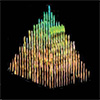
From pixel to voxel: New technique creates vivid 3D color patterns inside clear glass
Researchers develop micro-amorphization technique that allows imprinting dynamic, full-color 3D voxel arrays throughout bulk transparent solids, enabling new horizons in data storage, quantum optics, and multidimensional information optics.
October 22, 2023
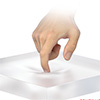
Inkjet-printed touchscreens gain a third dimension
Inkjet printing techniques have yielded touchscreens that detect finger position and pressure in 3D. This breakthrough promises more intuitive interactions.
October 10, 2023

Recent progress of OFET technology
A recent review takes a look at the progress of organic field-effect transistors (OFETs) and their potential applications in flexible electronics. The authors explore the recent progress of OFET technology and some of the exciting, flexible electronic applications addressed by it.
March 28, 2023
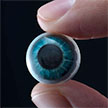
The future of contact lenses - lab-on-a-lens, augmented reality, and head-up displays
Ongoing smart contact lens research ranges from biosignal detection (intraocular pressure, glucose, cortisol) to therapeutic tools (aniridia, chronic ocular inflammation) and advanced features such as aumented reality displays and personalized designs using 3D-printing technology. Some of these technologies are already finding their way from the lab into commercial applications. The development of next-generation, smart contact lens technology is not just simply one field of bioelectronics but rather a complex, interdisciplinary effort that includes development of biocompatible materials; development of intuitive interfaces; and development of integration technologies capable of smart contact lens research.
April 18, 2022
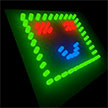
3D-printed perovskite nanopixels for ultrahigh-resolution displays and multilevel anticounterfeiting
The three-dimensional (3D) geometry of 3D-printed nanopixels can increase the emission brightness of display pixels, varying with the height of the pixels, and can be used to fabricate super high-resolution devices. 3D printing of perovskite nanopillars can be used for creating nanoscale display pixels as well and the increase of the emission intensity can be saturated by the limited depth of field of the measuring optical system.
June 30, 2021
Understanding ionic phenomena in liquid crystals doped with nanoparticles
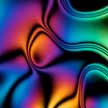
Liquid crystal materials are ubiquitous in everyday life. Recently, a new way to create advanced liquid crystal materials by merging nanotechnology and liquid crystals was discovered: by adding nanoscale objects to liquid crystals, new materials with superior physical properties can be created. However, this raises an important question: How do nanoparticles affect ionic processes in liquid crystals? Here is an overview of recent advances in the understanding of ionic phenomena in liquid crystals doped with nanomaterials.
March 18, 2021

A brief history of OLEDs
OLED technology is based on the phenomenon that certain organic materials emit light when fed by an electric current. OLED technologies makes it possible to manufacture ultra flat, very bright and power-saving OLED televisions, windows that could be used as light source at night, and large-scale organic solar cells. Since the development of the first viable OLED device in 1987, and tens of thousands of patents and research articles later, OLED device technology is moving towards its fourth generation.
January 27, 2021
Nanoparticles can cause unusual reorientation transitions in liquid crystals
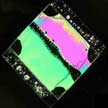
Many of the electronic devices we use in our everyday life employ liquid crystals in their optical displays. Electric field induced orientational transitions of elongated liquid crystal molecules are at the heart of LC technologies. Changing the applied voltage controls the orientation of liquid crystals and their properties such as color. Scientists now report an experimental observation of the electro-optical effect that is completely opposite to the conventional guest-host effect: ferroelectric nanoparticles being switched by an external field mediate the switching of liquid crystals.
August 28, 2020