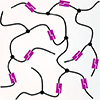
DNA base pairing snaps magnetic Janus nanoparticles and enzyme-loaded polymersomes into modular nanorobots that can be steered, tracked, and magnetically recovered for repeated catalytic cycles.
Self-adhesive polymer substrates turn independently optimized transistor modules into snap-together electronic skin that senses, learns, and computes without performance trade-offs.
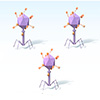
A biohybrid nanorobot pairs a bacterial virus with catalytic nanoparticles to destroy drug-resistant biofilms and shred the resistance genes they release.
Dynamic liquid crystal elastomer composites enable a 3D-printed soft robot that switches between three propulsion modes on water and reshapes its body for complex tasks.
A single microrobot cleans pollutants from wastewater then repurposes them to kill cancer cells, executing both tasks in sequence without retrieval or reprocessing between jobs.
Nanodiamond quantum sensors mounted on magnetic microbots achieve coherent spin control while moving freely through fluid, a first for untethered quantum sensing.
Magnetic graphene oxide sheets fold, move, sense motion, and switch function by swapping magnetic layers, offering a fast, reprogrammable platform for soft robots and other morphable structures.