

Biotechnology News – Latest Headlines
 Subscribe to our Biotechnology News feed
Discovery may help nerve regeneration in spinal injury
Scientists at the Universities of Liverpool and Glasgow have uncovered a possible new method of enhancing nerve repair in the treatment of spinal cord injuries.
November 5, 2012 Read more
New guideline for DNA sequences could prevent erroneous data
DNA sequence data is an indispensable source of research information in biology. But not all data are reliable. Almost 10% of all fungal DNA sequences are, for example, incorrectly identified to species level. A international team of researchers, with it?s core at the University of Gothenburg, Sweden, has therefore prepared a guide to assist the scientific community in the quality control process.
November 5, 2012 Read more
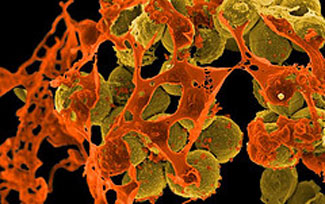
Superbug MRSA identified in US wastewater treatment plants
University of Maryland-led study is first to document environmental source of the antibiotic-resistant bacteria in the United States.
November 5, 2012 Read more
A faster, more economical method for detecting bioterror threats
Texas Biomedical Research Institute scientists in San Antonio have developed a faster, less expensive route to screen suitable tests for bioterror threats and accelerate the application of countermeasures.
November 5, 2012 Read more
Computers 'taught' to ID regulating gene sequences
Johns Hopkins researchers have succeeded in teaching computers how to identify commonalities in DNA sequences known to regulate gene activity, and to then use those commonalities to predict other regulatory regions throughout the genome. The tool is expected to help scientists better understand disease risk and cell development.
November 5, 2012 Read more
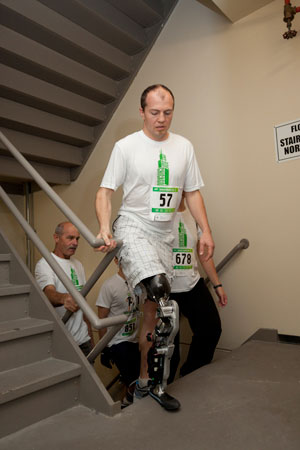
The first thought-controlled bionic leg
Rehabilitation Institute of Chicago research participant Zac Vawter made history on Sunday, November 4, 2012, by climbing 103 floors of Chicago's Willis Tower using the first "thought-controlled bionic leg", a neural-controlled prosthetic leg driven by his own thoughts.
November 5, 2012 Read more
Temporary storage for electrons: Natural method of producing hydrogen
Scientists at the Max Planck Institute for Chemical Energy Conversion (MPI CEC) and the Ruhr-Universität Bochum (RUB) have found through spectroscopic investigations on a hydrogen-producing enzyme that the environment of the catalytic site acts as an electron reservoir in the enzyme.
November 2, 2012 Read more
How bacteria talk to each other and our cells
Bacteria can talk to each other via molecules they themselves produce. The phenomenon is called quorum sensing, and is important when an infection propagates. Now, researchers at Linköping University in Sweden are showing how bacteria control processes in human cells the same way.
November 1, 2012 Read more
Plants recognise pathogenic and beneficial microorganisms
Plant roots are surrounded by thousands of bacteria and fungi living in the soil and on the root surface. To survive in this diverse environment, plants employ sophisticated detection systems to distinguish pathogenic microorganisms from beneficial microorganisms.
November 1, 2012 Read more
Study details essential role of trust in agricultural biotech partnerships
Researchers identify building blocks of trust: Honesty, transparency, capability, accountability, solidarity and generosity.
November 1, 2012 Read more
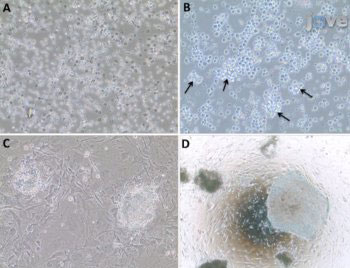
Novel technique to produce stem cells from peripheral blood
A new video-protocol in JoVE details steps to generate human induced pluripotent stem cells (iPSC) from cells in the peripheral blood. The technique has been developed by Boston University's Dr. Gustavo Mostoslavsky and his colleagues.
November 1, 2012 Read more
Global genome effort seeks genetic roots of disease
By decoding the genomes of more than 1,000 people whose homelands stretch from Africa and Asia to Europe and the Americas, scientists have compiled the largest and most detailed catalog yet of human genetic variation. The massive resource will help medical researchers find the genetic roots of rare and common diseases in populations worldwide.
October 31, 2012 Read more
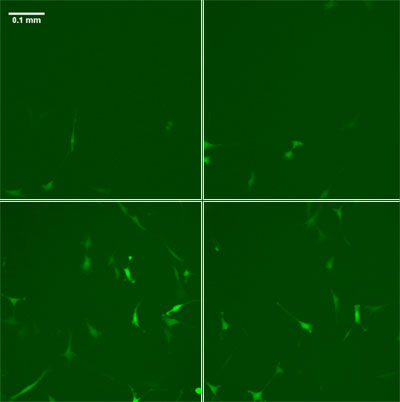
Cellular landscaping: Predicting how, and how fast, cells will change
A research team at the National Institute of Standards and Technology has developed a model for making quantifiable predictions of how a group of cells will react and change in response to a given environment or stimulus - and how quickly. The NIST model, in principle, makes it possible to assign reliable numbers to the complex evolution of a population of cells, a critical capability for efficient biomanufacturing as well as for the safety of stem cell-based therapies, among other applications.
October 31, 2012 Read more
Team uses antisense technology that exploits gene splicing mechanism to kill cancer cells
Blocking production of a pyruvate kinase splice-variant shows therapeutic promise.
October 31, 2012 Read more
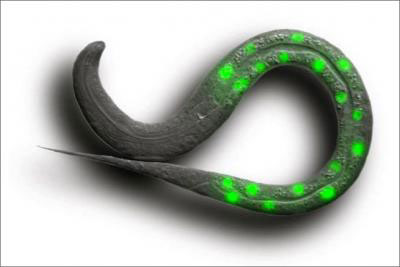
Scientists learn how to unlock the destiny of a cell: A gift for the tin man?
Scientists have discovered that breaking a biological signaling system in an embryo allows them to change the destiny of a cell. The findings could lead to new ways of making replacement organs.
October 31, 2012 Read more
Advanced exoskeleton promises more independence for people with paraplegia (w/videos)
The dream of regaining the ability to stand up and walk has come closer to reality for people paralyzed below the waist who thought they would never take another step.
October 30, 2012 Read more

Researchers create potatoes with higher levels of carotenoids
Potatoes with higher levels of beneficial carotenoids are the result of U.S. Department of Agriculture (USDA) studies to improve one of America's most popular vegetables.
October 24, 2012 Read more
Large-scale production of biofuels made from algae poses sustainability concerns
Scaling up the production of biofuels made from algae to meet at least 5 percent -- approximately 39 billion liters -- of U.S. transportation fuel needs would place unsustainable demands on energy, water, and nutrients, says a new report from the National Research Council.
October 24, 2012 Read more