

Biotechnology News – Latest Headlines
 Subscribe to our Biotechnology News feed
A GPS in your DNA
While your DNA is unique, it also tells the tale of your family line. It carries the genetic history of your ancestors down through the generations. Now, says a Tel Aviv University researcher, it's also possible to use it as a map to your family's past.
August 16, 2012 Read more

Flexible snake armour
Biology could inspire systems in engineering with minimized abrasion.
August 15, 2012 Read more
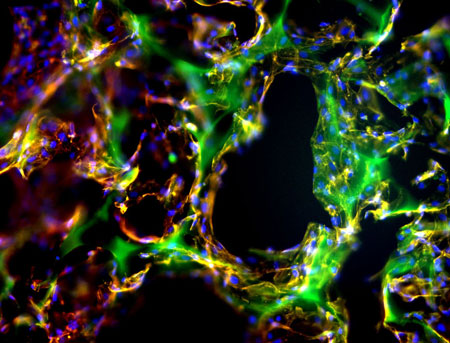
Success of engineered tissue depends on where it's grown (w/video)
Cells grown on different types of scaffolds vary in their ability to help repair damaged blood vessels.
August 15, 2012 Read more
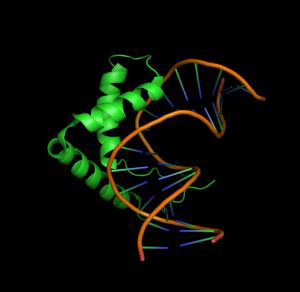
Molecular biology: The rules of interaction
Gene regulatory proteins may be more flexible in their DNA binding preferences than previously expected.
August 15, 2012 Read more
An artificial retina with the capacity to restore normal vision
For the first time, researchers decipher the retina's neural code for brain communication to create novel, more effective prosthetic retinal device for blindness.
August 14, 2012 Read more
Launching a 'social networking war' against cancer
Experts agree that, more than ever before, modern wars will be fought in the cyber zone, targeting an enemy's communications technology to cause untold damage. Now a Tel Aviv University researcher is suggesting that the same tactics should be employed in the battle against one of the body's deadliest enemies - cancer.
August 14, 2012 Read more
Human embryos frozen for 18 years yield viable stem cells suitable for biomedical research
Even after being frozen for 18 years, human embryos can be thawed, grown in the laboratory, and successfully induced to produce human embryonic stem cells, which represent a valuable resource for drug screening and medical research.
August 13, 2012 Read more
Team develops new method for sequencing dark matter of life from a single cell
An international team of researchers led by computer scientist Pavel Pevzner, from the University of California, San Diego, have developed a new algorithm to sequence organisms' genomes from a single cell faster and more accurately.
August 10, 2012 Read more
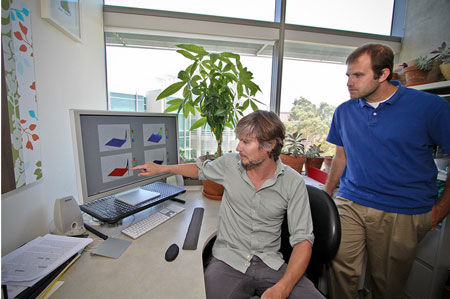
Computer models calculate systems-wide costs of gene expression
Bioengineers at the University of California, San Diego have developed a method of modeling, simultaneously, an organism's metabolism and its underlying gene expression. In the emerging field of systems biology, scientists model cellular behavior in order to understand how processes such as metabolism and gene expression relate to one another and bring about certain characteristics in the larger organism.
August 8, 2012 Read more
Using millions of years of cell evolution in the fight against cancer
Georgia Tech researchers are focusing on ways to fight cancer by attacking defective genes before they are able to make proteins. John McDonald is studying micro RNAs (miRNAs), a class of small RNAs that interact with messenger RNAs (mRNAs) that have been linked to a number of diseases, including cancer. McDonald's lab placed two different miRNAs (MiR-7 and MiR-128) into ovarian cancer cells and watched how they affected the gene system.
August 7, 2012 Read more
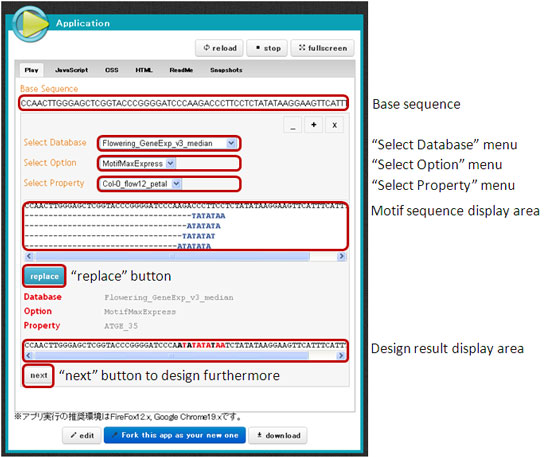
First DNA design guides available for GenoCon2 contest
Manuals for designing a synthetic promoter using the DNA CAD environment for Challenge A, as well as pointers for designing DNA sequences to introduce plant functions for Challenge B are now available from the GenoCon website.
August 7, 2012 Read more
New technology eliminates plant toxins
A team of researchers from the University of Copenhagen have developed a method to hinder unwanted toxins from entering the edible parts of plants such as the oilseed rape, which will make it suitable for animal feed.
August 5, 2012 Read more
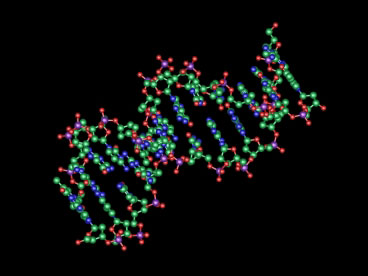
Researchers build a toolbox for synthetic biology
Engineers design new proteins that can help control novel genetic circuits in cells.
August 3, 2012 Read more
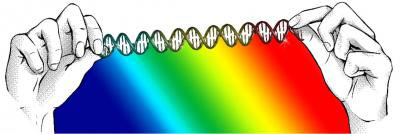
Researchers identify a novel double-stranded DNA structure
Researchers' findings address a scientific debate that had lasted for 16 years over the existence of a double-stranded DNA structure.
August 3, 2012 Read more
Getting to the root - unearthing the plant-microbe quid pro quo
The microbial community or microbiome that inhabits the rhizosphere and endosphere - the niches immediately surrounding and inside a plant's root?facilitates the shuttling of nutrients and information into and out of the roots within the soil matrix. These underground microbial activities have not received as much attention as the effort to characterize the role of the microbial populations inside and on the surfaces of humans, but this is now changing owing to a recent publication.
August 1, 2012 Read more
Massive data for miniscule communities
It's relatively easy to collect massive amounts of data on microbes. But the files are so large that it takes days to simply transmit them to other researchers and months to analyze once they are received. Researchers at Michigan State University have developed a new computational technique that relieves the logjam that these 'big data' issues create.
August 1, 2012 Read more
More code cracking
Three related studies help uncover the rules governing gene transcription.
August 1, 2012 Read more
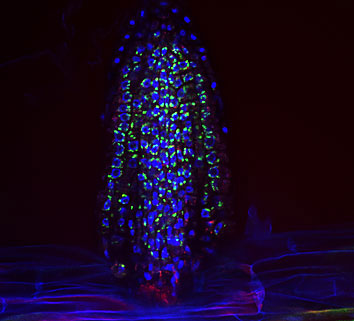
Roots and microbes: Bringing a complex underground ecology into the lab
Beneath the surface of the earth, an influential community of microbes mingles with plant roots. In the first large-scale analysis of those communities, scientists have now catalogued and compared the hundreds of types of bacteria that associate with the roots of the model plant Arabidopsis under various conditions.
August 1, 2012 Read more