

Nanotechnology Spotlight – Latest Articles
 Subscribe to our Nanotechnology Spotlight feed
Showing Spotlights 2785 - 2792 of 3574 in category All (newest first):
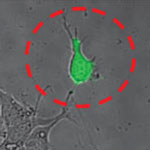
FluidFM: Combining AFM and nanofluidics for single cell applications
The Atomic Force Microscope (AFM) is a key tool for nanotechnology. This instrument has become the most widely used tool for imaging, measuring and manipulating matter at the nanoscale and in turn has inspired a variety of other scanning probe techniques. Originally the AFM was used to image the topography of surfaces, but by modifying the tip it is possible to measure other quantities (for example, electric and magnetic properties, chemical potentials, friction and so on), and also to perform various types of spectroscopy and analysis. Increasingly, the AFM is also becoming a tool for nanofabrication. Relatively new is the use of AFM in cell biology. Researchers in Switzerland have now demonstrated novel cell biology applications using hollow force-controlled AFM cantilevers - a new device they have called FluidFM.
July 8, 2009
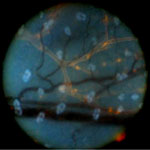
Novel electrostatic coupling method to make quantum dot conjugates
The usefulness of quantum dots comes from their peak emission frequency's extreme sensitivity to both the dot's size and composition. QDs have been touted as possible replacements for organic dyes in the imaging of biological systems, due to their excellent fluorescent properties, good chemical stability, broad excitation ranges and high photobleaching thresholds. In order for quantum dots to be useful as as nanoemitters for biological imaging, they need to be linked with a specific sensor molecule that exclusively targets a biomolecule of interest. These conjugations are usually made using small linker molecules although this often demands multistep procedures and may suffer from QD colloidal instabilities during the coupling reactions. Demonstrating hyaluronic acid-QD conjugates, researchers in Korea have now solved this problem by simple electrostatic conjugation which offers stable and size-tunable conjugates.
July 7, 2009
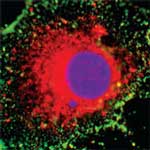
Nanotechnology: the things we don't know
A group of researchers at the Technical University of Denmark have conducted a systematic analysis of 31 recently published reports and articles which discuss the environmental, health, and safety aspects of nanomaterials. They find that serious knowledge gaps pervade nearly all areas of basic nanotechnology EHS knowledge. These knowledge gaps or areas of uncertainty were ranked to how often they were included in the screened literature. The analysis found that the following areas in particular have been highly cited as important knowledge gaps within the field: the lack of reference materials and standardization; environmental fate and behavior; human and environmental toxicity; test methods to assess, particularly, the effects, and commercial or industrial-related aspects (e.g. life cycle assessments).
July 3, 2009
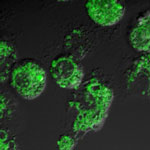
Fluorescent gold nanoprobes for real-time detection of reactive oxygen species
Environmental and behavioral factors may lead the body to produce superoxide radicals known as reactive oxygen species (ROS) that could cause cell damage through oxidation. Oxidative stress from ROS is implicated in aging and most diseases including cancer, heart disease, liver fibrosis, neurodegenerative diseases, autoimmune disorders. An excess of these reactive molecules can lead to oxidative stress and cellular damage, and toxicologists have identified ROS generation as a likely mechanism of nanoparticle toxicity. Since ROS plays an important role in various pathogenic processes, it has been recognized as an early indicator for cytotoxic events and cellular disorders. However, conventional chemical ROS probes have not fulfilled the rising need of in vitro and in vivo analysis of ROS generation due to auto-oxidation problems and poor specificity and sensitivity. Scientists in South Korea have now demonstrated a novel ROS-sensitive gold nanoprobe prepared from bio-inspired immobilization of fluorescein-labeled hyaluronic acid onto the surface of gold nanoparticles. This probe is highly stable under exposure to natural light and laser sources and extremely sensitive and specific to certain oxygen species.
July 2, 2009
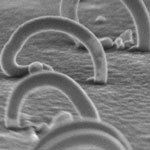
Nanoarches advance nanotechnology's tool box
One of the ultimate goals of nanotechnology is to fabricate functional devices at the nanoscale. A nanodevice is expected to integrate components of different material compositions and geometries. The integration is likely to be carried out on silicon if information processing is required. Thus far, the basic building blocks for nanodevices are nanoparticles, for which there are many material candidates; and nanotubes, for which the candidates are fewer (they are mostly carbon, although non-carbon based tubes have been fabricated as well). One-dimensional (1-D) nanomaterials such as nanotubes are useful for component connection and for the transport of charge, heat and vibration. In addition to the limited material selection, common 1-D nanomaterials are usually straight. Composite 1-D nanomaterials are rarer. Often they are also produced as discrete and unorganized units. Scientists in Singapore have now successfully fabricated a family of aligned one-dimensional C-curved nanoarches of different compositions by a simple and scalable method for the first time.
July 1, 2009

Nanotechnology PacMan cuts straight graphene edges
Graphene has two distinct types of edges produced when it is cut - armchair type or zigzag type - which correspond to the two crystal axis of graphene. These edge types are predicted theoretically to have distinct electronic, magnetic, and chemical properties, but current fabrication methods have no way of controlling which type of edge is produced and are dominated by disorder. For example, a common method is to use plasma etching which is an isotropic etching process and is not selective in which crystallographic direction it etches. This is a problem in especially nanoelectronics applications and devices where the potential performance of the device depends strongly on the edge structure as well. A solution to this problem has now been found. Researchers have demonstrated anisotropic etching in single-layer graphene which produces connected graphene nanostructures with crystallographically oriented edges. This opens many future avenues to study graphene nanostructures such as nanoribbons, nanoconstrictions, and quantum dots with crystallographic edges.
June 30, 2009

How to make nanosilver non-cytotoxic with sugar
You can find them in all kinds of products, from socks to food containers to coatings for medical devices - we are talking about silver nanoparticles. Valued for its infection-fighting, antimicrobial properties, silver in its modern incarnation as silver nanoparticles, has become the promising antimicrobial material in a variety of applications because the nanoparticles can damage bacterial cells by destroying the enzymes that transport cell nutrient and weakening the cell membrane or cell wall and cytoplasm. Despite their wide use, the issue of possible adverse effects and toxicity of nanoparticles for the human body is progressively, albeit slowly, recognized as central by an increasing number of studies. A widely accepted consensus on the detailed molecular mechanism of silver nanoparticles toxicity is still missing and very often the drive toward new formulations overwhelms the interest for a better assessment of the cytotoxicity of the nanoparticles. Scientists at the University of Trieste in Italy have now developed a novel non-cytotoxic nanocomposite hydrogel material based on natural polysaccharides and silver nanoparticles for antimicrobial applications.
June 29, 2009
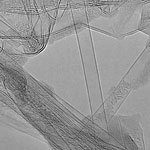
Observing carbon nanotubes can damage them - even at 80 kV
A few days ago we ran a Nanowerk Spotlight on a nanostructuring technique that uses an extremely narrow electron beam to knock individual carbon atoms from carbon nanotubes with atomic precision, a technique that could potentially be used to change the properties of the nanotubes. In contrast to this deliberately created defect, researchers are concerned about unintentional defects created by electron beams during examination of carbon nanomaterials with transmission electron microscopes like a high-resolution transmission electron microscope (HRTEM). For a long time it has been thought that if the accelerating voltage of electrons could be reduced to 80 kV in an electron microscope, then the electrons would not possess sufficient energy to cause knock-on damage in carbon nanomaterials. Knock-on damage occurs when electrons are scattered by the nucleus of the atom they are probing. Upon scattering, energy is transferred. In some circumstances this energy can be large enough to dislodge the atom from its position. A British-German team has examined how electrons accelerated at 80 kV interact with singe-walled carbon nanotubes and shown that in some circumstances SWCNTs were unstable.
June 25, 2009