

Nanotechnology Spotlight – Latest Articles
 Subscribe to our Nanotechnology Spotlight feed
Showing Spotlights 2793 - 2800 of 3574 in category All (newest first):

Humidity doesn't interfere with this nanotechnology gas sensor
Gas sensing applications are numerous in our modern society and include process monitoring, environmental compliance, health applications, homeland security, agriculture, etc. Gas sensors often operate by detecting the subtle changes that deposited gas molecules make in the way electricity moves through a surface layer. Thus, the more surface available, the more sensitive the sensor will be. Nanoscale materials are intriguing materials for next-generation nanotechnology gas sensors since their relative surface areas are so large. A problem with existing gas nanosensors is the cross-interference of other gas analytes. For instance, carbon nanotube based gas sensors for the prominent air pollutant nitrogen dioxide have shown strong interference of ethanol and ammonia gases to the NO2 response. Another cross-interference often is caused by humidity, i.e. the water vapor in the air. New research now demonstrates how the manufacturing of a nanosensor for ammonia gas can be tuned to eliminate the interference of water vapor. The trick lies in accurately controlling the synthesis of the sensing nanomaterial.
June 23, 2009

Nanotechnology approach for advanced drug delivery of water-insoluble therapeutics
A broad spectrum of therapeutics or effector molecules that address several areas of medicine, from inflammation, to cancer, and regenerative medicine, are insoluble in water (they are soluble primarily in solvents generally regarded as unsuitable for injection). The water insolubility of these therapeutics limits the means by which those compounds can be administered to the body. Rapid strategies to package and disperse these drugs in biocompatible vehicles while also maintaining their potent activity can have major implications in advancing fundamental, translational, and commercial/scale-up aspects of accelerating their clinical impact. A new study now shows a way in which nanodiamonds can be applied towards enhancing water dispersion of otherwise poorly watersoluble therapeutics. It realizes a high throughout strategy to solubilize a broad range of water-insoluble drugs, which coupled with the innate biocompatibility of nanodiamonds, provides an important foundation towards a nanotechnology platform approach for advanced drug delivery.
June 22, 2009
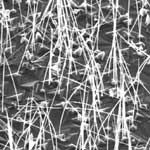
Another step in advancing nanotechnology fabrication techniques
One of the outstanding challenges in nanotechnology generally, and in the exploitation of so-called 'bottom-up' assembly of basic nanoscale building blocks such as nanowires, is the development of techniques for assembling large numbers of such nanostructures into more complex systems and precisely specified patterns in an accurate, deterministic manner. For instance, it is possible to build transistors, optical devices, and sensors with very specific properties using nanowires. Thus many useful applications of nanowires will depend on the ability to take these building blocks and organize them in some deterministic way in order to ultimately construct and interface with a nanowire-based system. New work demonstrates the basic capability for, and elucidates some of the guiding principles in, the use of dielectrophoretic behavior to direct the placement of large numbers of nanowires on complex, pre-patterned structures as might be required for integration of nanowires with, for example, silicon-based microelectronic circuitry. It shows that a high level of placement precision can be achieved by paying careful attention to the signal frequency as well as the macroscopic electrode architecture that is employed.
June 19, 2009
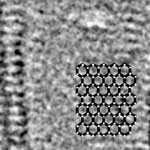
Nanotechnology structuring of materials with atomic precision
The manifold properties of carbon nanotubes (as well as other carbon nanomaterials such as fullerenes and graphene) are related to the various ways the carbon atoms can be arranged to form the tube lattice. Studies have shown that atomic-scale defects in these lattices can strongly influence the electronic and mechanical properties of the nanotubes. The simplest defect type is a vacancy where an atom is missing from the lattice site. Such defects can also be seen as chemically active sites for tube side wall functionalization. Due to the difficulty of observing vacancies directly, it remained unclear under what conditions vacancies in nanotubes are stable or exist at all. Researchers have now demonstrated a technique that allows them to remove carbon atoms from carbon nanotubes with atomic precision and in a controlled way with an extremely focused electron beam.
June 18, 2009

Nanotechnology and social inclusion - fear shouldn't drive public opinion
As nanotechnologies are increasingly becoming the focus of public interests and concerns, there is a risk that public opinion is shaped by either fearmongering or unrealistic expectations. Public engagement in policy making, i.e. having a say in decisions about technological developments that will affect people's lives significantly, should be based on objective information and facts. Public engagement is one of the processes that allows for increased social inclusion. Engagement seeks to achieve increased two-way information flow and knowledge exchange as well as increase overall technological literacy. Previously, we have reported about a German approach to embedding nanotechnology developments in society and covered the social aspects of nanotechnology in Europe. Today, we are showcasing an example from Down Under.
June 17, 2009

Approaches to safe nanotechnology
From a risk and safety point of view it is impossible to draw any definite conclusions as far as today's nanomaterials are concerned. Although gaining steam, nanotoxicological research is still scarce; standards are just emerging; and scientific findings can be contradicting each other because the underlying assumptions and methodologies vary. One initiative that tried to shed light on this issue is a recently completed global review of completed and near completed environment, health and safety research on nanomaterials and nanotechnology. The resulting EMERGNANO report is a unique attempt to identify and assess worldwide progress in relation to nanotechnology risk issues. The review doesn't provide any new data or conclusions but is offeres a fairly comprehensiv identification, stocktaking and analysis of of research carried out worldwide on nanotechnology safety, including that relating to hazard, exposure, risk assessment and regulation.
June 16, 2009
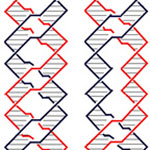
Nanoscale piston
Reciprocating devices are a common part of the macroscopic world. Examples of reciprocating machines are petrol and diesel engines or a hydraulic pump. At the core of these machines is a piston and cylinder assembly where the piston executes a reciprocating motion inside the cylinder. Reciprocating motion like that in a piston has not been available in a nanoscale machine until now. Ned Seeman and his team at New York University have designed a DNA device that exhibits reciprocal motion. They have used the PX-JX2 device, a robust sequence-dependent nanomechanical DNA machine, as the basis for constructing a pair of reciprocal devices, wherein one device assumes one state, while the other device assumes the opposite state.
June 11, 2009
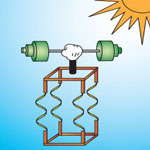
Photon-fueled single-molecule DNA nanomotor
Molecular-size motors have evolved in nature, where they are used in virtually every important biological process. In contrast, the development of synthetic nanomotors that mimic the function of these amazing natural systems and that could be used in man-made nanodevices is in its infancy. Building nanoscale motors is not just an exercise in scaling down the design of a macroworld engine to nanoscale dimensions. In addition to organic molecules, scientists increasingly are looking to DNA as a very promising way to fabricate nanomotors. The concept of a single DNA molecule nanomotor was already introduced in early 2002. However, this and subsequent designs require addition and removal of fuel and waste strands for motor function, although some artificial nanomotors can utilize alternative energy sources, including hydrolysis of the DNA backbone and ATP. Researchers at the University of Florida have now designed a photoswitchable single-molecule DNA nanomotor. It is the first fully reversible single-molecule DNA nanomachine driven by photons without any additional DNA strands as fuel.
June 10, 2009