

Nanotechnology Spotlight – Latest Articles
 Subscribe to our Nanotechnology Spotlight feed
Showing Spotlights 2265 - 2272 of 3575 in category All (newest first):
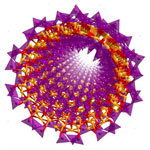
Cement nanotubes as a natural means for reinforcing concrete
Nanotechnology is increasingly being researched for applications in the construction industry and cement is a particular focus. Apart from reducing the damaging environmental side effects of cement production, another research focus is on reinforcing concrete to improve its mechanical performance. When researchers think of nanomaterial reinforcements for concrete, carbon nanotubes come as first option. The problem with carbon nanotubes is that they are water insoluble. In order to make them compatible with water chemistry, they must be functionalized in advance. To get around this problem, a team of scientists have proposed inorganic oxide nanotubes as natural means of reinforcements of cement pastes, in view of their chemically compatibility with the cement-water system.
June 12, 2012

Ultrastrong, foldable, and highly conductive carbon nanotube film
Carbon nanotubes (CNTs) show extraordinary multifunctionality, including excellent mechanical, electrical and thermal properties. To be used in practical applications, the CNTs need to be assembled into macroscale structures such as films, fibers and composites. Unfortunately, so far the properties of these macro-structures have been very poor, usually one to three orders of magnitude lower than that of individual CNTs. Low CNT structural perfection, alignment and intertube interaction are key issues that are responsible for such disappointing properties. Researchers have now demonstrated a simple, efficient and scalable strategy to make CNT films ultra-strong and conductive, in which the CNTs are well aligned and densely packed by exploiting drawable CNT arrays as precursors.
June 8, 2012
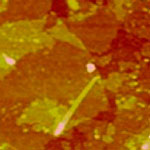
Modulating enzyme activity with functionalized graphene oxide
One type of biomolecules, enzymes, regulate almost all chemical reactions involved in numerous biological processes in living organisms and are also widely used in research and industry. Regulation of enzyme activity and stability is very important and has always attracted great attention. Various enzyme regulators, ranging from proteins, peptides, and synthetic organic molecules, have been discovered. Recently, nanomaterials evolve as promising alternatives for enzyme modulation. Nanomaterials provide large surface areas for biomolecule adsorption and can be engineered to present multiple surface functional groups for interacting with biomolecules, such as enzymes and/or their substrates. In a recent study, scientists started to explore the interactions between functionalized graphene oxide and serine proteases, a large family of enzymes with important biomedical and industrial applications.
June 7, 2012

Quantum teleportation over record distance, prelude to space networks
An international group of researchers reported a new record long distance for quantum teleportation. The authors claim a free-space distance of 143 kilometers. Quantum teleportation communicates physical information soundly without traveling directly through the space connecting the communicating parties. The reporting team includes quantum teleportation pioneer Anton Zeilinger of the Quantum Optics, Quantum Nanophysics, Quantum Information at the University of Vienna. Quantum teleportation combines classical and quantum information channels to transmit the complex state of quantum particles. The communication method conveys complete quantum information without the need to pass directly through the space between communicating parties.
June 4, 2012
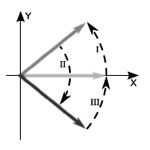
Summary of time reversal symmetry in optics
New research explores the uses of time reversal symmetry in optics, with a focus on quantum optics. The article compares time reversal with optical phase conjugation, and illustrates the concept of time reversal symmetry with several examples in classical and quantum optics. Time reversal symmetry is the physical property that events can occur in a forward or backward direction through time, with no fundamental distinction due to the direction. Time reversal symmetry applies to both classical and quantum optics, as well as areas of physics outside of optics. The property holds true in all areas of physics, with possible exceptions only under rare conditions in particle physics.
June 1, 2012
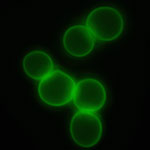
Functionalizing living cells through nanotechnology
Modifying living cell by coating them with a nanolayer of functional materials in order to provide them with new structural and functional features has developed into a popular research area for bionanotechnology researchers. In contrast to genetic manipulation techniques, here the functionality of a cell is modified simply by attaching polymers or nanoparticles to the cell's surface. A recent Perspective paper covers the most interesting and promising work in this area and presents an outlook the major potential future directions. The article focuses on on cell encapsulation with Layer-by-Layer (LbL) self-assembly via sequential adsorption of oppositely charged components: polyelectrolytes, nanoparticles, and proteins.
May 29, 2012
Ultrasmall nanoparticles show promise as anti-cancer agents
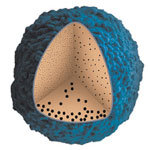
Researchers in China showed that nanoparticles smaller than 10 nm in diameter accumulate more efficiently and penetrate more deeply in tumors relative to their larger counterparts. Their findings have significant implications for the development of nanomaterials to diagnose and treat cancer. The enhanced tumor accumulation of the ultrasmall nanoparticles may be due, at least in part, to their prolonged blood circulation time. In contrast, most nanomaterials that enter the blood are rapidly cleared by tissue-resident macrophages in the liver and spleen. Ultimately, the ability of ultrasmall nanoparticles to diffuse deep within the tumor bulk may enable the design of nanoparticles that can carry therapeutic and diagnostic agents more efficiently into tumors.
May 28, 2012
Why is the (nano-)dose question so important?
A substance might potentially be harmful or even toxic for a biological system, provided that the quantity or the concentration (the "dose") is high enough. This principle forms the basis for health standards which determine the maximum permissible concentration of contaminations, for example in food, water or in the environment. Dose calculation is of high relevance for risk assessment as well as for regulations, for instance to determine the maximum allowable concentration of chemicals and particles or to determine other limits which do not cause health problems. In the case of nanomaterials, especially for nanoparticles there is to date, no limit regulation or any other regulation referring to dose, because the definition of dose for nanoparticles does not exist. The wherefores will be explained in this dossier.
May 24, 2012