

Nanotechnology Spotlight – Latest Articles
 Subscribe to our Nanotechnology Spotlight feed
Showing Spotlights 2273 - 2280 of 3575 in category All (newest first):

Consumers, nanotechnology and responsibilities: Operationalizing the risk society
Risks are high on the agenda in our society, to the extent that we might refer to the society as a risk society. Our society experiences emerging technologies, like nanotechnology. Different actors respond to this in a variety of ways. Among these are the consumers, an important, but neglected category of actors in this context. Arguably it is in our role as consumers we first encountered nanotechnology, in the form of nano-enabled products at the consumers market. What consumers think and do, reacting to the mixed messages about benefits and risks of nanotechnology, contributes to how the risk society (with regard to nanotechnology) is developed, and in that sense becomes operationalized. The theme of this thesis is not just the responses of consumers (and how others perceive these) to the introduction of nanotechnology, but also a case study of how the risk society can be operationalized.
May 22, 2012

Nitric oxide nanoparticles effectively treat candidal burn infections
Candida albicans is a leading fungal cause of burn infections in hospital settings. The prevalence of invasive candidiasis in burn cases varies widely, but it accounts as high as 23% of severe infection with a mortality rate ranging from anywhere to 14% to 70%. In a recent pre-clinical study, a nitric oxide releasing nanoparticle platform, which has previously been shown to be antibacterial to both gram positive and negative bacteria, as well as an accelerator of wound healing in excisional animal models, was found to be efficacious in clearing candidal burn infections in mice. This study represents one of many pre-clinical investigations demonstrating the efficacy of the NO nanoparticles as a broad spectrum antimicrobial agent as well as wound healing accelerant.
May 21, 2012

International standards for trade in nanotechnology foods?
Nanotechnology-based food and health products and food packaging materials are available to consumers in some countries already, and additional products and applications are currently in the research and development stage, and some may reach the market soon. In view of such progress, it is expected that nanotechnology-derived food products will be increasingly available to consumers worldwide in the coming years. Some of these products appear to already be in commercial use in other countries, raising the likelihood that they could become a part of our food supply in the near future, if they are not already. This article looks at how regulators are dealing with the pressures to commercialize nanotech foods and food packaging.
May 16, 2012
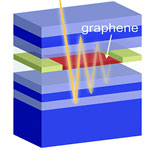
Microcavity vastly enhances photoresponse of graphene photodetectors
There is currently a very strong interest in using graphene for applications in optoelectronics. Graphene-based photodetectors have been realized before. By using graphene, researchers make use of the internal electric field that exists at the interface of graphene and metal. However, the low optical absorption of graphene - only 2.3 % due to its monoatomic thickness - leads to a low responsivity of these devices. Several groups worldwide are therefore currently pursuing different approaches to increase the interaction length of light with graphene and enhance the optical absorption. One novel approach is based on the integration of graphene into an optical microcavity. The increased electric field amplitude inside the cavity causes more energy to be absorbed, leading to a significant increase of the photoresponse.
May 14, 2012
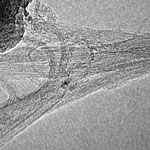
Carbon nanotubes enhance performance of heat transfer nanofluids
Nanofluids - engineered colloidal suspensions of nanoparticles in a base fluid - are attracting a great deal of interest with their enormous potential to provide enhanced performance properties. Particularly with respect to heat transfer, and compared with more conventional heat transfer fluids (i.e. coolants) currently available, nanofluidic coolants exhibit enhanced thermal conductivity. Attempts to increase the thermal conductivity of heat transfer fluids using nanoparticles has been an active research area over the past decade. However, these attempts have not resulted in a significant improvement in conductivity due to the low thermal conductivity of nanoparticles and high thermal boundary resistance around the 0-dimensional nanoparticles. Researchers have therefore decided to produce a nanofluid using single-walled carbon nanotubes because of their much higher thermal conductivity and their ability to form connected networks with the neighboring carbon nanotubes, thereby increasing the heat transfer path.
May 11, 2012
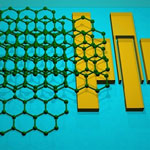
Graphene quilts take the heat away
Gallium Nitride (GaN) is a semiconductor material commonly used in bright light-emitting diodes since the 1990s, which are now found in traffic lights and solid-state lighting. Thanks to its wide band gap, this very hard semiconductor material also finds applications in optoelectronic, high-power and high-frequency devices. However, a severe problem that afflicts high-power GaN electronic and optoelectronic devices is self-heating and the difficulties of heat removal. Researchers have now found an unusual solution for the thermal management problem of gallium-nitride technology: They demonstrated that thermal management of GaN transistors can be substantially improved via introduction of alternative heat-escaping channels implemented with graphene multilayers.
May 10, 2012
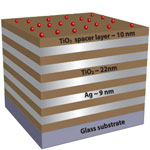
Topological transitions in metamaterials could lead to more efficient solar cells, sensors, and LEDs
Physicists have uncovered a new method to manipulate light by borrowing an idea from the field of mathematical topology - topology is the mathematical field dealing with the properties of objects undergoing deformations, such as stretching and twisting. They created an artificial material, a "metamaterial", that can transform from regular dielectric - a substance like glass or plastic, which does not conduct electricity - to a medium that behaves like metal (reflects) in one direction and like dielectric (transmits) in the other. The research team expects optical topological transition to be the basis for a number of applications of both fundamental and technological importance through use of metamaterial-based control of light-matter interaction.
May 9, 2012

Guiding crystallization in thin films around bends and corners (w/video)
Thin films comprising carbon-based molecules and polymers have promising technological applications, such as biosensors, solar cells, electrically-active and light-emitting layers for displays, etc. Oftentimes, properties, such as luminescence and conductivity, depend on the orientation of crystals within the film. In organic thin films deposited on substrates, crystallization most often occurs isotropically in the plane of the film. Much research has thus focused on controlling the orientation of crystals in the plane of organic thin films. The use of temperature gradients and gravitational flow have been successfully employed to orient crystals unidirectionally. Two-dimensional control of the orientation of crystals spatially within organic thin films, however, remains exceedingly difficult to achieve. In new work, researchers have now demonstrated a method to guide crystallization along arbitrary patterns in the plane of organic thin films, using an organic semiconductor.
May 8, 2012