

Nanotechnology Spotlight – Latest Articles
 Subscribe to our Nanotechnology Spotlight feed
Showing Spotlights 1545 - 1552 of 3580 in category All (newest first):
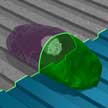
Virtual cell model predicts cell response to substrate topography (w/video)
The crucial roles of the physicochemical properties of cell culture substrates on function and behavior of a wide range of the cells are becoming well-studied in the current literature, using experimental approaches. However, development of in silico approaches for prediction of cell responses to the physicochemical properties of substrates is still in its infancy. In new work, an international team of researchers has developed a unifying computational framework to create a multi-component virtual cell model to probe cell function/behavior in silico.
November 1, 2017
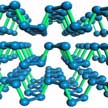
The rising star of 2D black phosphorus (phosphorene): Past, present and future prospects
Since the ground-breaking discovery of two-dimensional (2D) black phosphorus (phosphorene), it has created global research interest and triggered ripples of excitement in the scientific community due to its intriguing optical, mechanical and electronic properties. Researchers have looked into the state-of-the-art development of phosphorene, including its structure, preparation routes, anisotropic properties, device applications as well as the bottlenecks encountered by the research community. However, there still are quite a few obstacles and opportunities for scientists to tackle.
October 31, 2017
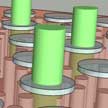
Reversibly controlling the learning properties of memristors via optical means
Memristors present an opportunity to make new types of computers that are different from existing von Neumann architectures, which traditional computers are based upon. In new work, researchers have demonstrated the ability to reversibly control the learning properties of memristors via optical means. They show that light can be used in a reversible manner to change the connection strength (or conductivity) of artificial memristor synapses and as well control their ability to forget i.e. we can dynamically change device to have short-term or long-term memory. The reversibility is achieved by changing the polarization of light.
October 30, 2017
Ultra-thin graphene-based encapsulation for OLEDs
Researchers have reported on improved performance of graphene-based moisture barrier layers. By combining catalytic CVD and ALD they created in scalable fashion nanolaminates of few-layer graphene and aluminium oxid. Unlike previous reports, this new approach exploits the synergy between different materials and growth techniques. These nanolaminates also are a potential material to be included in standard multi-stacked barrier layers to enhance the performance of existing ALD aluminium oxide and produce next generation moisture barriers.
October 26, 2017
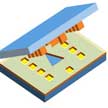
Modular 'Lego' electronics
Researchers demonstrate a novel assembly technique for transforming traditional state-of-the-art complementary metal oxide semiconductor (CMOS) based integrated circuits (IC) and other electronic components into LEGO-like modules by providing unique geometrical identity to each module; and assembling these 'LEGO IC' without the need for bonding or soldering but with the highest yield, accuracy and throughput required to maintain a high system performance.
October 25, 2017
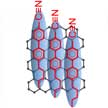
Scientists use transparent graphene electrodes to cleanse ionic impurities in liquid crystal displays (LCDs)
Image sticking phenomena in liquid crystal (LC) devices became obvious soon after the production of the first nematic LC displays and have been a concern ever since. Now, researchers have developed a method to reduce the presence of excess ionic impurities by using a graphene electrode in the LC cell. Graphene shows high optical transmittance and high electrical conductivity, and therefore, graphene can be used as transparent electrodes.
October 24, 2017

Exploring the crucial role of biomolecular coronas for nanoparticle-cell interactions
Researchers explore cellular uptake, endocytic pathways, and intracellular dynamics of nanoparticles in HeLa cells, both in absence and presence of biomolecular corona from human plasma. They find that the biomolecular corona could act as a personalized 'endogenous trigger' affecting off-target interactions and controlling the indication for disease of clinically approved formulations. Mechanistic investigations of the biomolecular corona could contribute to a better understanding of the poor success of targeted liposomal technology.
October 23, 2017

Acoustic microstreaming - using sound waves for microfluidic applications (w/video)
Precise and reproducible manipulation of synthetic and biological microscale objects in complex environments is essential for many practical biochip and microfluidic applications. A new technique that offers simple, non-specific and long-lasting operation has been developed in form of an ultrasound-based method to guide microparticles in an autonomous and reproducible fashion, along with engineered topographical features - something like an automated highway system for microparticles.
October 20, 2017