Showing Spotlights 49 - 56 of 544 in category All (newest first):
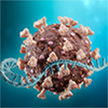 The success of mRNA technology in the development of a COVID-19 vaccine has become a groundbreaking development in the fight against cancer, as well as in the development of new vaccines against many other infectious diseases, including HIV. Future nanotechnology-based mRNA vaccines could allow the delivery of multiple antigen-targeted vaccines in one vaccine lipid nanoparticle to protect against multiple diseases, thereby reducing the number of vaccines needed to prevent common vaccine-preventable diseases.
Jul 5th, 2022
 The controlled rotation of micro- and nanoscale objects plays a crucial role in sensing, imaging, biomedicine, and manufacturing. What makes light-driven micro- and nanorotors so promising for many applications is their non-contact, fuel-free operation. It has remained challenging for simple and low-power optics to achieve light-driven rotation of a wide range of objects, including optically symmetric synthetic particles and biological cells. A novel platform elegantly addresses this issue by achieving the rotation of various particles and live cells using an arbitrary low-power laser beam.
Jul 4th, 2022
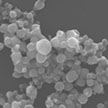 By irradiating a pure tellurium target in deionized water, researchers formed 'naked' tellurium dioxide nanoparticles with a spherical morphology and a size of around 70 nm. The surface of those nanoparticles is totally clean (hence 'naked'), meaning that it does not contain any residues from chemical reactions. This surface cleanliness makes them ideal to interact with biological pathogens and it takes less than 10 ppm to eradicate deadly pathogens like multi-drug resistant E. coli and Methicillin-resistant S. aureus.
Jul 1st, 2022
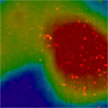 Every cell relies on the uptake (endocytosis) of materials like proteins, cytokines and even synthetic carbon nanomaterials, to perform its required cellular fate functions. Studying this process in detail is an extremely challenging and thus extremely interesting goal in biophysics. Therefore, endocytosis is of interest for bringing therapeutic targets into cells. Studying the pathways of how materials get into the cell can aid in untangling trafficking to design higher efficiency targeted drug and gene delivery therapies.
Jun 20th, 2022
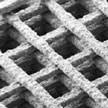 Although 4D printing is considered very promising for various biomedical applications - such as tissue scaffolds, neural scaffolds, grafts and stents, cardiac patches and valves, even bionic constructs - its broad-scale adoption for clinical use and tissue engineering purposes is complicated by a notable limitation of printable smart materials and the simplistic nature of achievable responses possible with current sources of stimulation. Nevertheless, 4D printing may offer a more favorable fabrication approach over 3D printing, as 4D constructs can respond to internal and/or external stimuli.
Jun 7th, 2022
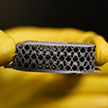 Researchers propose a first-of-a-kind smart orthopedic implant with both diagnostic and energy harvesting capabilities. This mechanically tunable, multifunctional metamaterial implant can sense and harvest energy from body motions. These implants only use their constituent components to achieve these advanced functionalities - they don't require any external power source or bulky electronics. Furthermore, the implants can be 3D printed and customized for each patient based on the clinical requirements and anatomical matching.
Jun 3rd, 2022
 One interesting alternative to traditional antibiotics is phage therapy. Bacteriophages are viruses that selectively target and solely kill bacteria, even multi-drug resistant ones. However, scientists don't yet have the full picture of how it works and what the potential risks are. In view of these challenges, researchers have considered an alternative approach where phages are destroyed immediately after use, thus controlling dosage and circumventing undesirable consequences while maintaining the advantages of whole phage as antibacterial delivery vehicle.
May 30th, 2022
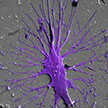 We are in the early stages of neural computing and have time to think through the ethical issues involved. Among other things, if neural computers become common, we will grapple with tissue donation issues. Scientists have found that human neurons were faster at learning than neurons from mice. Might there also be differences in performance depending on whose neurons are used? Might Apple and Google be able to make lightning-fast computers using neurons from our best and brightest today? Would someone be able to secure tissues from deceased genius's like Albert Einstein to make specialized limited-edition neural computers?
May 24th, 2022

 Subscribe to our Nanotechnology Spotlight feed