

Nanotechnology Spotlight – Latest Articles
 Subscribe to our Nanotechnology Spotlight feed
Showing Spotlights 2305 - 2312 of 3575 in category All (newest first):
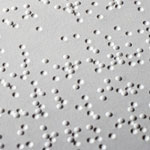
Nanotechnology Braille display could make Web accessible to the blind
If you are a blind computer user you have to rely on electronic Braille displays which typically allow you to see only one line at a time, no matter what you were doing. Such a Braille display is a tactile, electro-mechanical device for displaying Braille characters, consisting of a row of special 'soft' cells. A soft cell has 6 or 8 pins made of metal or nylon; pins are controlled electronically to move up and down to display characters as they appear on the computer display. A number of cells are placed next to each other to form a soft or refreshable braille line. As the little pins of each cell pop up and down they form a line of braille text that can be read by touch. Researchers have now have fabricated a Braille sheet display by integrating organic thin-film transistor drivers, organic static random-access memory, and carbon nanotube-based actuators.
March 16, 2012

New secrets of spider silk - its high thermal conductivity beats most materials
Researchers and material scientists have been fascinated by spider silks for a long time - ultra-strong and extensible self-assembling biopolymers that outperform the mechanical characteristics of many synthetic materials, including steel. Atomistic studies have contributed to a better understanding of the source of the strength and toughness of this amazing biological material. Now, researchers have come up with another set of very surprising findings: The highly periodical structure of spider silk can sustain super fast thermal transport that surpasses those of most organic and inorganic materials. This discovery shows that highly organized organic materials can feature extremely high thermal conductivity.
March 15, 2012
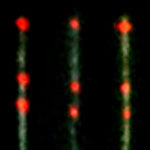
DNA reference tags allow single-molecule research on complex genomes
Knowing the distribution of DNA binding proteins along the genome is very informative and can tell scientists about the state of gene expression at the time of measurement. These DNA-binding proteins include transcription factors which modulate the process of transcription, various polymerases, nucleases which cleave DNA molecules, and histones which are involved in chromosome packaging in the cell nucleus. Previously, researchers demonstrated the viability of a single-molecule approach to directly visualize and map protein binding sites on DNA using fluorescent quantum dots, allowing multicolor, nanometer-resolution localization. Now, they have shown that proteins bound to DNA can be located very accurately by direct imaging. The precision of these measurement presents new opportunities for contextual genomic research on the single-molecule level.
March 12, 2012

Nanobrick walls make excellent gas barriers and flame retardants
Polyurethane (PU) foam is an extremely versatile material that commonly is used in bedding, upholstery and building insulation. However, PU foam is very flammable, often resulting in dripping of melted material that enhances flame spread through the formation of a pool fire under the burning object. Brominated flame retardant compounds (e.g. pentabromodiphenyl ether) have been used to reduce foam flammability but there is growing evidence that these chemicals are toxic to the environment and living organisms. Replacing brominated flame retardants in polymer formulations with safer and more environmentally-friendly alternatives has also sparked the interest of nanoscientists. One recent effort to create an environmentally-friendly flame retardant system involves the layer-by-layer assembly of thin films using materials obtained from completely renewable sources.
March 9, 2012
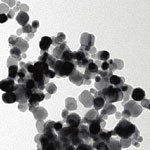
Environmental implications of nanoparticle aging
Several studies in the literature have highlighted that as nanomaterials "age" they can undergo oxidation; sintering (coalescence); surface ligand displacement; smaller nanoparticle formation; and surface carbonate formation. Nevertheless, no studies are available on how these changes affect the physicochemical properties of the nanomaterials. The aging of nanomaterials is expected to be rapid even under ambient environmental conditions. With the consequence that pristine, as synthesized materials - which are commonly used in nanotechnology-relevant environmental health and safety (EHS) studies - are never really encountered under natural environmental conditions. Which means that researchers who investigate the applications and implications of nanomaterials need to have a clear understanding of the aging process of these materials and need to take its effects into consideration.
March 8, 2012

Robotic Venus flytrap aids artificial muscle research
The Venus flytrap (Dionaea muscipula) is a carnivorous plant that catches and digests little insects. Its trapping mechanism consists of a series of tiny hairs at the crease where the plant's two leaves join. When a fly or spider walk across these hairs, touching two or more of them in succession, the two leaves will close quickly enough - within hundreds of milliseconds - to prevent its escape. Now, researchers have used it as inspiration for a new biomimetic robot made with artificial muscles. The device offers promise in the development of electrically stimulated artificial muscle that could be implanted in people to help overcome muscular disease or paralysis.
March 6, 2012
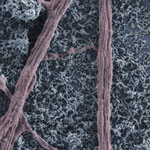
Exploring the complexity of nanomaterial-neural interfaces
Carbon nanotubes, like the nervous cells of our brain, are excellent electrical signal conductors and can form intimate mechanical contacts with cellular membranes, thereby establishing a functional link to neuronal structures. There is a growing body of research on using nanomaterials in neural engineering. Now, researchers have, for the first time, explored the impact of carbon nanotube scaffolds on multilayered neuronal networks. Up to now, all known effects of carbon nanotubes on neurons - namely their reported ability to potentiate neuronal signaling and synapses - have been described in bi-dimensional cultured networks where nanotube/neuron hybrids were developed on a monolayer of dissociated brain cells.
March 2, 2012
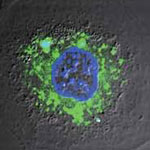
Direct observation of drug release from carbon nanotubes in living cells
Carbon nanotubes (CNTs) offer a number of advantages for delivering drugs to specific locations inside the body which suggest that they may provide an improved result over nanoparticles. They have a larger inner volume which allows more drug molecules to be encapsulated, and this volume is more easily accessible because the end caps can be easily removed, and they have distinct inner and outer surfaces for functionalization. Recent research has shown the ability of CNTs to carry a variety of molecules such as drugs, DNA, proteins, peptides, targeting ligands etc. into cells - which makes them suitable candidates for targeted delivery applications. Researchers have now developed a unique two-dye labeling method to directly track the release process of a anti-cancer drug from carbon nanotube carriers in living cells.
March 1, 2012